Breast symmetry surgery adjusts the natural breast so it sits closer in size, shape and position to the reconstructed one. It may mean lifting, reducing or enlarging that side, and it is usually planned once reconstruction has settled.
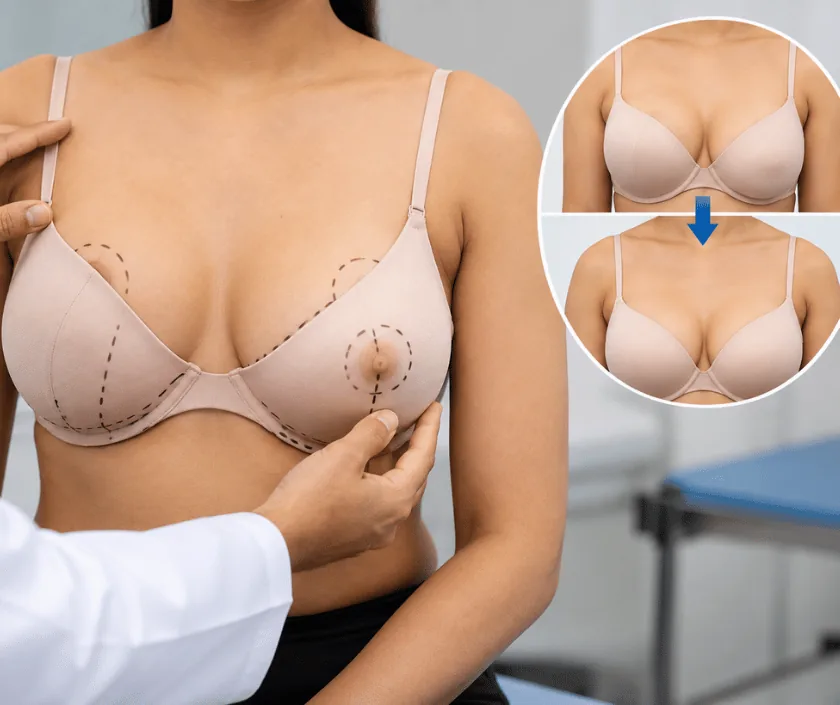
Breast symmetry surgery balances the two sides after breast reconstruction by operating on the natural breast. Depending on the difference, it may be lifted, made smaller or given a small implant. It is usually done as a second stage once the reconstructed side has settled. The aim is a close match in clothing, not an identical pair.
A reconstructed breast tends to sit higher, firmer and rounder than a natural one. Over time that difference can become the thing you notice most in the mirror or under a fitted top. Symmetry surgery narrows the gap by changing the other side, which is usually simpler and safer than reworking the reconstruction.
Which operation suits depends on the direction of the difference. A natural breast that hangs lower can be lifted. One that is larger can be reduced, and tissue removed is sent for laboratory examination as a routine safeguard. A smaller natural breast can be given a modest implant, though that brings the usual implant considerations with it.
Timing matters. Swelling from reconstruction takes months to go, and shape keeps changing during that period. Operating too early risks matching a shape that then moves. Most surgeons therefore plan balancing as a later stage, often at the same sitting as nipple reconstruction or other refinements.
Balancing is elective and optional. It suits women who are otherwise settled with their reconstruction but find the difference between sides bothersome.
Both sides are examined and measured while you stand, and photographs may be taken with consent. Options are compared, and a written estimate follows the assessment.
A lift, a reduction or a small implant is selected according to the difference. Scar patterns are explained honestly, since each option leaves its own marks.
Markings are drawn while you sit or stand so gravity is accounted for. Surgery is usually under general anaesthesia as a day case or with one night in hospital.
Skin and tissue are reshaped, the nipple is repositioned if needed, and the result is checked against the reconstructed side while you are sat up on the table.
Wounds are closed in layers and a supportive bra is fitted. Tissue removed is sent for laboratory examination, and the result is discussed with you afterwards.
Soreness and swelling are expected in the operated breast. Simple pain relief is usually enough, and a support bra is worn continuously.
Bruising fades and dressings are reviewed. Most women manage light home activity, while lifting and reaching overhead are still limited.
Swelling has settled a good deal and shape is easier to judge. Office work and gentle exercise are usually possible around this point.
The match becomes clear as everything softens. Scars continue to fade for a year or more, and further adjustment is occasionally wanted.
Balancing gets the two sides much closer, particularly under clothing. Without clothing the difference stays visible, because a reconstructed breast and a natural one age, move and feel differently. Scars from the balancing operation are a real trade and they take a year or more to fade. Weight change or the passage of time can shift the match again. Most women still feel the improvement was worth having.
This is surgery on a healthy breast, so the balance of benefit and risk deserves careful thought.
Support and patience do most of the work in the first weeks.
It brings them much closer, especially under clothing, but a reconstructed breast and a natural one will always differ up close.
Reduction or lift surgery does not cause cancer, and tissue removed is routinely examined in the laboratory.
Waiting until the reconstructed side has settled usually gives a better match, so balancing is generally a later stage.
Weight, age and gravity affect the natural breast but not the reconstruction, so the match can drift over years.
Elegance Clinic in Surat plans balancing as part of the whole reconstruction journey, and is straightforward about the scars it adds to a healthy breast.

Balancing surgery is quoted after assessment, because a lift, a reduction and an implant each carry different theatre time, materials and length of stay. The written estimate covers surgeon and anaesthesia fees, theatre, any implant, laboratory examination of tissue removed, dressings and follow up visits. Where balancing forms part of reconstruction after cancer surgery, several insurers in India contribute, though policies vary, so it is worth checking yours with the estimate in hand.
These are the questions that come up most often in consultation. If yours is not here, send it on WhatsApp and the team will reply, usually the same day.
Ask your question →Adjusting the natural side is usually simpler and gives a better match than reworking a reconstruction. A lift, reduction or small implant on that side brings the two closer in size and position, which is what most women notice in clothing.
Once the reconstructed side has settled, which usually takes several months. Swelling has to go and shape has to stabilise first, otherwise the match may be made against a shape that then changes. It is often combined with nipple reconstruction.
Yes. A lift or reduction leaves scars around the areola and running downwards, sometimes with a line in the fold beneath the breast. They fade over a year or more without vanishing, and the pattern is shown to you beforehand.
Screening continues as your cancer team advises. Surgery changes the appearance of the breast on imaging, so it helps to tell the radiology unit what has been done. Tissue removed during a reduction is examined in the laboratory as routine.
A written estimate follows assessment, since a lift, a reduction and an implant differ in theatre time and materials. Cover varies between insurance policies in India when balancing forms part of reconstruction, so it is worth asking your insurer directly.
Certainly. Many women are content with the difference between sides, particularly if it is small or hidden by clothing. Balancing is offered because it helps some women, not because reconstruction is unfinished without it.
The natural breast continues to change with weight, age and gravity, while the reconstructed side largely does not. Over years the two may drift apart again. Some women have a further small adjustment later, and others simply accept the change.
Seeing patients from across the city and beyond: read about the practice on the plastic surgeon in Surat page, or check what a written estimate covers on the costs and insurance page.
