Facial injuries carry weight beyond the wound itself. The face is how people recognise us, and a cut there is judged differently from the same cut on a knee. Road accidents, falls, sport and assaults account for most cases, and many arrive at night when a quick decision matters. Careful cleaning, precise alignment of the edges and correct handling of any structure underneath do more for the final appearance than any product applied later.
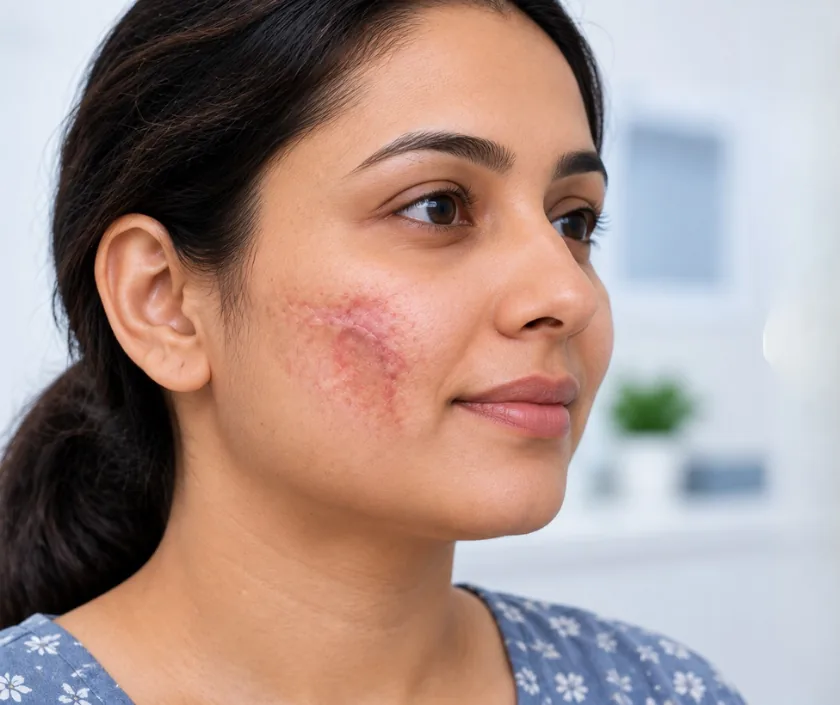
This page explains how facial soft tissue injuries are grouped and what each group needs. Some wounds are straightforward and close in one sitting. Others involve the eyelid margin, the lip border, the nostril rim or the ear, where a millimetre of misalignment shows for life. A few damage the facial nerve, the tear duct or the salivary duct and must be recognised at the first examination. Repair at Elegance Clinic in Surat starts with that assessment before any stitching begins.
Facial wounds are grouped by what has been lost and what lies underneath, because those two things decide whether simple repair is enough.
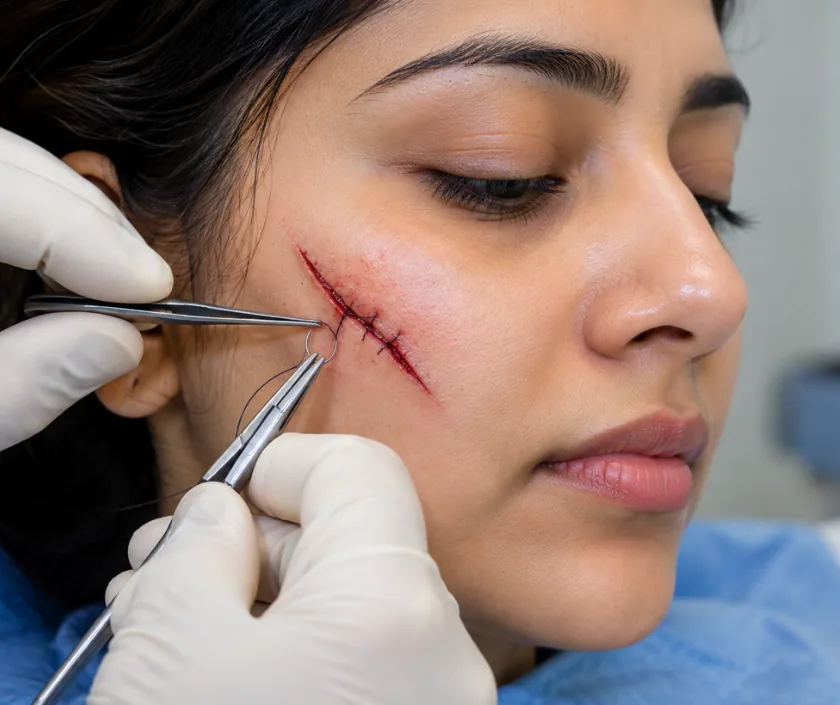
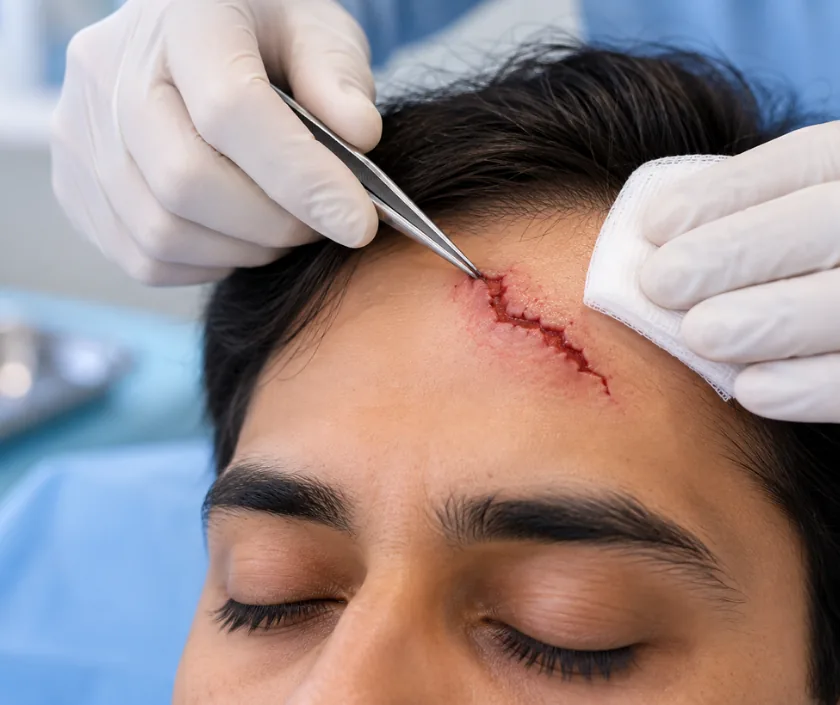
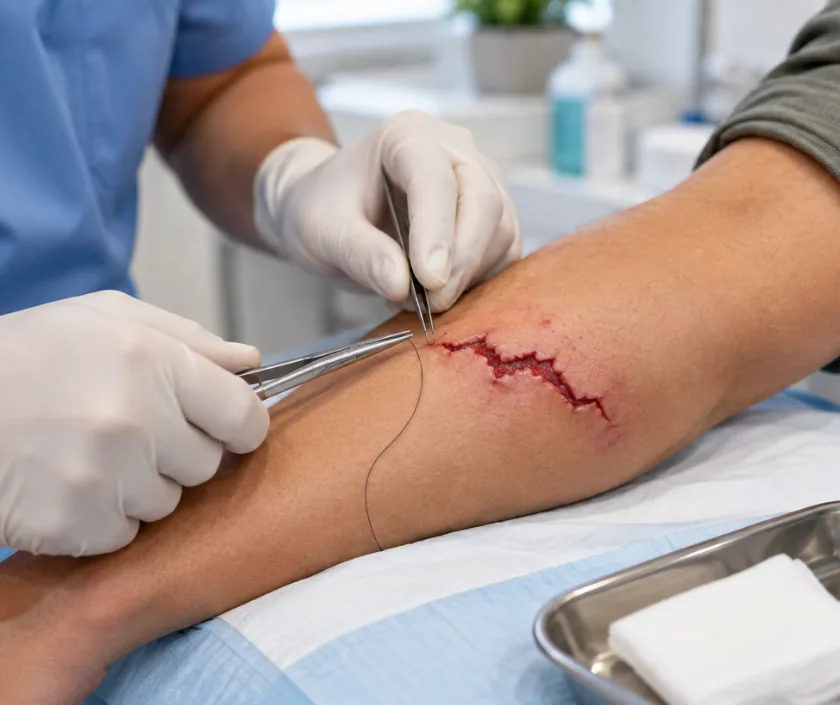
Facial wounds are usually closed sooner than wounds elsewhere, because the blood supply is rich and infection is less likely. Even so, heavily contaminated wounds may be cleaned first and closed shortly afterwards. Being seen early gives more options than arriving days later.
Once stitches are out, the scar enters a long remodelling phase. Silicone, gentle massage, sun protection and time do most of the work. Redness and firmness peak in the early months, then fade. Judging a facial scar before a year has passed is premature.
Some scars stay wide, stepped or pulled despite good aftercare. Revision can reorient a scar into a natural crease, break up a straight line or level a step. Lasers and microneedling help with colour and texture rather than with position.
Children move, and their skin heals actively, so both repair and aftercare differ. Absorbable stitches and glue avoid a second procedure. Scars can widen as the face grows, and review is usually spread over a longer period than in adults.
Some facial wounds should be seen the same day, however small they look on the surface.
The points people most want answered when a facial injury has just happened.
Ask your question →The charge reflects the size and complexity of the wound, whether local or general anaesthetic is used, theatre time and any exploration of deeper structures. Follow up visits and scar treatment are quoted separately, and an estimate is given before treatment where possible.
Local anaesthetic numbs the area before any repair begins, so the stitching itself is not felt. The injection stings briefly. Children and anxious patients may be offered sedation or a general anaesthetic so the repair can be done calmly and precisely.
Surface healing on the face is usually quick, with stitches removed within about a week. Swelling and bruising settle over two to three weeks. The scar itself keeps changing for a year or more, softening and fading gradually during that time.
Every cut through the skin leaves a mark. Careful closure, placement along natural lines and diligent aftercare make it far less noticeable. Most well repaired facial scars become hard to spot at conversational distance, though they do not vanish entirely.
Yes. Scars that are wide, raised, pulled or awkwardly angled can often be revised months or years later. Assessment looks at the scar direction, skin type and any underlying tightness, and the realistic degree of improvement is discussed beforehand.
Bleeding that will not stop, wounds involving the eyelid, lip or nostril margins, facial weakness, double vision, and animal or human bites all need same day care. Early attention gives a better repair than delayed treatment of the same wound.
Bring details of how the injury happened, the time it occurred, your tetanus history and a list of medicines, especially blood thinners. Photographs taken at the scene and any earlier treatment records help the assessment considerably.
