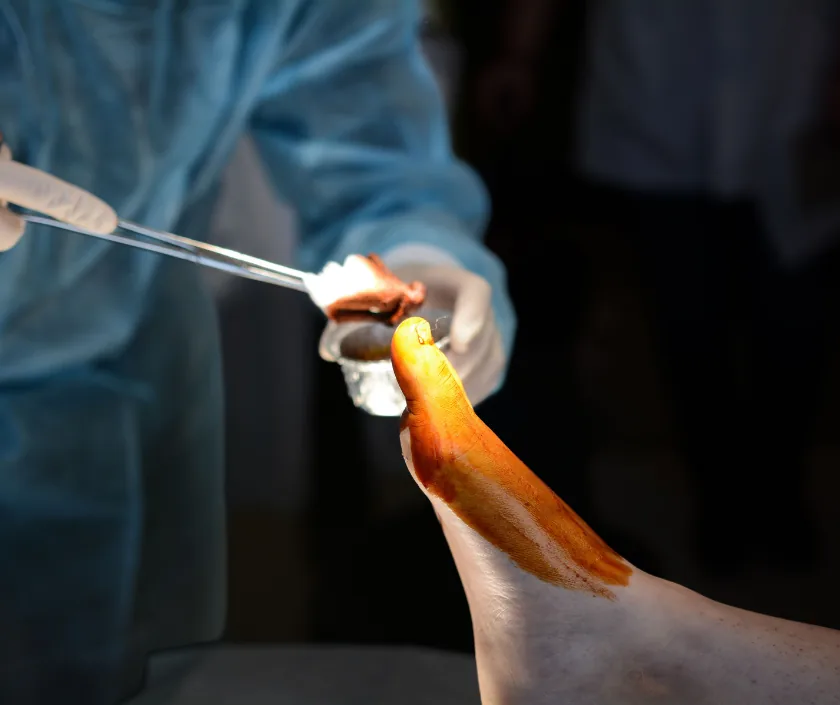
Swollen limbs after cancer treatment, infection or from birth, managed with compression and, in selected cases, microsurgery.
Anyone with persistent limb swelling, most often after breast or pelvic cancer treatment, or long standing filarial swelling.
Limb measurement, staging and a compression review, before any discussion of surgery.
Microscope equipped theatre for lymphovenous anastomosis and lymph node transfer in selected patients.
Conservative care and staged surgery are quoted in writing; some cover is case based.
Each category opens a hub with its own treatment pages and patient information.
Nothing here is improvised. The sequence below is how care in this specialty is actually organised, and your own written plan follows it.
The swelling is measured and staged, and reversible causes and infection are treated first.
Compression therapy and skin care are the foundation at every stage, surgery adds to them, never replaces them.
Lymphovenous anastomosis or node transfer for suitable earlier stage limbs, judged on assessment.
Debulking and reduction surgery reshape advanced limbs and reduce infection episodes.
"Compression is the treatment. Surgery is the assistant, chosen carefully and honestly."
Lymphedema is managed, not cured, and honest staging decides who benefits from microsurgery and who from reduction.
Preventing cellulitis matters as much as size: every infection episode makes the swelling permanently worse.

Published with documented patient consent, generalised for age and sex, in line with advertising norms applicable to medical practitioners in India.
Published bands are for Surat and include surgeon, anaesthesia, theatre and standard stay. Where a band is not published, a written estimate follows examination. Cover under mediclaim and schemes is confirmed before admission.
Ask for an estimate →These are the questions that come up in consultation most often. If yours is not here, send it on WhatsApp and the team will reply, usually the same day.
Ask your question →No treatment cures lymphedema, and any promise of cure should raise doubt. It can be controlled well, with compression as the foundation and surgery helping selected limbs.
Earlier stage limbs where fluid, not fat and fibrosis, is the main problem. Suitability is decided by staging and assessment, and honest advice sometimes means recommending against surgery.
In most cases yes, in some form. Compression protects whatever surgery achieves and prevents progression, and garments are refitted as the limb changes.
Because each episode of cellulitis destroys more lymphatic channels and makes swelling permanently worse. Preventing infection is the single most protective habit.
Cover varies: surgery after cancer treatment is often admissible, while garments and therapy may not be. What applies to your policy is checked before treatment.
Limb measurements at fixed points, symptoms, skin condition and how often infections occur are recorded at each visit, and imaging of the lymphatic channels is used when surgery is being considered. Tracking over time shows whether treatment is working.
Trained decongestive therapy with compression is the foundation of treatment and is usually continued for a period before any operation is planned. It also shows how much of the swelling is fluid that can be moved.