Tissue expansion grows your own skin next to a defect so the repair can be made with matching colour and texture. The trade off is time, because the expander is filled slowly over weeks before the second operation.
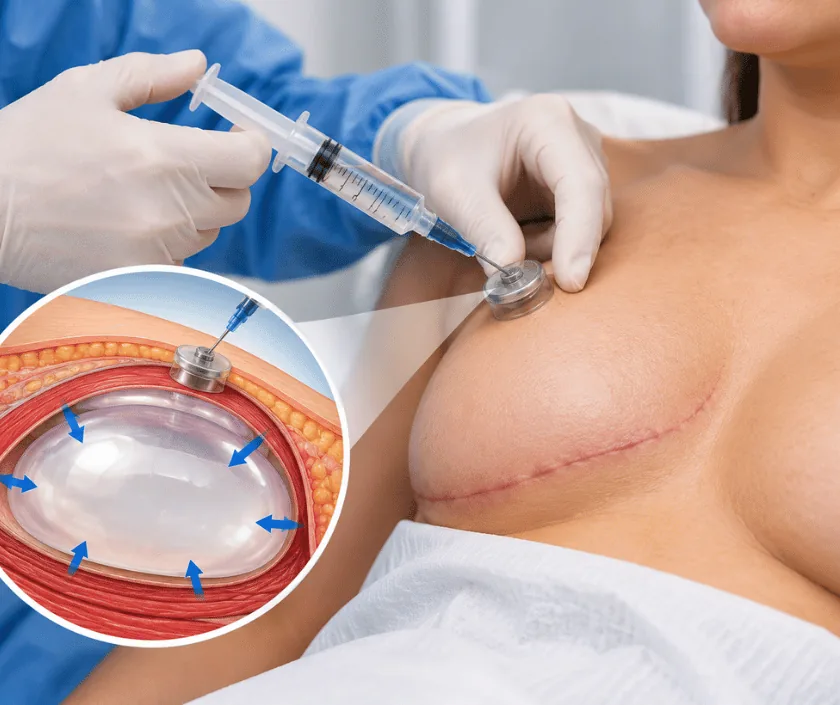
Tissue expansion is a two stage operation. A silicone balloon is placed under healthy skin beside the area that needs rebuilding, then filled with saline at clinic visits over several weeks. As the skin stretches, the body makes more of it. At the second operation the expander is removed and the extra skin is moved to cover the defect.
Skin responds to steady stretch by growing. Tissue expansion puts that property to use. A soft silicone balloon, called an expander, is slipped into a pocket under healthy skin close to the area that needs rebuilding. Over the following weeks, sterile salt water is added through a small valve at outpatient visits, and the skin above the balloon slowly enlarges.
The value of this method lies in the quality of skin it creates. Because the new skin comes from right beside the defect, it usually matches in colour, thickness, texture and even hair growth. That matters most on the scalp, where a graft looks obviously different, and on the trunk and limbs where large burn scars need replacing.
There is a cost in time and patience. Expansion cannot be rushed without risking the skin, so the schedule is set by how the tissue behaves rather than by the calendar. A visible swelling develops as filling proceeds, and it stays until the second operation. Most patients accept this once they understand what the finished repair can look like.
This method asks for commitment over weeks, so it works best when the plan is understood from the start. Suitability depends on the site, the surrounding skin and your ability to attend regular visits.
The defect is measured and the donor skin beside it assessed. Expander size, shape and position are chosen, and the number of filling visits is estimated so you know what the schedule will look like.
Under general anaesthesia a pocket is made beneath healthy skin and the expander is placed with its filling port. A small amount of fluid goes in at surgery, and a drain may be used briefly.
Once the wound has healed, fluid is added through the port at intervals. Each session is brief. Tightness afterwards is expected, and the amount added is guided by how the skin looks and feels.
When enough skin has grown, the expander is removed. The stretched skin is advanced or rotated to cover the defect, scar tissue is excised, and the wound is closed in layers.
Dressings, activity limits and scar care are explained before discharge. Review visits follow over the coming months, and further refinement can be planned later if the shape needs it.
Soreness and swelling around the expander are usual after each operation. Pain relief is given, any drain is checked, and gentle movement is encouraged as advised.
Wounds are reviewed and stitches dealt with. Most people return to light work while avoiding pressure, stretching or knocks over the expander.
Visits continue at intervals for fluid to be added. Tightness for a day or two after each session is normal, and the skin is checked every time.
After the second stage the new scars soften and settle. Colour keeps improving for months, and any refinement is planned once healing is complete.
Expansion often gives the closest match available for large defects, yet scars remain where the skin is joined and moved. Some settling of the expanded area happens after the balloon comes out, which is anticipated during planning. Not every case reaches the intended size, and occasionally a second round of expansion or a different method is needed. Progress is reviewed at each visit rather than promised in advance.
This is a staged operation with a device under the skin, so the risks differ from a single procedure and are worth understanding fully.
Simple habits protect both the device and the skin above it between visits.
Filling faster than the skin tolerates risks pain, thinning and breakdown. The pace is set by how the tissue responds, not by the diary.
The expander is removed at the second operation and the stretched skin is used for cover. That swelling is a stage, not the end result.
Expansion is widely used on the scalp, trunk and limbs, especially after burns and for large birthmarks.
Some settling is normal after the device comes out, which is why a little more skin is grown than the defect strictly needs.
Elegance Clinic in Surat plans staged reconstruction with the whole timeline mapped out first, so families know how many visits and stages to expect before the first operation.

Cost for tissue expansion reflects two operations, the expander itself and the filling visits in between. After assessment we set out the likely number of stages and share a written estimate covering theatre, device, stay and reviews. Because the schedule depends on how your skin responds, the figure is explained as a case based estimate rather than a fixed package.
These are the questions that come up most often in consultation. If yours is not here, send it on WhatsApp and the team will reply, usually the same day.
Ask your question →Cost varies with the size and number of expanders, the two operations and the filling visits between them. Because the schedule depends on how your skin responds, the figure is case based. A written estimate is shared after assessment and before admission.
Expanders are made of medical grade silicone and have been used for decades. The main concerns are infection, leakage and thinning of the skin above the device. Regular checks at filling visits are designed to catch these problems early.
Two operations are separated by an expansion phase that usually runs over several weeks. The pace is set by how the skin tolerates each filling, so the timeline is reviewed as you go rather than fixed at the outset.
Because the skin is grown right next to the defect, colour, thickness and hair pattern usually match closely. Joining scars remain where the skin is moved, and these fade over months. The match is generally better than a graft taken from elsewhere.
People who cannot attend regular filling visits, those with infection or an open wound at the site, and continuing smokers are usually advised against it. Skin damaged by radiation also tolerates expansion poorly and may need a different plan.
Wounds need to be fully healed and the scar reasonably settled before an expander is placed. Rushing into surgery over inflamed tissue raises the chance of infection. Timing is judged at examination rather than by a set number of months.
The area is examined, the surrounding skin assessed and photographs taken. Expander size and position are discussed along with the number of visits expected. You leave with a written estimate and a clear picture of both stages.
Seeing patients from across the city and beyond: read about the practice on the plastic surgeon in Surat page, or check what a written estimate covers on the costs and insurance page.
