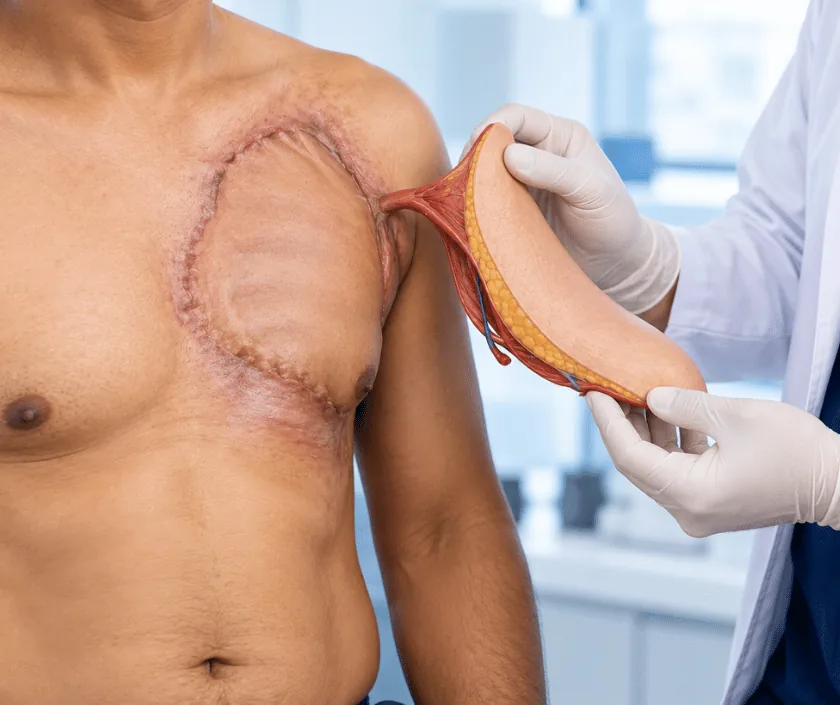
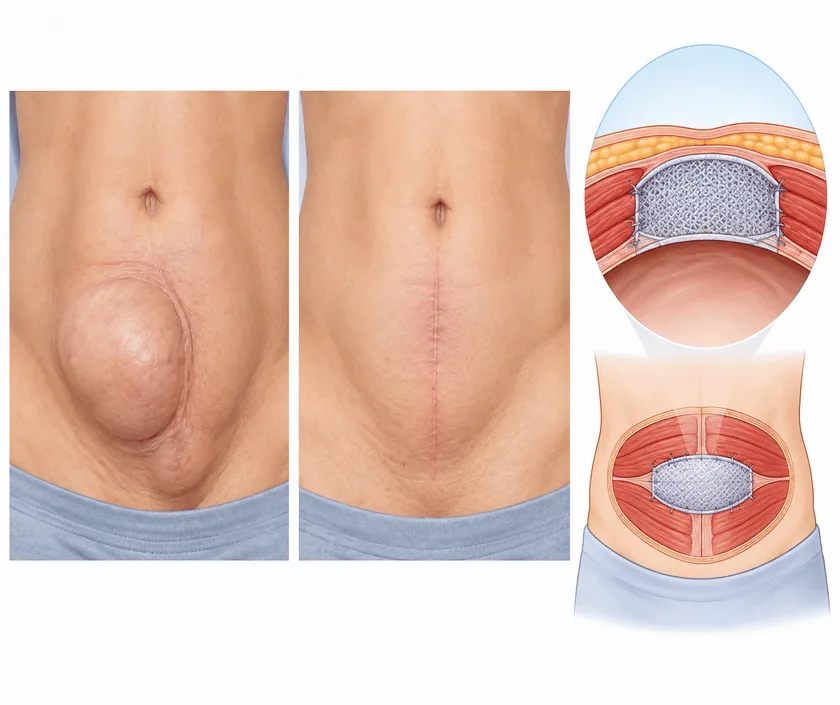
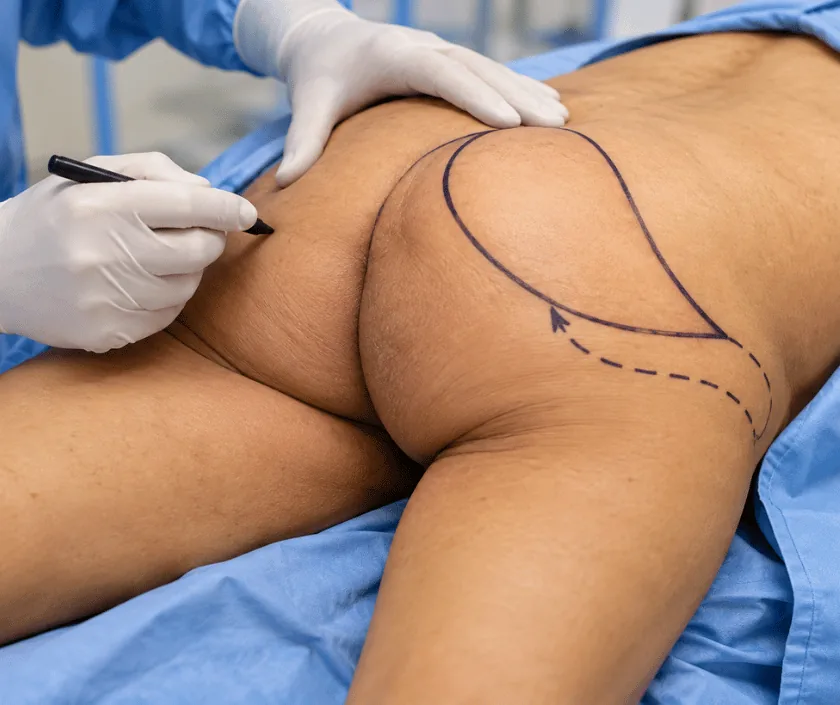
Chest wall defects, open abdomens, infected meshes and perineal wounds, closed with flaps engineered for strength as well as cover.
Patients with sternal wounds after cardiac surgery, abdominal wall defects, infected mesh or perineal defects.
Wound review with the treating team, imaging of the defect, and a staged reconstruction plan.
Theatre equipped for combined procedures with cardiothoracic, general surgical and oncology teams.
Reconstruction after surgery, infection or cancer is generally payable under mediclaim.
Nothing here is improvised. The sequence below is how care in this specialty is actually organised, and your own written plan follows it.
Infection and dead tissue are cleared, and any failing mesh or hardware is addressed with the primary team.
Muscle and fascial flaps rebuild the wall, strength where the trunk needs strength, cover where it needs cover.
Binder support and graded activity protect the repair while it gains strength.
Hernia surveillance and refinement, coordinated with the primary surgical team.
"The trunk is structural. A closed wound that cannot bear a cough has not been reconstructed."
Trunk reconstruction restores the wall, not just the skin: a sternum that is stable, an abdomen that holds, a perineum that heals.
These cases are shared with cardiac, general surgical and oncology teams, and the flap plan is built around their operation.

Published with documented patient consent, generalised for age and sex, in line with advertising norms applicable to medical practitioners in India.
Published bands are for Surat and include surgeon, anaesthesia, theatre and standard stay. Where a band is not published, a written estimate follows examination. Cover under mediclaim and schemes is confirmed before admission.
Ask for an estimate →These are the questions that come up in consultation most often. If yours is not here, send it on WhatsApp and the team will reply, usually the same day.
Ask your question →Sometimes, with washouts and cover, but a chronically infected mesh usually needs removal and staged reconstruction of the wall. The decision is made with the surgeon who placed it.
With debridement of infected bone and cartilage, and closure using muscle flaps that bring blood supply to the area. It is coordinated closely with the cardiac team.
That is the goal. Component separation and flap techniques restore a functional wall, with binder support and graded activity while strength returns over weeks to months.
Typically one to two weeks in hospital depending on the defect, then six to twelve weeks of protected activity before heavy lifting, guided at reviews.
Reconstruction after surgery, infection or cancer is generally payable under mediclaim, and approvals are raised with the primary admission where teams operate together.
Heavy lifting and straining are restricted for several weeks so that the repair is not stressed while it gains strength. You are given specific limits for work and exercise, and they are relaxed in stages.
Position, dressing choice and sometimes a temporary change in bowel or urinary routine are used to keep the area dry and protected. Nursing instructions are written down for home, since this is what protects the repair.