Healing a burn wound and recovering from a burn are two different things. Skin may close within weeks, yet the scar underneath keeps changing for a year or longer. During that time it can thicken, tighten and pull on nearby joints. Rehabilitation exists to stay ahead of that process. Started early and continued patiently, it protects movement, keeps scars flatter and helps people get back to work, school and family life.
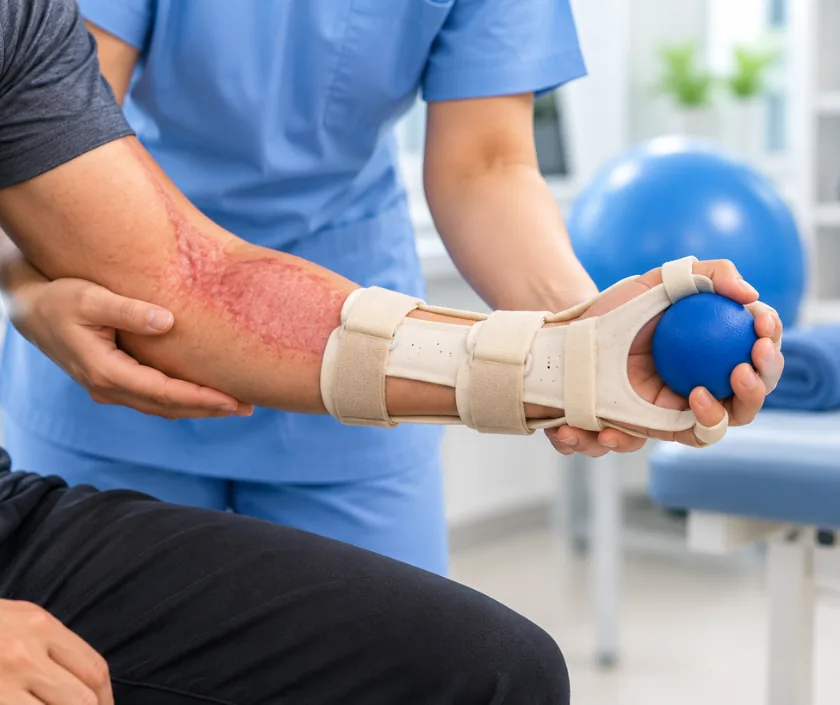
This page describes the parts of a burn rehabilitation programme and when each one is used. Care at Elegance Clinic in Surat is shared between the surgical team, physiotherapists and occupational therapists, with the family closely involved because most of the daily work happens at home. Programmes are reviewed regularly, since a scar that is settling needs different handling from one that is actively thickening. Progress can vary a great deal between individuals, and steady effort over months usually matters more than any single treatment.
Each element does a specific job at a specific stage. Understanding the sequence explains why therapy continues long after the wound has closed.
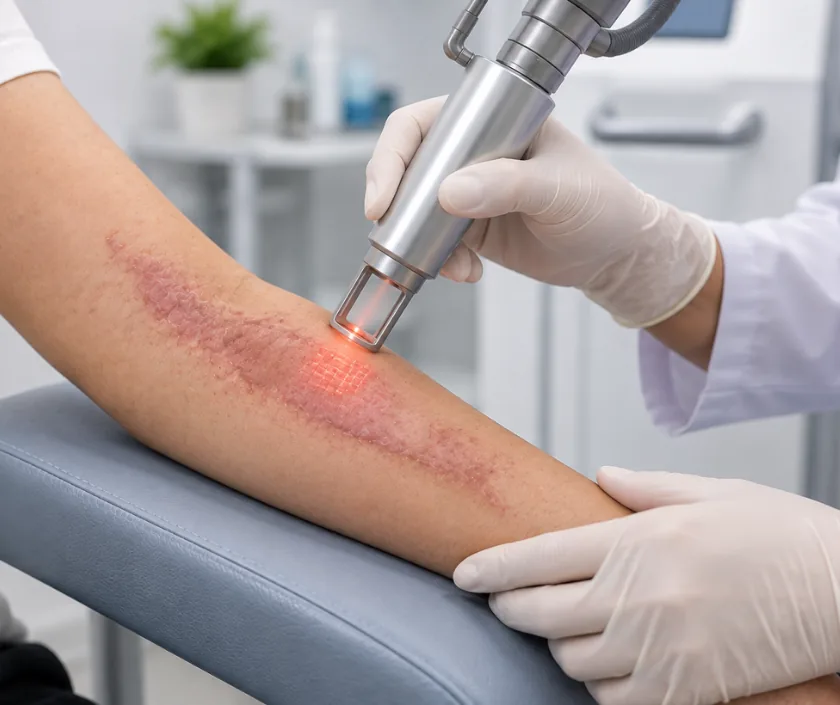
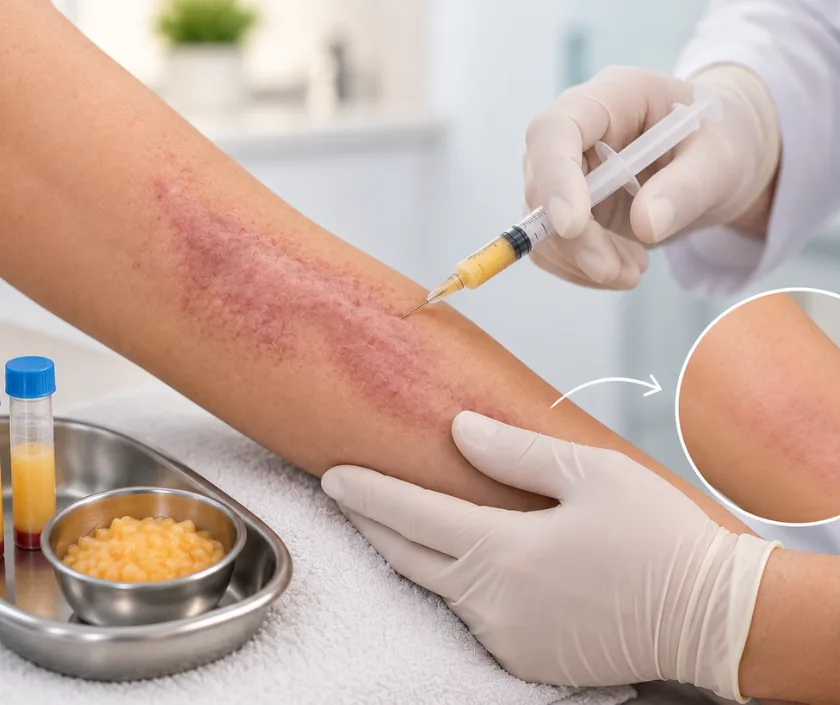
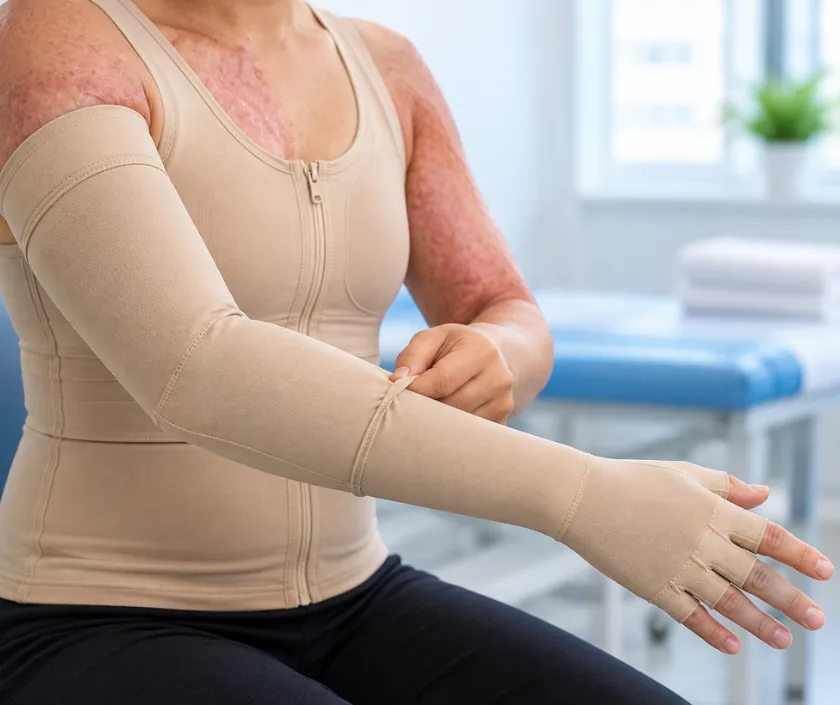
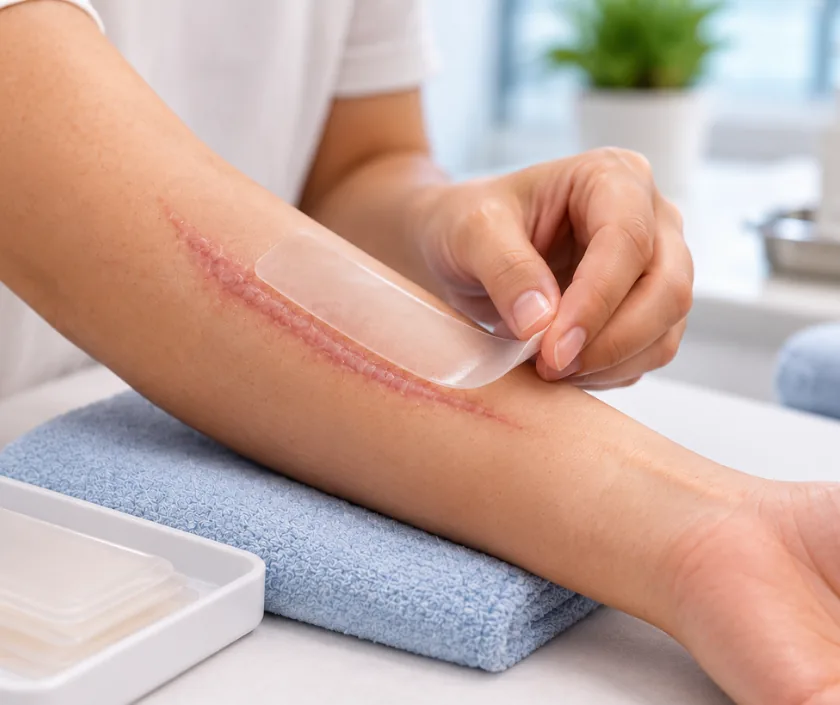
Healed burn skin often makes little oil or sweat, so it feels dry and itches persistently. Regular moisturiser, cool clothing and prescribed medicines help. Scratching damages fragile skin, so therapists teach tapping and pressure techniques that relieve the sensation more safely.
Fresh scar and grafted skin darken easily and unevenly in sunlight, and the change can last a long time. Covering the area, using high factor sunscreen on exposed parts and avoiding midday sun for at least a year all protect the result.
A scar crossing a joint can tighten faster than stretching can counter it. Losing movement despite good therapy is a signal, not a failure. Surgical release may then be planned, with rehabilitation restarting afterwards to hold the new range.
Going back is easier when planned in steps. Shorter days, adjusted tasks, garment friendly clothing and a word with teachers or supervisors all reduce anxiety. Occupational therapists often visit or contact the workplace to help arrange sensible adjustments.
Rehabilitation is adjusted as scars change. Report the following rather than waiting for the next scheduled visit.
The practical points patients and families raise most often during therapy.
Ask your question →Costs are spread over time rather than paid at once. Therapy sessions, custom splints, silicone products and pressure garments each have their own charge, and garments need replacing periodically. An expected schedule of costs is discussed when the programme is planned.
Garments feel tight at first and take a week or two to get used to. They should feel firm rather than painful. Redness, numbness or skin breakdown means the fit is wrong, and the garment should be checked rather than endured.
Scars stay active for many months, and therapy usually follows them for as long as they keep changing. Intensive work happens early, then visits spread out. Recovery can vary widely, so the plan is reviewed rather than fixed at the beginning.
Consistent therapy tends to give flatter, more supple scars and better joint movement than healing alone. It cannot erase a scar or restore skin to its original state, but it strongly influences how much a scar limits everyday function.
Almost everyone benefits, including children and older adults, with the programme scaled to what each person can manage. Very small superficial burns may need only moisturiser and sun care. Deeper or grafted burns nearly always need structured therapy.
Contact the team the same day for spreading redness, fever, a foul smell from a wound, or sudden loss of movement in a joint. Rapid scar thickening around the mouth, eyes or neck also needs prompt reassessment.
Movement is measured at each affected joint, scar height and colour are recorded, and garment fit is checked. Photographs track progress. The home programme is then updated, and any new splint or garment is ordered at that visit.
