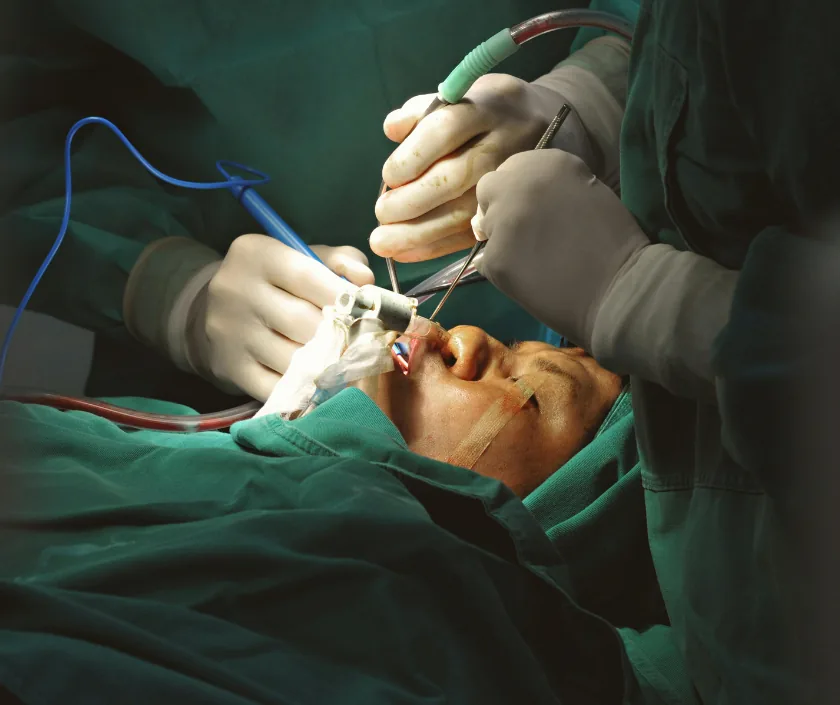
A face that has stopped moving, protected first, then reanimated with nerve and muscle procedures matched to the cause and the clock.
Anyone with facial weakness after Bell\'s palsy, surgery, injury or from birth, recent or long standing.
Assessment of which branches are affected and for how long, eye protection review, and a staged plan.
Microscope equipped theatre for nerve transfers and functional muscle transfer.
Functional procedures are assessed for mediclaim cover case by case.
Nothing here is improvised. The sequence below is how care in this specialty is actually organised, and your own written plan follows it.
An eye that cannot close is the urgent problem, drops, taping and, where needed, a lid procedure protect sight.
While the facial muscles are alive, nerve repair and transfers can reanimate them, timing decides eligibility.
Long standing paralysis is reanimated with functional muscle transfer, rebuilding a deliberate smile.
Static procedures, botulinum toxin and therapy refine symmetry at every stage.
"The clock decides the options. A paralysed face seen early keeps choices that a late one has lost."
Facial reanimation is time sensitive: nerve based options fade as months pass, which is why early assessment matters even while recovery is awaited.
Long standing paralysis is still treatable, with muscle transfer and balancing procedures restoring function and symmetry.

Published with documented patient consent, generalised for age and sex, in line with advertising norms applicable to medical practitioners in India.
Published bands are for Surat and include surgeon, anaesthesia, theatre and standard stay. Where a band is not published, a written estimate follows examination. Cover under mediclaim and schemes is confirmed before admission.
Ask for an estimate →These are the questions that come up in consultation most often. If yours is not here, send it on WhatsApp and the team will reply, usually the same day.
Ask your question →Early, even while waiting for natural recovery. If the eye does not close it needs protection immediately, and nerve based reanimation options are strongest in the first year to eighteen months.
Yes. Functional muscle transfer, static procedures and balancing treatments restore symmetry and a deliberate smile even in long standing paralysis.
Reanimation rebuilds a genuine, voluntary smile; with practice and therapy most patients smile convincingly, though perfect symmetry with the normal side is not promised.
It is protected urgently with lubrication and taping, and often a small eyelid procedure so blinking protects the cornea. Sight protection comes before every cosmetic concern.
Eye protecting and functional procedures are often admissible under mediclaim; purely cosmetic balancing may not be. Cover is checked against your policy before planning.
When the nerve is recovering, guided facial retraining can make a real difference and no surgery may be needed. Therapy cannot replace a nerve or muscle that is no longer working, which is when surgical options are discussed.
Nerve transfers and muscle transfers need months before movement appears, because the nerve must grow into the muscle before it can work. Progress is reviewed at set intervals and therapy runs alongside.