Modern facial surgery often begins on a computer rather than in the operating room. A CT scan is turned into a three dimensional model of the skull, and the operation is rehearsed on that model before anyone is admitted. Guides can then be printed to show exactly where to cut, and an implant can be made in advance to match the shape that is missing.
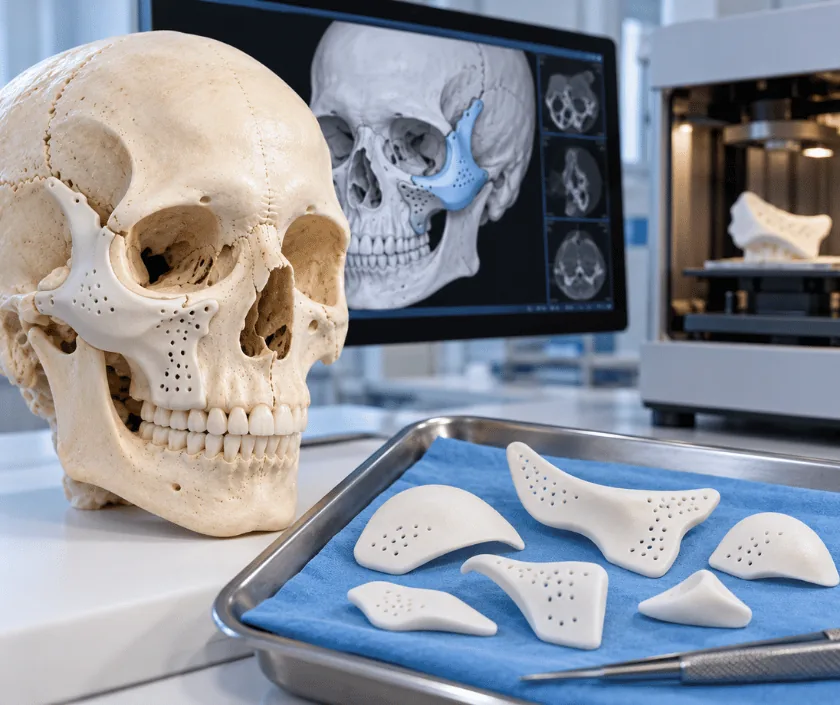
These tools are helpful, though they are not needed for every case. A single clean fracture is usually fixed just as well with a standard plate bent by hand during surgery. Digital planning earns its place when a defect is large, when both sides of the face are involved, or when an old injury has healed badly and the correct position is no longer obvious. This page explains the choices and where each one fits.
Options run from simple ready made metalwork to fully custom implants. Cost and waiting time rise along that scale, so the choice depends on the problem.
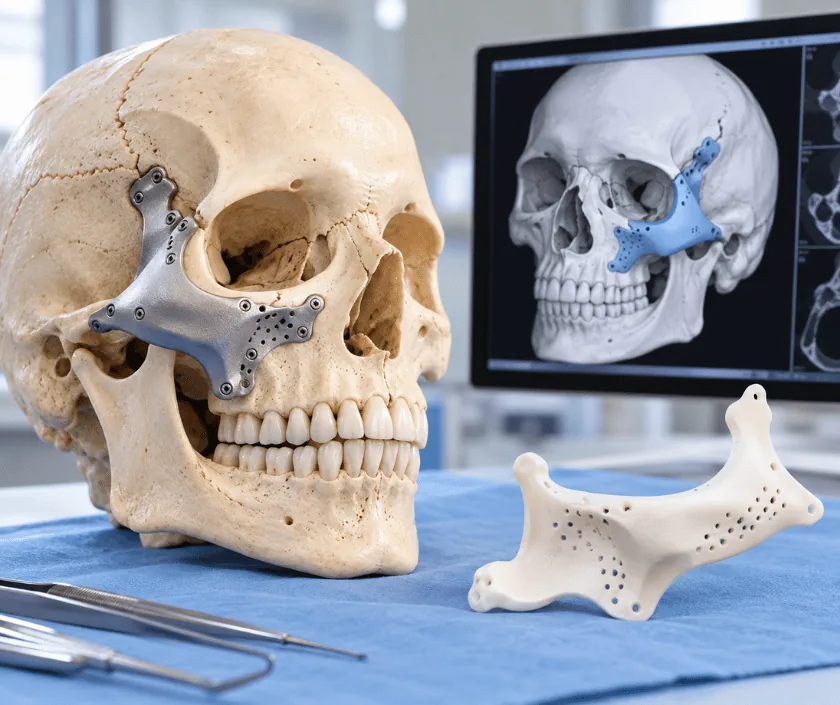
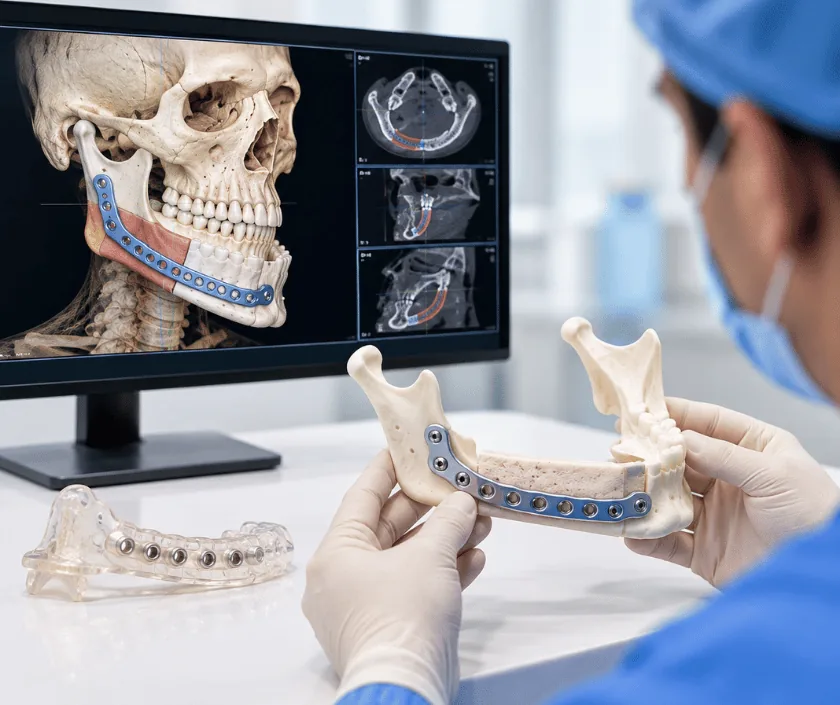
Digital planning is not instant. Scans go to an engineering team, a plan is agreed with the surgeon, then guides or implants are manufactured and shipped. Weeks can pass before surgery, which is why fresh injuries are still treated with plates shaped by hand.
Most facial implants are titanium, which the body tolerates well and which shows clearly on later scans. Some are made from medical grade plastics that weigh less and interfere less with imaging. Site, load and any planned radiotherapy all steer the choice.
Plates are normally left alone and cause no bother. Airport scanners rarely react to them. Removal comes up only when a plate turns painful, becomes exposed or infected, or when a growing child needs the metal taken out later on.
Advanced planning suits a minority of cases. One clean fracture or a small gap is handled well with standard plates. Extra cost and delay make sense when the defect is wide, when landmarks are gone, or when symmetry is genuinely hard to judge.
Metal in the face usually settles quietly. A few changes should be checked without delay.
← Back to Maxillofacial Trauma & Facial Skeletal Reconstruction
These answers cover cost, safety, timing and how to judge whether custom planning is worth it for you.
Ask your question →Yes. A made to measure implant carries a design fee and a manufacturing charge on top of the surgery, so the total is higher than with ready made plates. An itemised estimate is shared once the scan has been reviewed and a plan agreed.
Titanium has been used in facial surgery for decades and is well tolerated by the body. Most plates stay in place quietly for life. Loosening, exposure or infection happen occasionally, and any implant that causes trouble can be removed or exchanged.
Swelling is at its worst in the first few days and settles over two to three weeks for most people. Soft food is usual early on when the jaw is involved. Full bone healing around the implant takes a few months, and recovery can vary.
Planning improves accuracy, particularly where a defect is large or where landmarks have been lost. Many patients gain better balance between the two sides. It does not remove scars, and a soft tissue that has been thinned or irradiated still limits what any implant can achieve.
Suitability rests on the size and site of the defect, the quality of skin and lining over it, and whether infection has been present. Smoking and poorly controlled diabetes both raise the risk of exposure. A scan and examination settle the question.
Usually not, because manufacture takes time that an acute injury does not allow. Urgent cases are treated with stock plates that are shaped during the operation. Custom work can still be planned later if the shape needs refining once everything has healed.
Bring any CT scans on disc, earlier operation notes, and a list of your medicines. Old photographs taken before the injury are genuinely useful for planning. Examination, imaging review and a discussion of options usually fit into a single appointment.
