Two very different accidents share a common problem. In a degloving injury, skin and fat are torn away from the tissue beneath, usually by a rolling or dragging force such as a wheel or a machine roller. With a bite, teeth drive bacteria deep into tissue through a small opening. Both look far less serious on the surface than they are underneath, and both are frequently underestimated in the first hours.
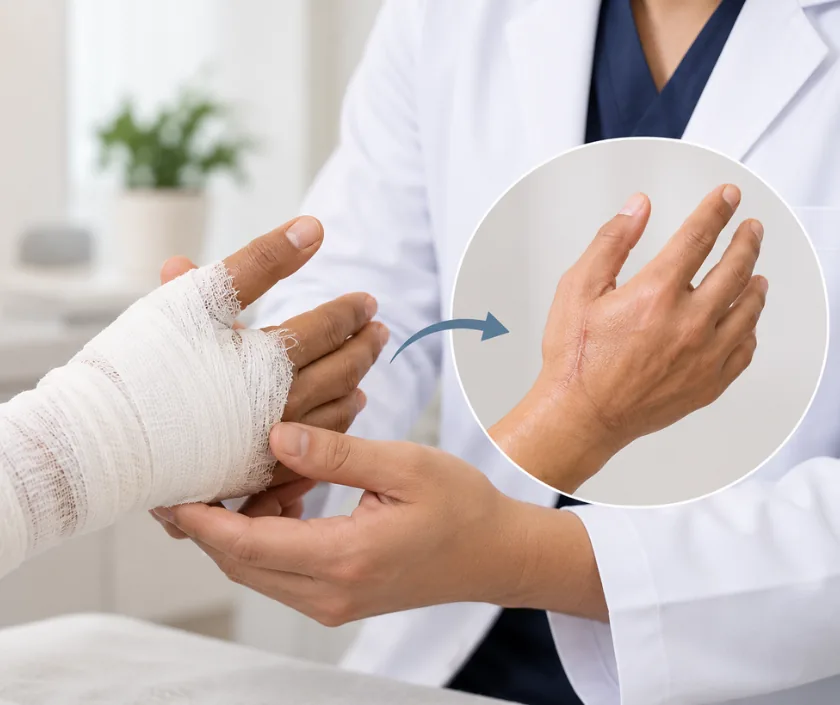
What links them is hidden damage. Degloved skin may look intact yet have lost its blood supply, and it dies days later if treated as a simple flap. A bite over a knuckle may appear to be a small cut while the joint beneath is already contaminated. Assessment at Elegance Clinic in Surat therefore concentrates on what lies below the surface, using examination, imaging where needed and, in many cases, formal exploration in theatre rather than bedside closure.
Grouping these injuries by mechanism and depth explains why some are stitched at once while others are cleaned, left open and reviewed.
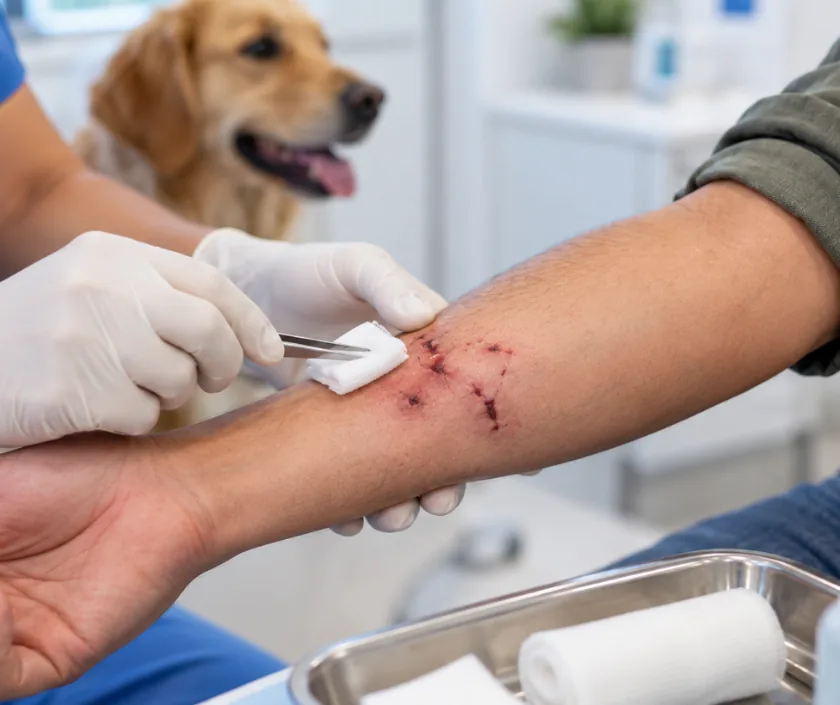
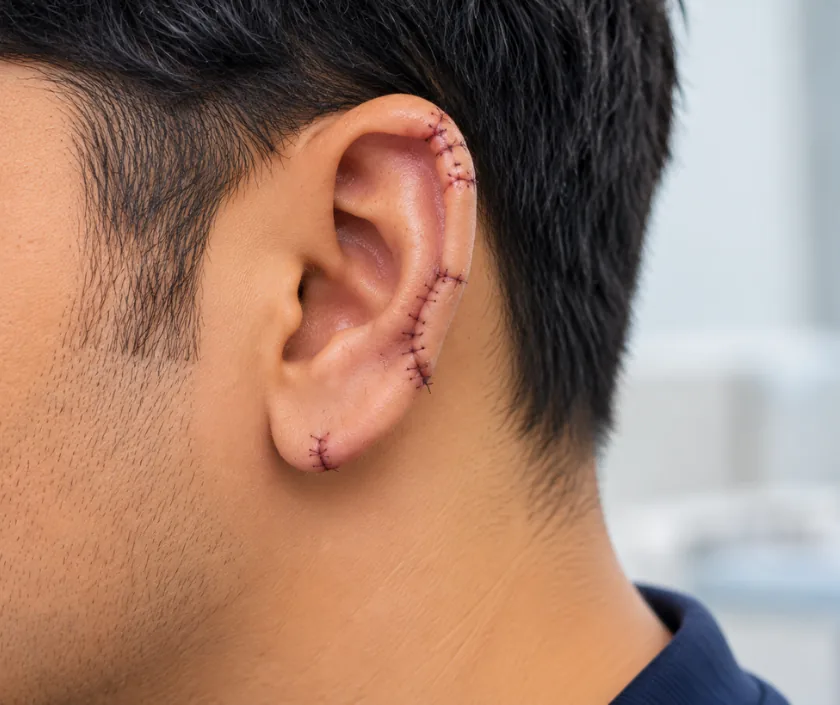
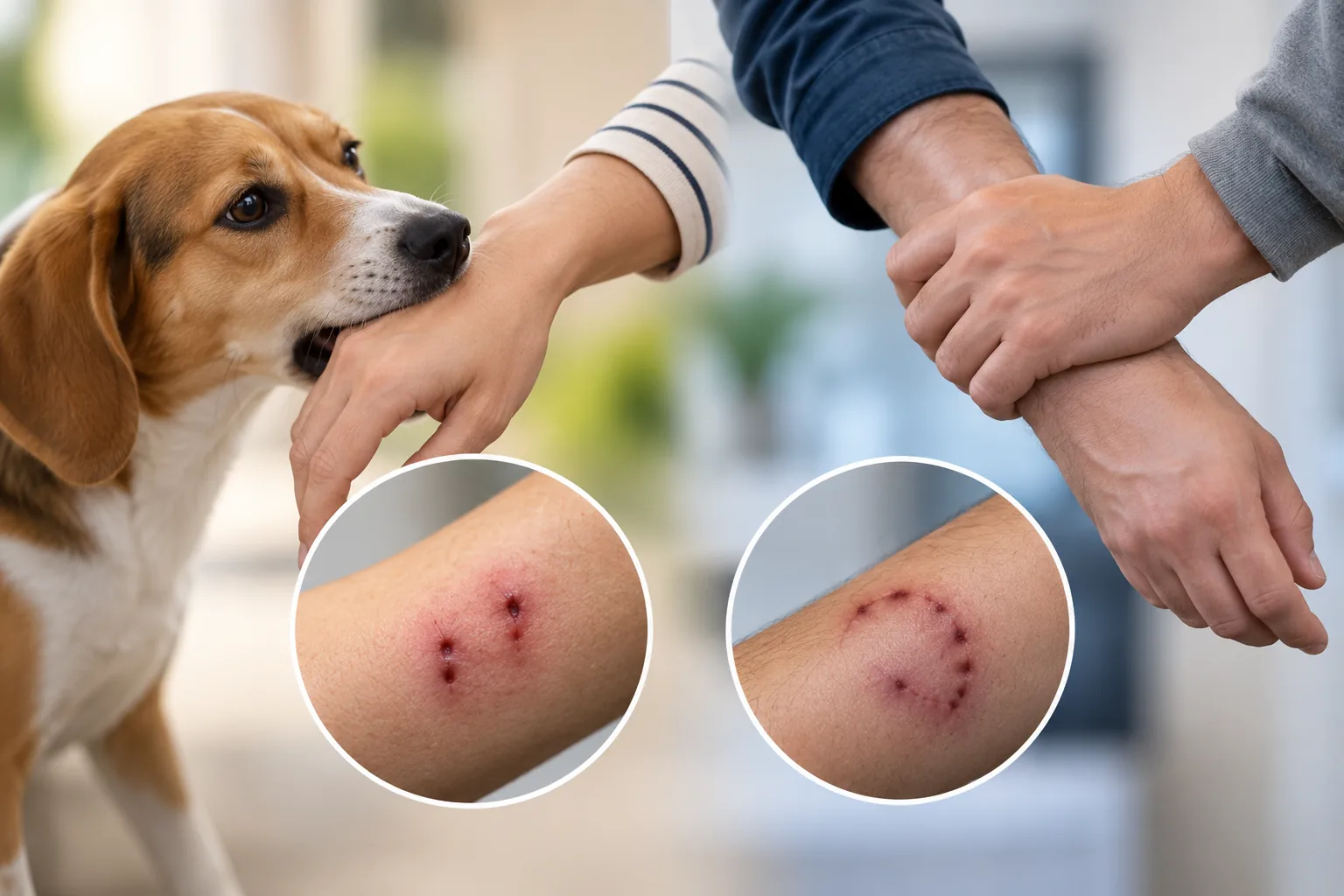
Any bite from a mammal raises the question of rabies, and the decision depends on the animal, the region and its vaccination history. Tetanus cover is reviewed at the same visit. These decisions are made by a doctor rather than delayed or judged at home.
Closing a contaminated puncture traps bacteria in a warm, sealed space. Leaving the wound open, or closing it a few days later once it is clean, lowers the chance of a deep infection. Facial bites are handled differently because of the rich blood supply.
Torn skin can look pink and healthy yet be doomed. Surgeons judge survival by bleeding at the edges, the direction of the tear and sometimes by dye tests during surgery. Skin that will not survive is better removed and used as a graft.
Even a well managed degloving can leave stiff joints, patchy sensation, a contour dip or an unstable scar. Secondary procedures such as fat grafting, scar release or tendon surgery are planned once the wound is stable and swelling has settled.
Degloving and bite injuries can deteriorate quickly. Attend an emergency department if any of the following applies.
Answers to what patients ask most often after this kind of accident.
Ask your question →Cost depends on how many operations are needed, whether microsurgery or flap cover is involved, hospital stay and the length of antibiotic treatment. Simple bite washouts are far cheaper than staged reconstruction. An estimate is given once the plan is clear.
Bites can lead to deep infection of tendon sheaths, joints and bone, which is far harder to treat than the original wound. Early washout and antibiotics greatly reduce that risk. Waiting to see whether it settles is the main reason problems escalate.
Recovery varies widely. A small cleaned bite may settle in a couple of weeks. Degloving with grafting or flap cover often means weeks in dressings, then months of therapy for movement, sensation and scar softening before daily activities feel normal again.
Grafted or flap covered skin differs in colour and texture from its surroundings, and contour is rarely even. Improvement continues for a year or more, and later refinements are possible. Realistic photographs of similar cases are shared before surgery.
Not always. Salvage depends on the blood vessels, the level of injury, contamination and the person's general health. Sometimes a shorter, comfortable, working finger serves better than a longer one that stays stiff and painful. That choice is discussed carefully.
Loss of circulation, a bite over a joint or on the face, spreading infection and any peeled skin flap all need same day surgical care. Delay in these situations narrows the options and usually means more tissue is eventually lost.
The wound is examined for blood flow, nerve function and tendon movement. Photographs are taken, imaging is arranged if bone or a foreign body is suspected, and tetanus and rabies cover is reviewed. Theatre is often booked directly from that visit.
