Skin cancer is usually cured by removing it with a margin of healthy tissue around the edge. That leaves a wound, and on the face even a small wound sits next to features that move, such as an eyelid or a lip. Reconstruction closes the gap without dragging those features out of place.
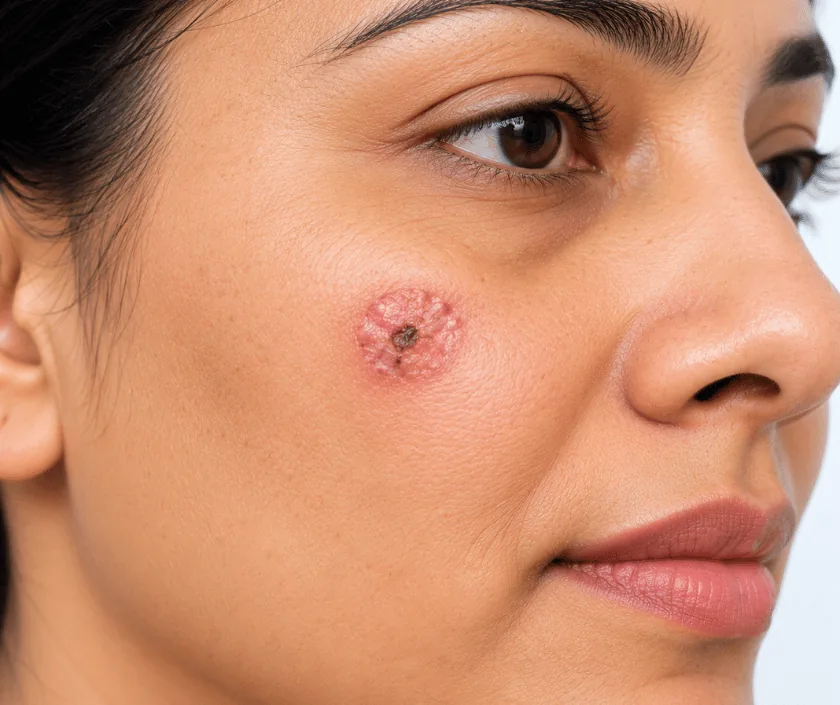
Two questions shape the plan. The first is whether the cancer has been fully removed, since closing over a tumour that is still present only hides the problem. Just as important is what the site needs in terms of thickness, colour and support. A patch of skin borrowed from behind the ear can match a cheek closely, while a deep wound with bare cartilage needs tissue that brings its own blood supply. Age, other illnesses and any earlier radiotherapy to the area are weighed as well, since they all affect how a wound heals. This page sets out the usual choices.
The method is matched to the depth and site of the wound. Simpler options are preferred whenever they can give a sound and tidy result.
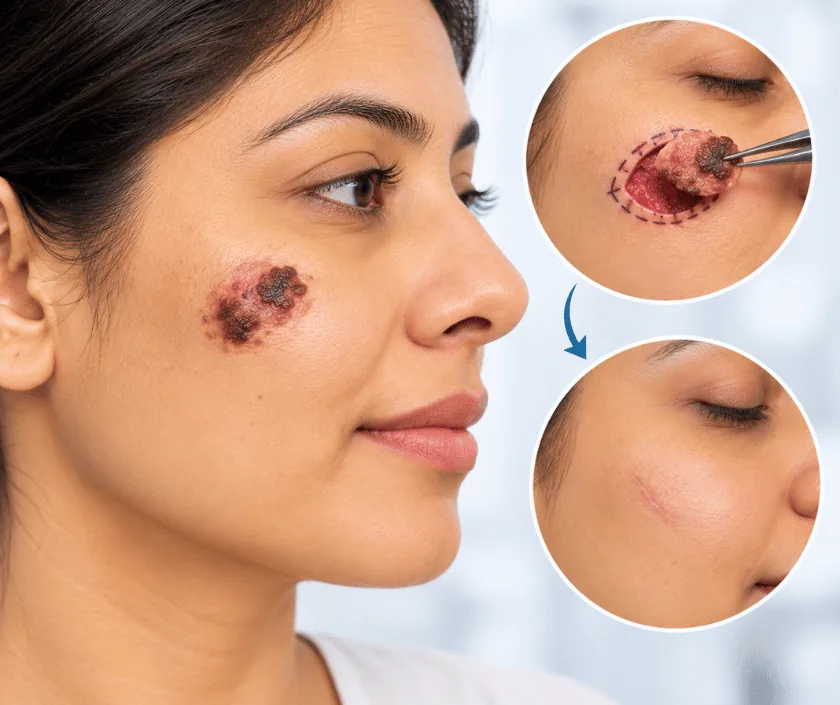
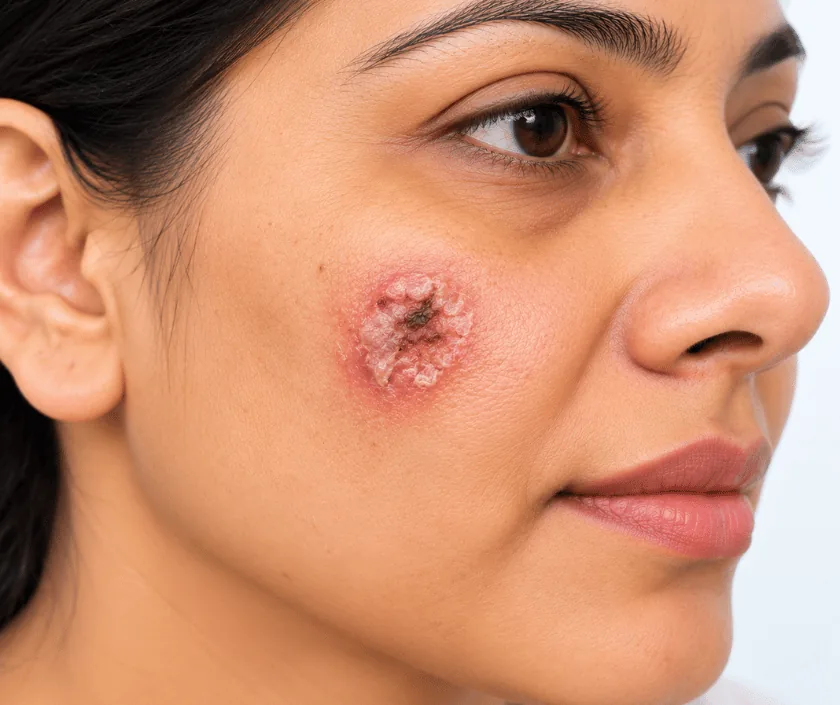
Some tumours are removed and closed at the same sitting, while others are dressed until the laboratory confirms a clear edge. Waiting feels frustrating, yet it avoids the far greater nuisance of reopening a healed flap to clear tumour that was left behind.
Fresh scars look red and firm before they settle. Sun protection, gentle massage once the wound has healed, and silicone gel all help. Most scars soften across six to twelve months, and any minor revision is best judged only after that.
Anyone who has had one skin cancer carries a higher chance of another, often at a different site. Regular self checks and yearly skin review pick new lesions up early, while they are still small and simple to remove.
Damage builds over years, so protection still helps after treatment. Shade during the middle of the day, a broad hat, long sleeves and regular sunscreen on exposed skin all reduce further harm. Habits carried into daily routine work better than occasional effort.
Skin changes are easy to dismiss. The following are worth an early opinion rather than a wait.
These cover cost, safety, healing and how the result usually looks over time.
Ask your question →Small lesions closed directly under local anaesthesia sit at the lower end. Costs rise with flap surgery, general anaesthesia and laboratory work on the margins. Many policies cover treatment of a proven cancer. A written estimate is given after examination.
For most facial lesions, yes. You stay awake and comfortable while the area is numbed, and you can go home the same day. General anaesthesia is reserved for large tumours, for sites that are hard to reach, or when several areas are treated together.
Stitches on the face usually come out within a week, and on the trunk or limbs a little later. A graft takes around two weeks to settle. Redness and firmness fade over months, so the final appearance is judged well after the wound has closed.
Scars are placed in creases and along natural borders wherever possible, so many become hard to pick out at conversational distance. Colour and texture keep improving for a year. Some scars stay visible, and a small revision is occasionally offered later.
Removal with a clear margin deals with most skin cancers for good. Return at the same site is uncommon once the edge is confirmed clear, though a new cancer elsewhere on sun exposed skin is quite possible, which is why review appointments matter.
Most skin cancers grow slowly and allow a few weeks for proper planning. Faster action is advised for a lesion that is ulcerating, growing quickly, or suspected of being a melanoma. Bring any changing lesion forward rather than waiting for a routine slot.
The lesion is examined, often with a magnifying device, and the skin elsewhere is checked. A biopsy may be taken on the day. Options for removal and closure are explained, along with the likely scar, the timeline and what follow up will involve.
