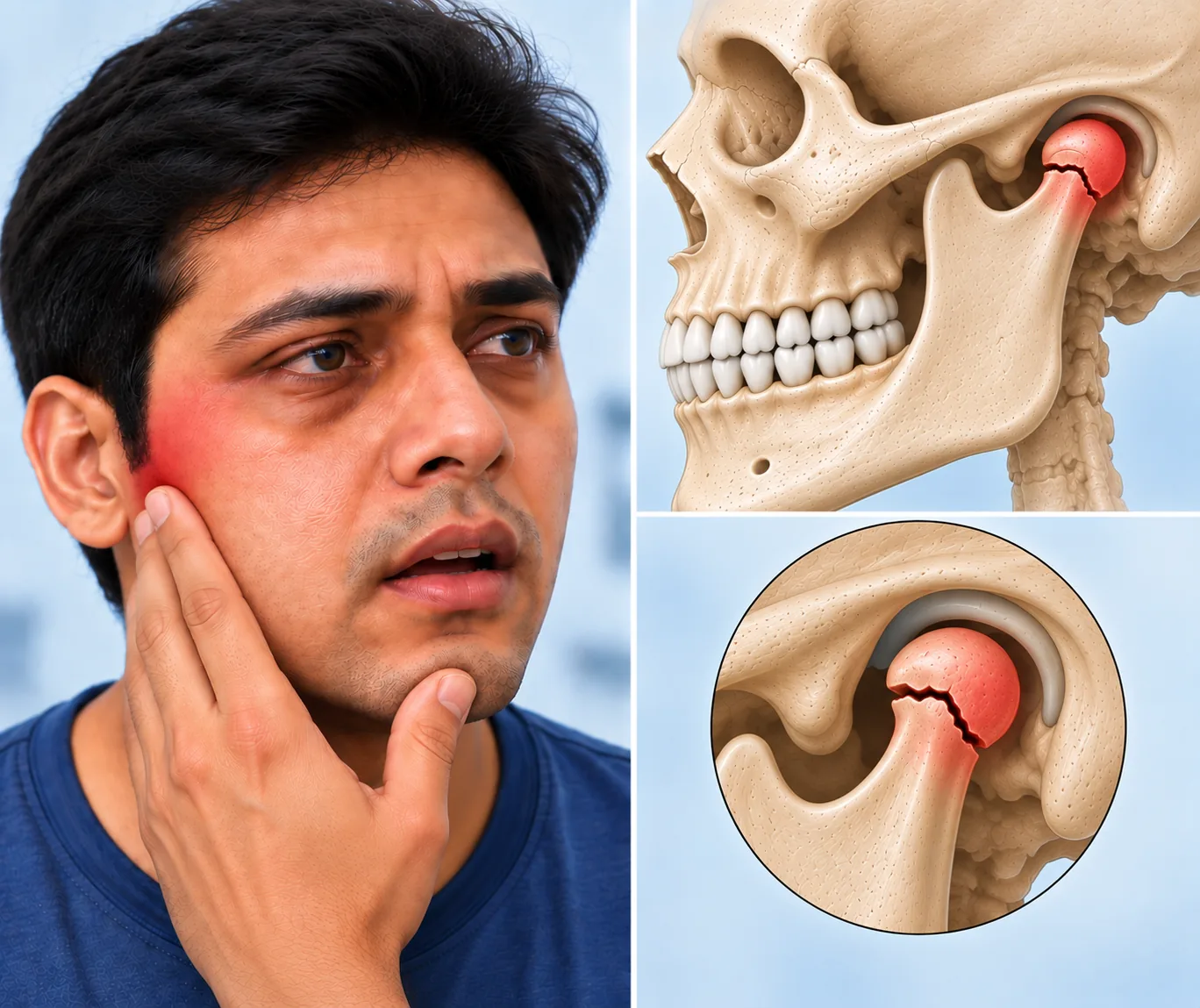
Facial fractures, orbital injuries and jaw reconstruction, fixed so the bite closes, the eye sits level and the face keeps its shape.
Anyone with a fractured jaw, cheekbone, nose or eye socket, or a facial skeleton deformity after injury or disease.
Clinical examination with CT imaging, bite assessment, and a fixation or reconstruction plan explained on the scans.
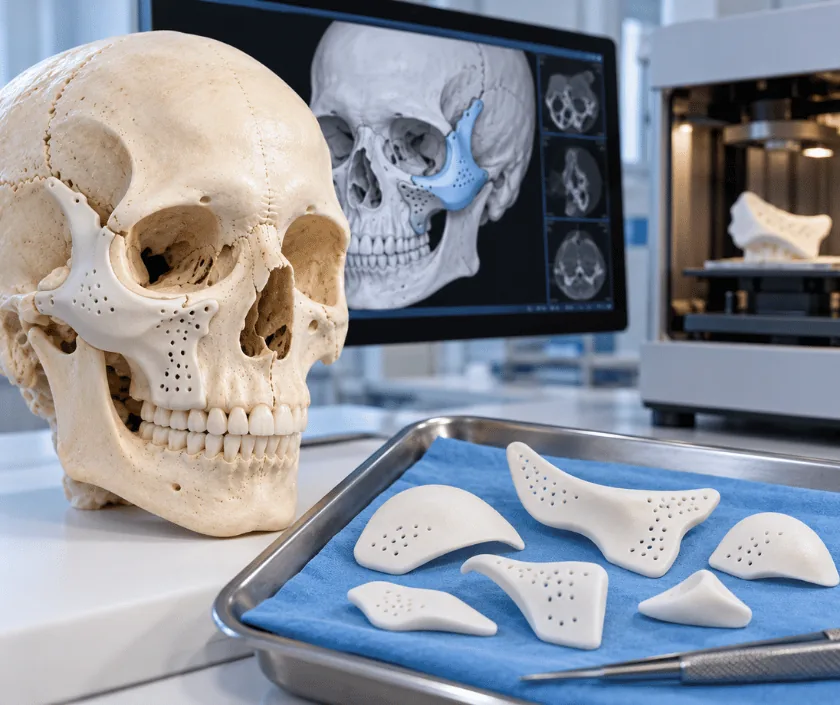
Theatre equipped for plating and fixation, with 3D planning and patient specific implants where the defect demands them.
Fracture fixation after injury is generally payable under mediclaim and accident cover.
Nothing here is improvised. The sequence below is how care in this specialty is actually organised, and your own written plan follows it.
CT imaging, airway and vision checks, and timing of fixation, most fractures are best fixed within two weeks.
Open reduction and plating through hidden incisions, restoring the bite and the facial buttresses.
Diet progression, mouth opening exercises and occlusion checks while the bone unites.
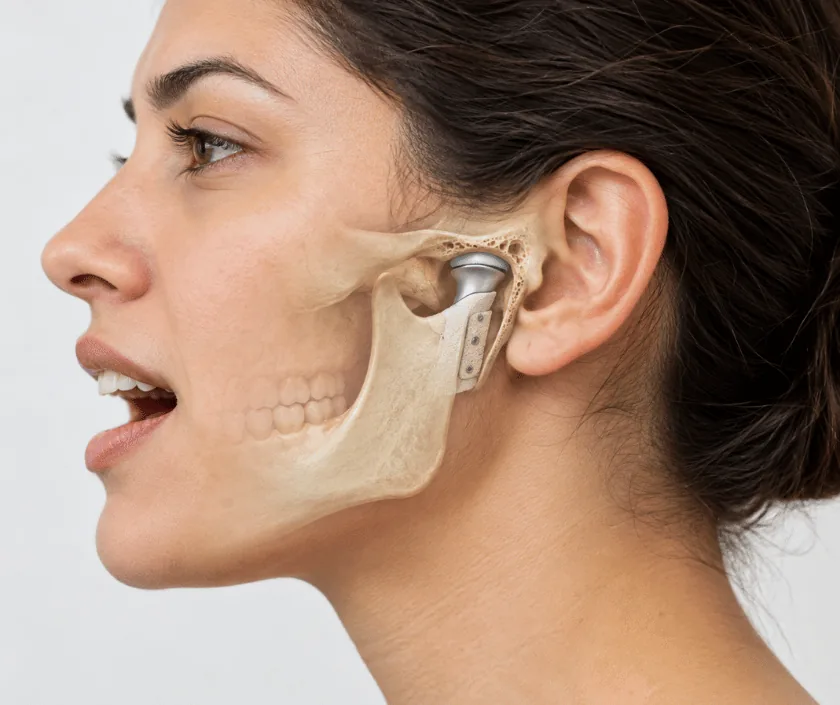
Secondary correction, implant work or scar revision where asymmetry or deformity persists.
"The bite is the blueprint. Fix the occlusion and the face follows."
Facial fractures are fixed against the bite and the buttresses of the face, which is why assessment starts with the teeth, not the skin.
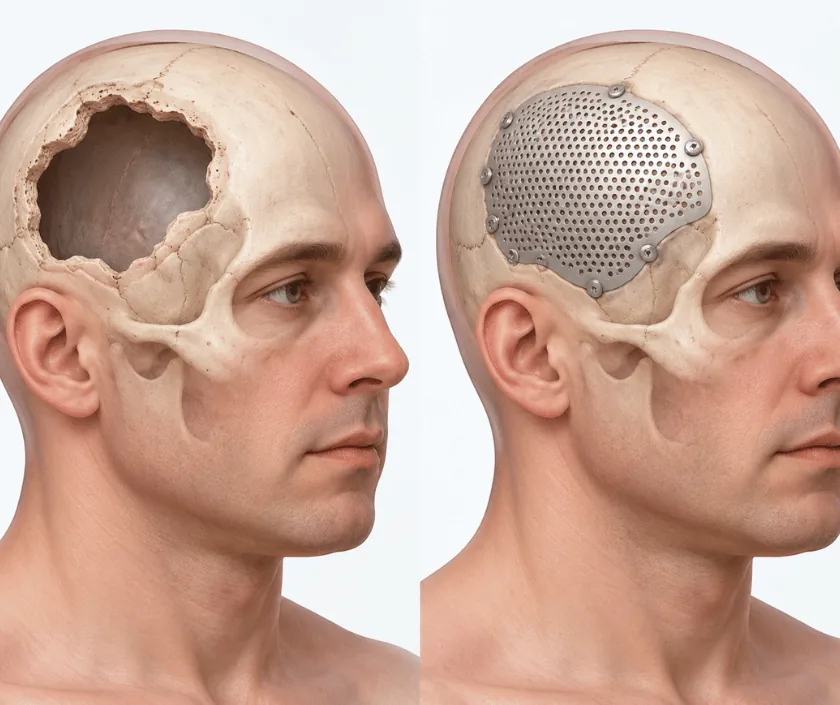
Complex defects use virtual planning and patient specific titanium implants, so the reconstruction is decided before the theatre, not in it.

Published with documented patient consent, generalised for age and sex, in line with advertising norms applicable to medical practitioners in India.
Published bands are for Surat and include surgeon, anaesthesia, theatre and standard stay. Where a band is not published, a written estimate follows examination. Cover under mediclaim and schemes is confirmed before admission.
Ask for an estimate →These are the questions that come up in consultation most often. If yours is not here, send it on WhatsApp and the team will reply, usually the same day.
Ask your question →Most facial fractures are best fixed within about two weeks, before the bone begins to set in the wrong position. Swelling sometimes delays surgery by a few days without harming the result.
Titanium plates are usually left in place permanently. Removal is only considered if a plate becomes infected, prominent or symptomatic, which is uncommon.
Most fixation is done through incisions inside the mouth or hidden in natural creases and the hairline, so visible scarring is minimal for the majority of fractures.
A soft diet is usual for four to six weeks while the bone unites, with a staged return to normal chewing guided by review visits and the fracture pattern.
Fixation after injury is generally payable under mediclaim and accident policies. The approved amount is confirmed with your insurer before planned admission.
The aim is to restore the bony framework to its earlier position so that the face is balanced and the bite works. Swelling hides the result for several weeks, and small differences can remain, which are reviewed once healing settles.
Depending on the pattern of the fracture, the bone is held with small plates and screws, or the teeth are held together for a period, or both. Which method suits your injury is explained with your scans before surgery.