The temporomandibular joint sits just in front of each ear and does something unusual. It hinges and slides at the same time, with a small cushion of cartilage riding between the bones as the jaw opens. Both joints have to work together, because they are joined by one bone. That combination makes the joint remarkably versatile and also rather easy to upset.
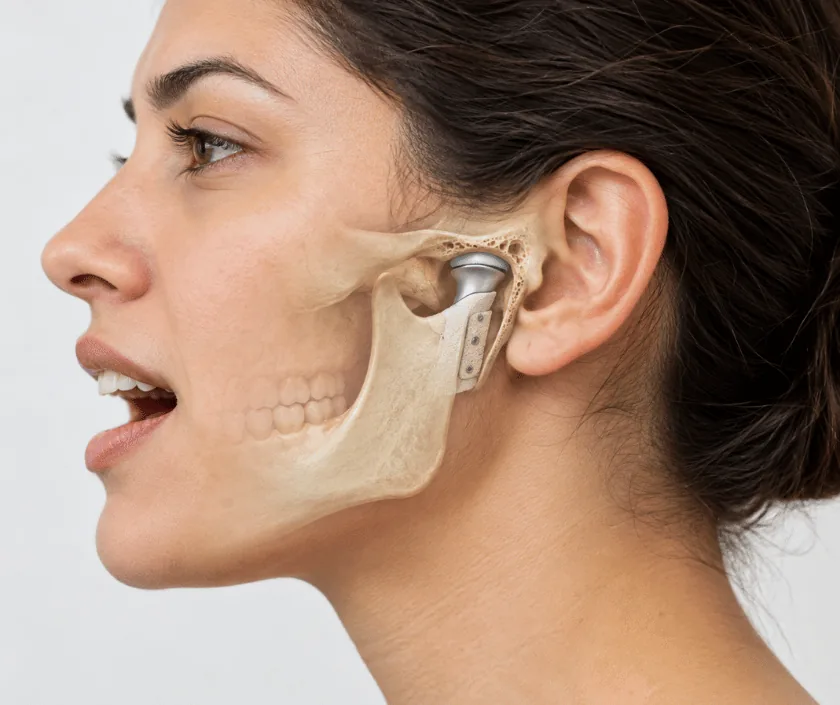
Problems here are common and most are not serious. Clicking without pain often needs nothing more than reassurance. Aching around the ear, difficulty opening wide, or a jaw that locks intermittently usually responds to simple measures long before surgery is considered. Assessment at Elegance Clinic in Surat looks at how far the jaw opens, whether it deviates to one side, the state of the bite and the muscles, and whether habits such as clenching are driving the problem. Scans are used when the pattern suggests damage inside the joint rather than muscle strain.
Sorting these conditions by what is actually at fault, muscle, disc or bone, explains why treatment differs so much between people with similar symptoms.
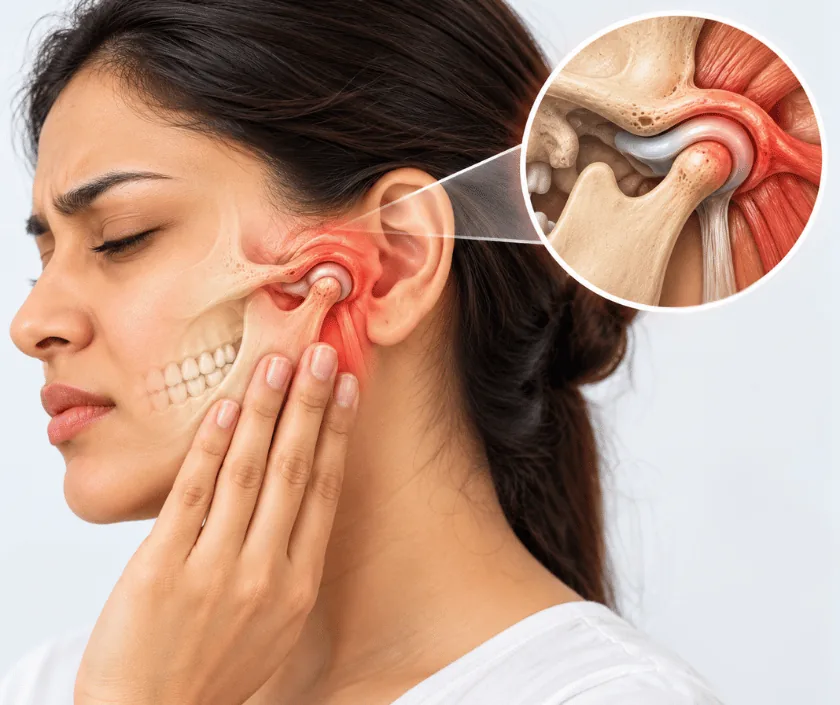
Many people clench in their sleep without knowing it. Worn tooth surfaces and morning tightness are the clues. A custom splint spreads the load and protects the teeth, while working on sleep and stress addresses the reason the clenching is happening.
Guided exercises restore opening, retrain the path the jaw travels and settle overworked muscles. They are done in short sessions several times daily rather than in long bursts. Physiotherapy is often the single most useful part of treatment for jaw joint pain.
Plain images show the bone, while magnetic resonance scanning is the way to see the disc and soft tissue. Scans are ordered when symptoms suggest internal damage or when simple treatment has not helped, rather than at the first visit for everyone.
A blow to the chin can fracture the neck of the jaw joint on one or both sides, and stiffness may follow months later. Anyone with a past jaw injury who develops restricted opening should mention that history at assessment.
Most jaw joint symptoms improve with simple care. These features should be assessed without delay.
← Back to Maxillofacial Trauma & Facial Skeletal Reconstruction
Common questions from patients with clicking, aching or restricted jaws.
Ask your question →Most jaw joint care is inexpensive because it relies on advice, exercises and medication. Custom splints, injections, imaging and keyhole surgery each add cost. Charges are set out step by step, and simpler measures are always tried before the costly ones.
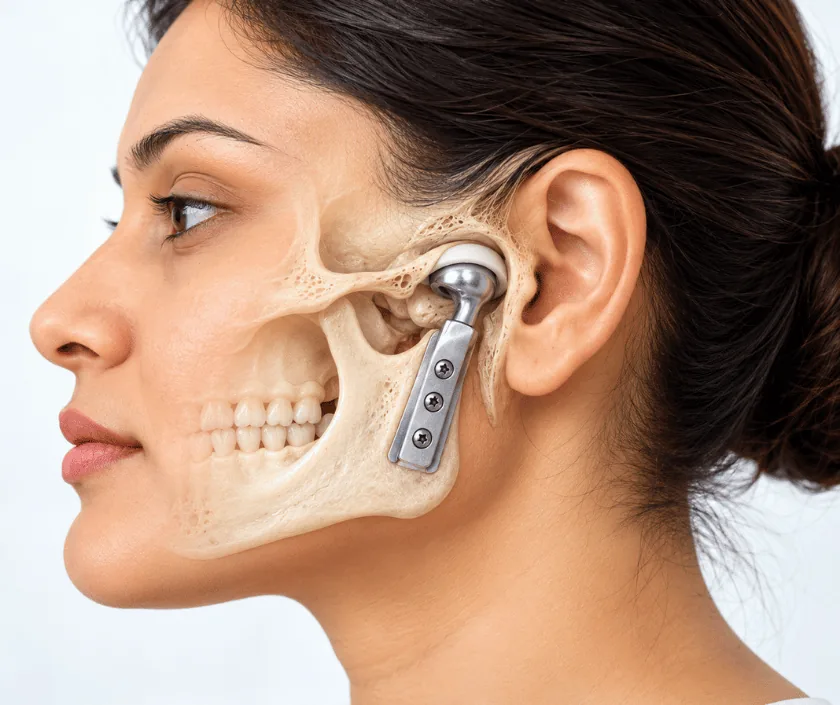
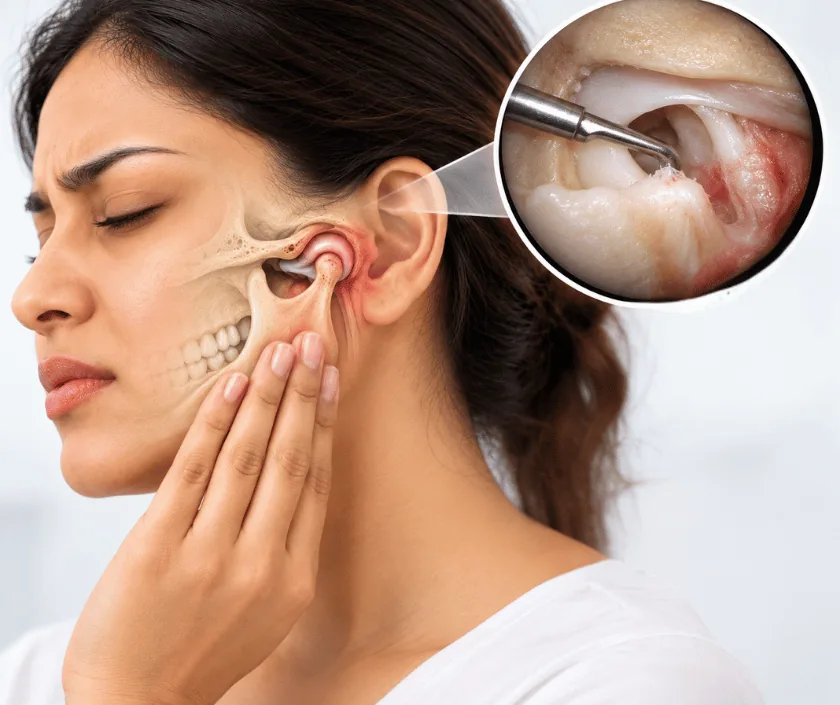
Surgery here is uncommon and reserved for cases that have not settled. Risks include facial nerve weakness, altered bite, bleeding, infection and continuing pain. Because of that, conservative treatment is generally exhausted before any operation is recommended.
Muscle related pain often eases within a few weeks of jaw rest, exercises and a splint. Disc problems can take longer and may fluctuate. Recovery varies between individuals, and steady daily habits usually help more than any single intervention.
Not reliably. Clicking that causes no pain and does not limit opening is generally left alone, and many people find it lessens over time. Treatment aims at comfort and function rather than at silencing the noise itself.
Splints suit people whose pain is worse on waking, who grind their teeth or who have muscle tenderness rather than joint damage. They are made to measure and reviewed regularly, because a poorly fitting splint can alter the bite over time.
A jaw that will not close after wide opening needs same day help, as does an inability to open with fever and swelling. Gradual stiffening is not an emergency but should be assessed within days rather than left for months.
Opening is measured, the joints and muscles are felt while you open and close, the bite and teeth are checked and your sleep and stress patterns are discussed. Imaging is arranged only if the findings suggest it will change the plan.
