In early pregnancy the tube that carries urine closes along the underside of the penis, working from the base towards the tip. When that closure stops short, the opening sits somewhere along the shaft instead of at the end, and the skin and curvature around it are affected too. This is hypospadias, and it is one of the more common differences noticed in newborn boys.
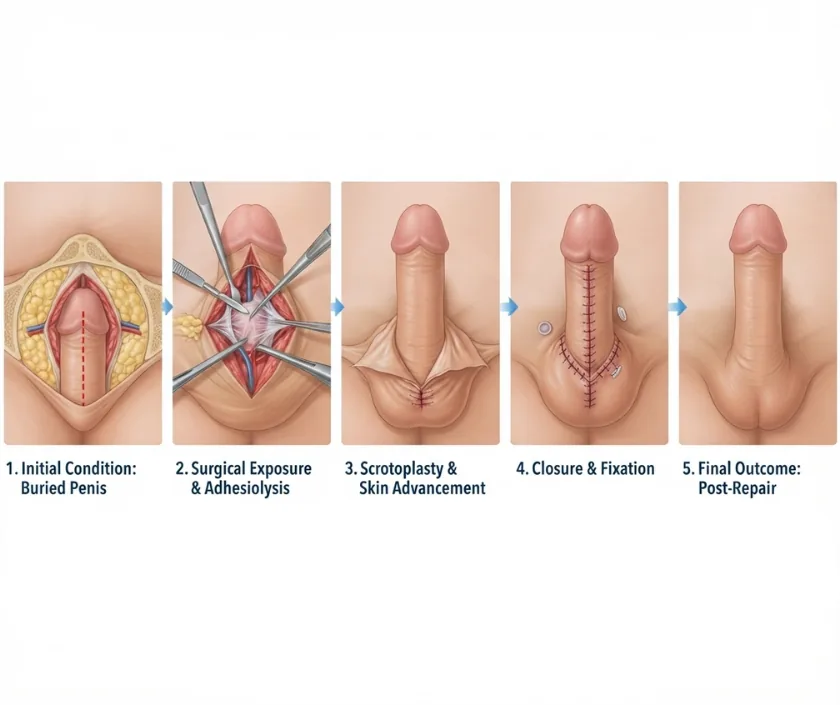
Parents are often told about it at the first bath or during a routine check, then left to search online with very little guidance. What matters early on is simple: nobody should carry out a routine circumcision before a surgeon has looked, because that foreskin is frequently needed for the repair. Beyond that, there is time to plan properly. This page describes the groups that surgeons use, and Elegance Clinic in Surat sets out a timetable after examining your child.
The position of the opening and the degree of bend together decide whether one operation is enough or whether the repair is staged. This grouping is the first thing a surgeon establishes.
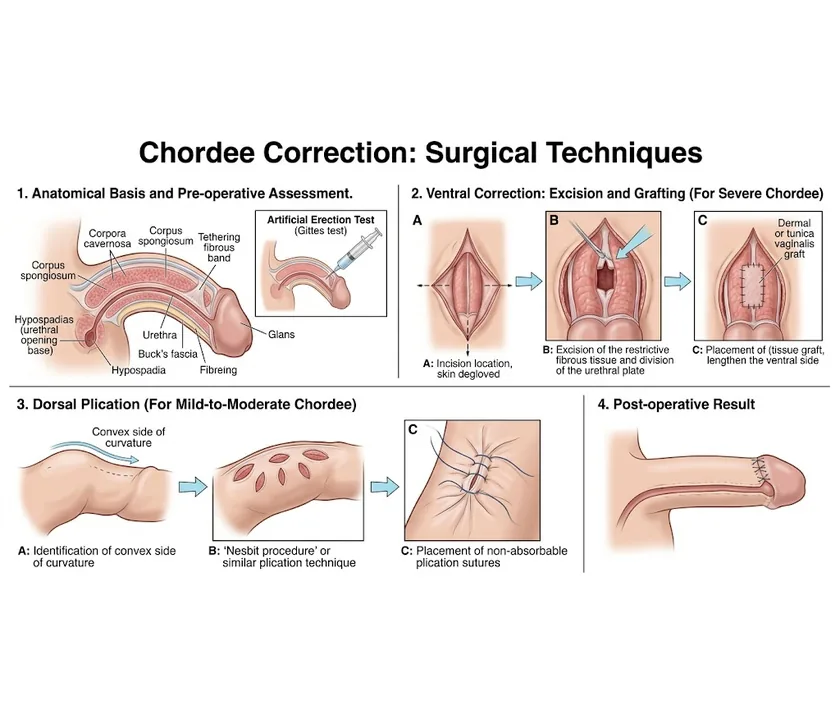
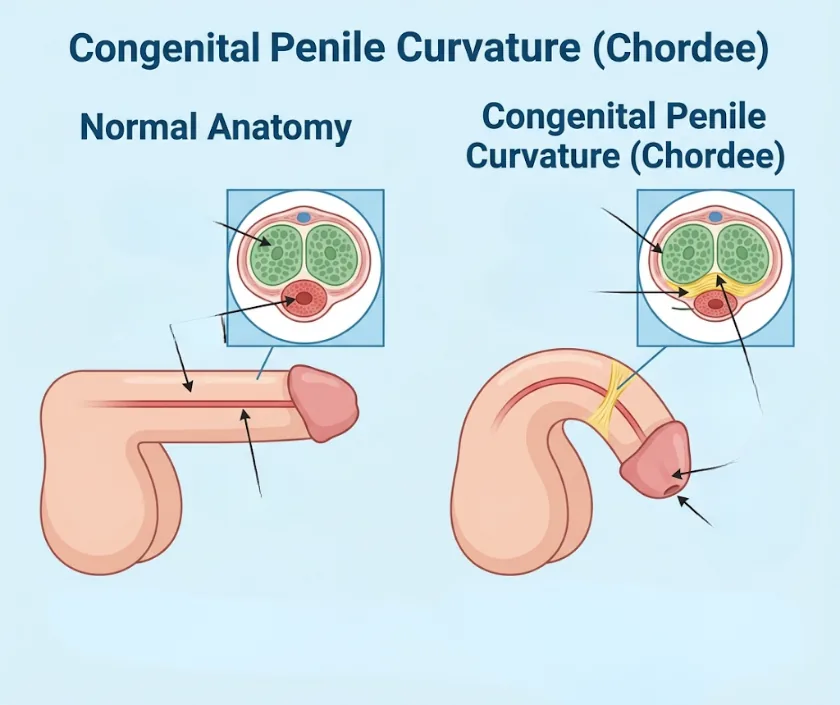
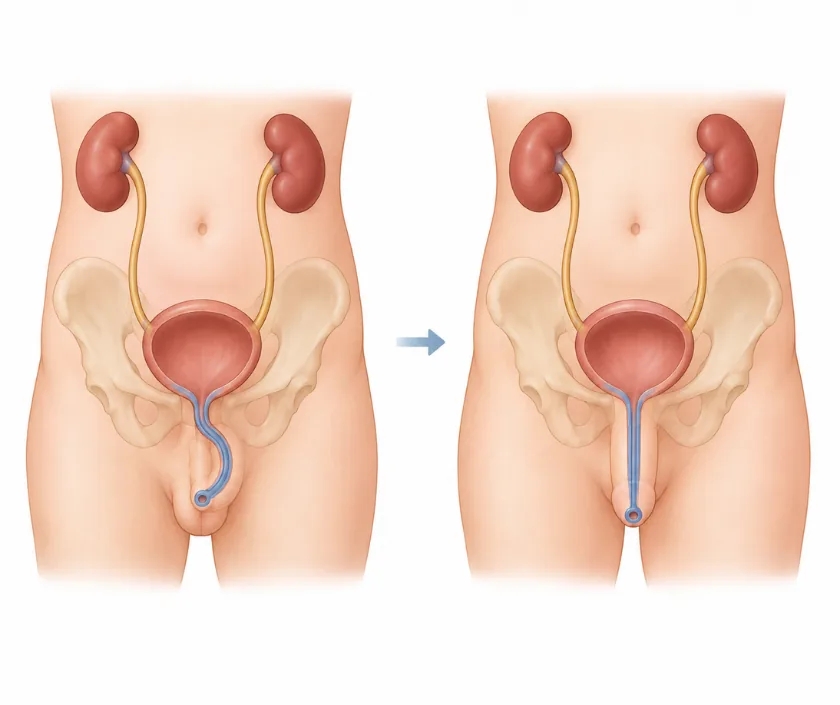
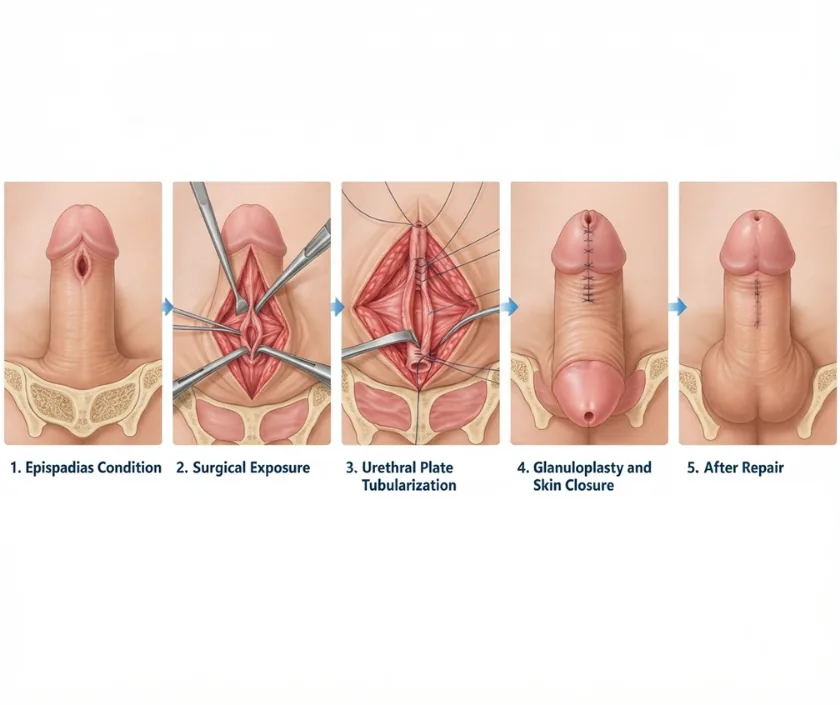

Foreskin tissue is the natural material for rebuilding the missing part of the urinary tube, and once removed it cannot be replaced. Any family planning a religious or routine circumcision should mention a hypospadias diagnosis first. Surgeons commonly complete the circumcision themselves during the repair.
Repair is usually timed for infancy, before a child forms lasting memories and while dressings are easy to manage in nappies. Anaesthesia is safer once a baby has grown steadily. Older boys and adults can still be repaired, though the plan and the discussion change with age.
A fine tube often drains urine while the repair heals, and a dressing stays on for a set period. Your surgeon gives written instructions covering bathing, nappies, medicines and the review date. Follow them exactly and call the clinic rather than adjusting anything at home yourself.
Most boys need only a couple of checks in the first year after surgery. A further review around puberty is worthwhile, because growth can reveal a slight bend or narrowing that was not obvious earlier. Small corrections at that stage are usually straightforward.
Some signs after surgery, and a few before it, should be reported the same day rather than saved for the next visit.
These answers cover the questions raised at almost every consultation. Your own child will be assessed on examination.
Ask your question →The figure depends on whether the correction is single stage or staged, the anaesthesia involved and how long your child stays in hospital. Staged repairs cost more overall because two admissions are needed. A written estimate is provided once the type has been established at examination.
Infants undergo this repair routinely, with anaesthesia given by specialists used to small children and monitoring throughout. Fitness is confirmed beforehand with an examination and tests. Recognised risks, including wound problems and the chance of a leak forming later, are explained before consent.
Nappies and gentle activity resume within days, while the drainage tube and dressing stay for a defined period set by the surgeon. Most boys return to nursery or school after the review appointment. Rough play, cycling and straddle toys wait somewhat longer.
The purpose of repair is a straight shaft and a forward stream from the tip, which most boys achieve. Fertility depends more on the testes than on the repair itself. Where the opening lay far back, a review around puberty checks how everything has developed.
No. Correction is offered well beyond infancy and into adulthood, although explaining what will happen becomes an important part of preparing an older child. Healing remains good. The surgeon may adjust the plan slightly, since tissue behaves differently as a boy grows.
Hypospadias itself is not urgent and there is room to plan. Urgency arises when a boy cannot pass urine, when a testis becomes suddenly painful and swollen, or when a wound after surgery shows signs of infection. Each of those needs assessment the same day.
The examination is brief and gentle, checking the position of the opening, the curvature and where the testes lie. Photographs may be taken for the record with your consent. You will then hear which group applies, how many operations are likely and what the timetable looks like.
