A DIEP flap rebuilds the breast using skin and fat from your lower tummy, leaving the abdominal muscle in place. The tissue is disconnected, moved to the chest and its tiny blood vessels are joined again under a microscope.
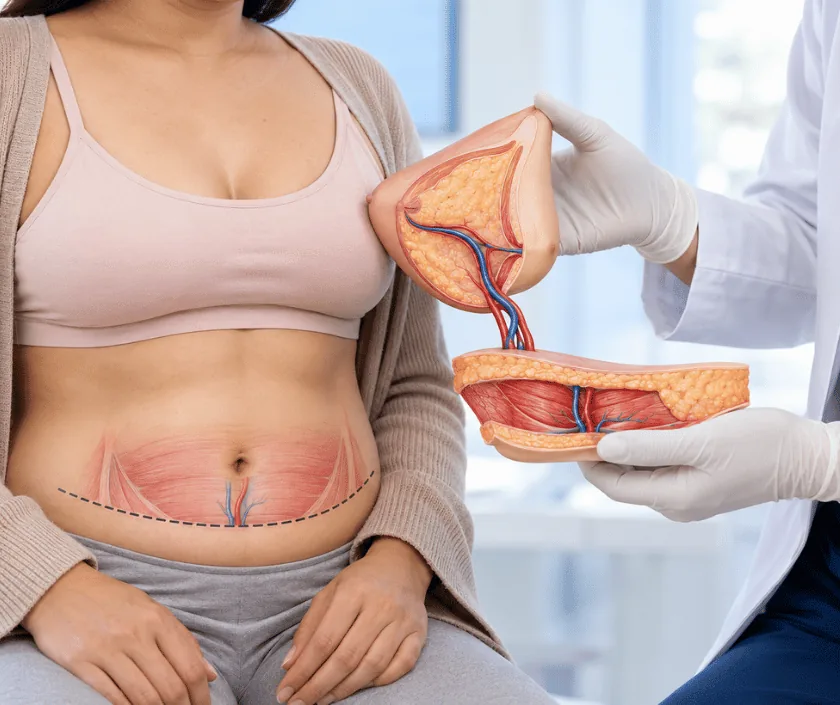
A DIEP flap uses skin and fat from the lower abdomen to rebuild the breast after mastectomy. The abdominal muscle is spared, which helps protect core strength. Blood vessels from the flap are joined to vessels near the ribs using microsurgery. The result is soft and warm, though sensation is reduced and the abdomen carries a long scar.
Most women carry a layer of skin and fat below the navel that can be spared. A DIEP flap borrows that tissue to make a new breast. What separates this method from older abdominal flaps is that the muscle underneath stays where it is. Only the small feeding vessels that pass through the muscle are taken, which helps preserve abdominal strength.
Once the flap is lifted, it is completely disconnected from the body. The surgeon moves it to the chest and joins its artery and vein to vessels near the breastbone or the ribs, working under a microscope. Blood flow through those joins is what keeps the new breast alive, so the flap is watched closely for the first few days.
The abdomen is then closed, giving a flatter tummy and a long scar low across the hips. Your navel is repositioned. It is a big operation with two healing areas, so recovery asks more of you than implant surgery does. In return you gain a breast made of your own living tissue.
A DIEP flap asks for a longer operation and a longer recovery, so fitness and body shape matter as much as preference. There is no rush to decide.
The abdomen and chest are examined and a scan may be used to map the blood vessels beforehand. Options are compared without pressure, and a written estimate follows the assessment.
You are marked while standing so the tummy scar sits low. Fitness checks, blood tests and anaesthetic review are completed, and you are asked to stop smoking well in advance.
Skin and fat are lifted from the lower abdomen while the surgeon traces the feeding vessels through the muscle and preserves the muscle itself. This part takes several hours.
The flap is moved to the chest and its artery and vein are stitched to vessels near the ribs under a microscope. Shape is then built to match the other side.
Both areas are closed with drains in place and the navel is repositioned. Nurses check flap colour, warmth and blood flow frequently through the first nights.
You stay in a closely monitored bed while the flap is checked often. Sitting up and short walks begin early, with the tummy still tight and sore.
Drains are removed as output falls. Walking slightly bent forward is normal at first. Tiredness is significant, and rest matters as much as movement.
Standing upright feels comfortable again for most women. Light work and gentle walking are usually possible, while core exercise and lifting are still held back.
The breast softens and settles into a natural shape. Scars fade slowly. Second stage refinements, nipple reconstruction or balancing the other side are planned from here.
A DIEP breast usually looks and feels closer to natural tissue than any implant can. Even so, it is a rebuilt shape rather than the breast you lost. Sensation is reduced and may take a long time to return partially, if at all. The skin patch on the chest often differs slightly in colour. On the abdomen you keep a long low scar and a repositioned navel. Small refinements at a second sitting are common and expected.
This is major surgery in two areas of the body, and the risks are explained fully before you agree to it.
Two healing areas mean two sets of instructions, and pacing yourself matters more than pushing through.
The abdomen is flattened, but this is cancer reconstruction. The aim is the breast, and the tummy result follows from that.
It feels softer and warmer than an implant, though sensation stays reduced and the breast will not behave like the one you had.
Suitability depends on abdominal tissue, previous surgery, general fitness and smoking. Some women are better served by another method.
Reconstruction is usually staged. A second smaller procedure for shaping, nipple reconstruction or symmetry is normal.
Microsurgical reconstruction depends on careful planning and close monitoring afterwards, and Elegance Clinic in Surat organises both around your cancer treatment rather than separately from it.

DIEP reconstruction is quoted case by case, because operating time is long, the stay is longer than for implant surgery and monitoring needs are higher. After assessment you receive a written estimate covering surgeon and anaesthesia fees, microsurgical theatre time, ward stay, drains, dressings and follow up. Any planned second stage is listed separately, so you can see the whole pathway. Many insurance policies in India cover reconstruction after cancer surgery, and the team helps prepare the claim.
These are the questions that come up most often in consultation. If yours is not here, send it on WhatsApp and the team will reply, usually the same day.
Ask your question →Both use lower abdominal skin and fat. A TRAM flap takes some or all of the straight tummy muscle with it, while a DIEP flap traces the small feeding vessels through the muscle and leaves the muscle behind. That tends to protect tummy wall strength better.
Expect several nights, longer than after implant surgery, because the flap is monitored closely at first and both wounds need care. Discharge happens when you are walking comfortably, eating normally and the flap is settled. The team decides by your progress, not a fixed count.
Yes, and it is often the preferred choice then. Treated chest skin heals poorly and tolerates implants badly, so healthy tissue with its own blood supply usually gives a more comfortable and stable reconstruction over the years that follow.
Sparing the muscle helps a great deal, and most women regain everyday core function. Some notice reduced strength in sit up type movements, and a bulge occasionally develops. Graded physiotherapy through recovery makes a real difference to how the abdomen settles.
A written estimate is prepared after assessment, since theatre time, hospital stay, monitoring and any second stage all affect the total. Reconstruction following cancer surgery is covered by many insurers in India, so share the estimate with your insurance company before admission.
Immediate reconstruction saves skin and means one anaesthetic, but it is not always advisable when radiotherapy is planned. Delayed reconstruction, even years later, gives a very good result too. Timing is decided together with your cancer team, and there is no wrong choice.
The muscle is preserved, so pregnancy after this surgery is generally possible, though the abdominal skin has been tightened and the scar can stretch. Most surgeons suggest completing your family first where the cancer plan allows that flexibility.
Each technique below has its own page explaining how it works and when it is chosen.
Seeing patients from across the city and beyond: read about the practice on the plastic surgeon in Surat page, or check what a written estimate covers on the costs and insurance page.
