An SGAP flap rebuilds the breast using skin and fat from the upper buttock, moved to the chest with microsurgery. It is generally chosen when the abdomen cannot be used, and it leaves a scar across the upper buttock.
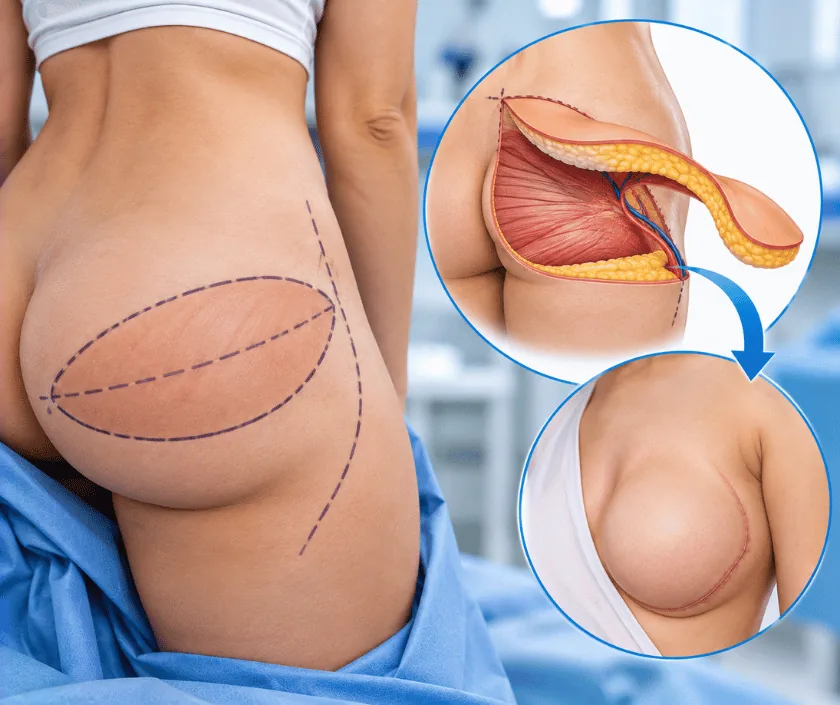
An SGAP flap takes skin and fat from the upper buttock, along with the superior gluteal artery perforator vessels, and transfers it to the chest under a microscope. Muscle is spared. This method is mostly used when abdominal tissue is unavailable. The donor scar sits across the upper buttock, and sitting can feel tender for a while.
When the abdomen cannot supply enough tissue, the buttock becomes a sensible alternative. An SGAP flap borrows skin and fat from the upper part of the buttock, taking with it the small perforating vessels that feed that area. Gluteal muscle underneath is left where it is, so walking and standing are not weakened in the way older gluteal methods risked.
The flap is fully detached and moved to the chest, where its artery and vein are joined to vessels near the ribs under a microscope. Your position on the operating table has to change during the procedure, which lengthens theatre time. Careful monitoring in the first days checks that blood is flowing well through the new joins.
Afterwards the buttock carries a scar running across its upper part, usually placed where underwear will cover it. That side may look slightly flatter than the other. Sitting is tender for a while and cushions help. In exchange you gain a breast built from your own tissue, with no implant involved.
This flap is chosen for particular circumstances rather than as a routine first option, and the decision deserves an unhurried discussion.
The buttock, abdomen and chest are all examined, and a scan may map the perforating vessels. Alternatives are compared openly, and a written estimate follows the assessment.
You are marked while standing so the buttock scar sits where underwear will cover it. Surgery is done under general anaesthesia and takes several hours.
Skin and fat are lifted from the upper buttock while the perforating vessels are traced through the gluteal muscle, which itself stays in place.
Your position is changed and the flap is moved to the chest. Its artery and vein are stitched to vessels near the ribs under a microscope, then the breast is shaped.
Both wounds are closed with drains, and the flap is checked frequently for colour, warmth and blood flow over the first days on the ward.
You are watched closely while the flap settles. Sitting is uncomfortable, so a cushion and frequent short walks help more than lying still.
Drains are removed as output falls. Buttock soreness eases slowly and remains the main limit on activity. Tiredness is normal at this stage.
Sitting is usually far easier and light routine returns. Exercise builds up gradually, guided by how the donor area feels rather than by a calendar.
The breast softens and the buttock scar fades. Any shaping refinement, nipple reconstruction or work on the other breast is planned from here.
The reconstructed breast is soft and warm, though buttock fat is firmer than abdominal fat, so the texture is a little different. It will not match the other side exactly and sensation is reduced. On the buttock you keep a scar and often some flattening or a slight difference between the two sides. Sitting comfort returns over weeks. Small refinements at a second procedure are common and planned rather than a sign of failure.
Microsurgery and a buttock donor site each bring their own risks, and these are explained fully in advance.
The buttock wound is the part that limits daily life at first, so simple positioning habits help a great deal.
Some flattening or a difference between sides is common, but the muscle is preserved and most women find clothing hides the change.
It is generally used when the abdomen is unsuitable or already used, since abdominal flaps are usually simpler to perform.
Gluteal muscle stays in place. Walking and standing are not usually affected once the wound has healed.
Sensation in the reconstructed breast stays reduced whichever tissue is used, and that is worth expecting from the outset.
Elegance Clinic in Surat takes time over the choice of donor site, because the right answer depends on your body, your previous surgery and what you are prepared to trade.

Buttock based flap reconstruction is quoted case by case, since theatre time is long, position is changed during surgery and the hospital stay varies with how the flap settles. After assessment you receive a written estimate listing surgeon and anaesthesia fees, theatre, ward stay, drains, dressings and follow up. Any planned second stage appears separately. Reconstruction following cancer surgery attracts cover under many Indian insurance policies, and the team assists with the paperwork.
These are the questions that come up most often in consultation. If yours is not here, send it on WhatsApp and the team will reply, usually the same day.
Ask your question →The abdomen is normally the first choice. When it is too slim, already used for the other breast, or scarred by previous operations, the upper buttock offers another good source of skin and fat with reliable blood vessels.
The scar runs across the upper buttock and is marked while you stand, so underwear and swimwear usually cover it. It fades over many months but stays visible, and some difference in buttock shape between the two sides is common.
Sitting is tender for the first weeks and a soft cushion helps. Most women find it eases steadily and becomes easy again well before the scar has finished fading. Long journeys are best postponed until sitting feels comfortable.
Slightly. Buttock fat is firmer than tummy fat, so the reconstructed breast can feel a little denser. Both feel softer and warmer than an implant, and both leave the breast with reduced sensation compared with before.
A written estimate is given after assessment, because theatre time is long, positioning is changed during surgery and hospital stay varies. Reconstruction after cancer surgery attracts insurance cover under many Indian policies, so submit the estimate to your insurer early.
Expect several nights, so the flap can be monitored closely and both wounds cared for. Discharge depends on the flap settling, comfortable walking and controlled pain, so the team judges readiness rather than following a fixed number of days.
Absolutely. Choosing not to reconstruct, or using an external prosthesis, is a valid decision that many women are content with. Consultations exist to give you information, not to move you towards an operation you do not want.
Each technique below has its own page explaining how it works and when it is chosen.
Seeing patients from across the city and beyond: read about the practice on the plastic surgeon in Surat page, or check what a written estimate covers on the costs and insurance page.
