A TUG flap rebuilds the breast using skin, fat and a strip of the gracilis muscle from the inner thigh. It suits smaller reconstructions and women whose abdomen cannot be used, and it leaves a scar in the thigh crease.
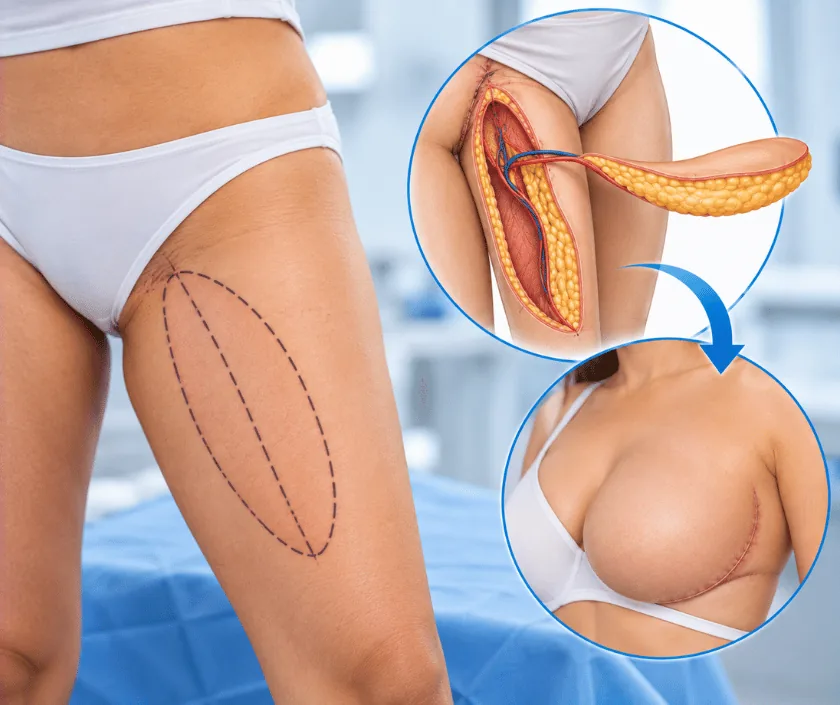
A TUG flap uses skin, fat and the gracilis muscle from the upper inner thigh to rebuild the breast. The tissue is transferred to the chest with microsurgery. It usually suits smaller or moderate breast reconstruction and is chosen when the abdomen is unsuitable. The donor scar sits in the crease at the top of the thigh.
The gracilis is a slim strap muscle running down the inside of the thigh. It helps bring the leg inwards, but several other muscles share that job, so a strip of it can be borrowed. A TUG flap lifts that muscle together with the skin and fat above it, and the whole block is used to rebuild the breast.
Because the flap is fully detached, its artery and vein have to be joined to vessels near the ribs under a microscope. Blood flow through those joins keeps the tissue alive, which is why nurses check the flap so often in the first days. Theatre time is long, and the legs are positioned carefully to allow access.
Inner thigh tissue is limited in volume. That makes this flap a natural fit for smaller reconstructions, sometimes for both sides at once, rather than for building a large breast. In return the scar tucks into the thigh crease, where clothing and underwear normally hide it.
This flap works best for particular body shapes and breast sizes, so the discussion begins with what is realistically achievable for you.
The thighs and chest are examined and the likely volume is discussed honestly. A scan may be used to check the blood vessels, and a written estimate follows the assessment.
You are marked while standing so the scar sits in the thigh crease. Surgery is under general anaesthesia, with the legs positioned to give the surgeon access.
Skin, fat and a strip of gracilis muscle are lifted from the upper inner thigh while the feeding vessels are protected. The thigh wound is then closed.
The flap is carried to the chest and its artery and vein are joined to vessels near the ribs under a microscope. Tissue is then shaped into a breast mound.
Drains are placed at both sites and the wounds are closed. Flap colour, warmth and blood flow are checked regularly through the first days.
The thigh feels tight and sore, and moving in bed takes effort. Nurses help you stand and walk short distances while the flap is monitored.
Drains come out as fluid settles. Walking improves steadily, though the groin crease can rub and needs care. Tiredness is expected and normal.
Most women walk comfortably and return to a light routine. Swelling in the thigh continues to settle, and exercise is added gradually.
The breast softens and the thigh scar fades. Any refinement, nipple reconstruction or balancing of the other side is planned from this point.
A TUG flap gives a soft breast of small to moderate size. If you want more volume than the thigh can supply, this is not the right method, and it is better to know that early. Sensation in the reconstructed breast is reduced. The thigh keeps a scar in the crease, some tightness and often altered feeling around it. Contour of the inner thigh may differ slightly between the two legs. Second stage refinement is usual.
The thigh crease is a demanding place to heal, and microsurgery carries its own risks. Both are set out before you decide.
The groin crease needs particular attention, since it moves constantly and stays warm.
Other muscles share the same role, and most women walk and climb stairs normally once healing is complete.
Inner thigh tissue is limited, so this method suits smaller and moderate reconstructions rather than large ones.
It is placed in the crease at the top of the thigh, where underwear generally covers it, though it does remain visible up close.
Most reconstructions are staged, with a smaller second procedure for shaping, nipple reconstruction or symmetry.
Elegance Clinic in Surat matches the donor site to your body and your goals, and says plainly when a method cannot deliver the size you are hoping for.

Thigh based flap reconstruction is quoted case by case, because theatre time, hospital stay and whether both sides are rebuilt all change the total. After assessment you receive a written estimate listing surgeon and anaesthesia fees, theatre, ward stay, drains, dressings and follow up visits. Any planned second stage is shown separately, so the whole pathway is visible. Reconstruction after cancer surgery is covered by many insurance policies in India, and the team assists with the claim.
These are the questions that come up most often in consultation. If yours is not here, send it on WhatsApp and the team will reply, usually the same day.
Ask your question →The gracilis is a slim muscle and several others share its work, so most women walk, climb stairs and exercise normally once healing is complete. Tightness and swelling in the thigh are common early on and settle with time and physiotherapy.
Inner thigh tissue is limited, so a TUG flap suits small and moderate sized breasts. If you want more volume, the abdomen or another method is usually a better fit. Your surgeon should tell you plainly what your thigh can supply.
The scar sits in the crease at the top of the inner thigh, running towards the back. Underwear and most clothing cover it. Like all scars it fades over many months without disappearing, and it can widen a little.
That area moves constantly and stays warm, so healing needs care. Keeping the wound clean and dry, wearing the garment provided and avoiding wide leg movements early all help. Smoking makes wound problems in this location considerably more likely.
A written estimate follows assessment, since theatre time, hospital stay and whether one or both sides are rebuilt all change the figure. Reconstruction after cancer surgery is covered by many Indian insurers, so share the estimate with your insurance company before admission.
Yes. One flap can be taken from each inner thigh, which also keeps the legs symmetrical. It makes for a long operation, so fitness is assessed carefully and the plan is only made once you have had time to consider it.
There is no deadline. Some women reconstruct at the time of mastectomy, others years afterwards, and some choose not to at all. Cancer treatment comes first, and the reconstruction conversation can wait until you feel ready to have it.
Each technique below has its own page explaining how it works and when it is chosen.
Seeing patients from across the city and beyond: read about the practice on the plastic surgeon in Surat page, or check what a written estimate covers on the costs and insurance page.
