A hole or weak area in the chest wall can follow cancer surgery, deep infection or an old radiation injury. Reconstruction rebuilds the layers that protect the lungs and heart, so breathing feels steadier and the wound can finally settle.
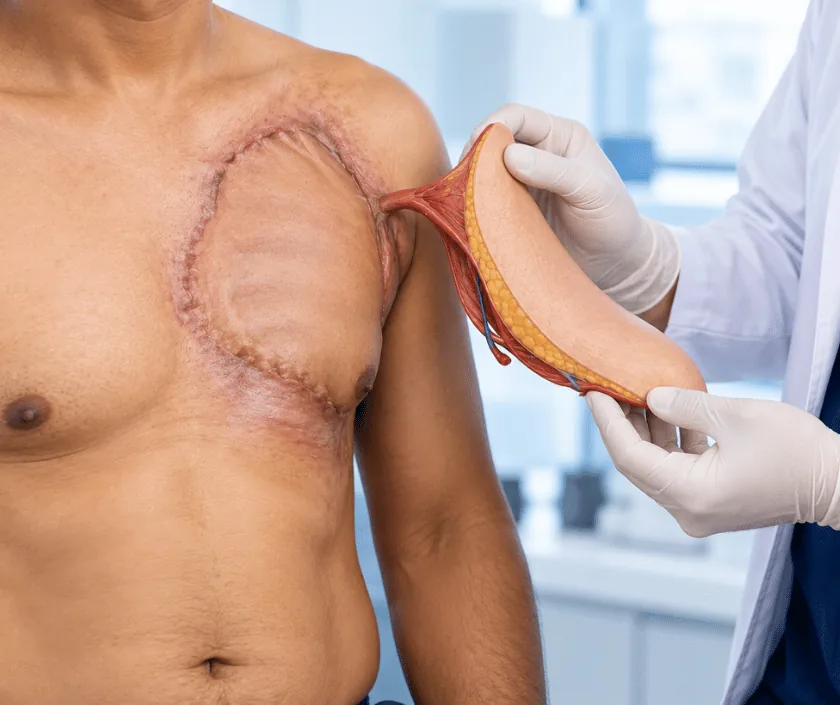
Chest wall defect reconstruction closes a gap in the bony and soft tissue layers of the chest. Surgeons remove unhealthy tissue, support the skeleton if it has become unstable, and bring in healthy muscle or skin to cover the area. The aim is a sealed, protected chest that breathes well and heals without repeated wound problems.
The chest wall is built in layers. Ribs and the breastbone form the frame, muscle and fat sit over them, and skin covers everything. When a tumour is removed, when infection eats into the tissue, or when old radiation treatment thins the skin, one or more of those layers can be lost. Reconstruction is the operation that puts them back.
Planning starts with imaging and a careful look at the wound. Your surgeon works out how much bone is missing, whether the gap will make the chest unstable, and how healthy the surrounding skin is. Small defects may need soft tissue cover alone. Larger ones often need a firm supporting layer, such as a mesh or a plate, before muscle is laid over it.
Soft tissue cover usually comes from a flap, which is living tissue moved with its own blood supply. Common choices include the latissimus dorsi from the back, the pectoralis major from the front of the chest, and the rectus abdominis from the upper abdomen. Because a flap brings fresh circulation, it copes far better with irradiated or infected ground than a skin graft alone.
Reconstruction suits people who need a chest wall gap closed properly and who are well enough for a planned operation. An honest conversation about fitness comes first.
You are examined and scanned so the team can measure the gap, check the lungs and heart, and choose a flap. Blood tests and a review of your current medicines are usual at this stage.
Infected bone, dead muscle and old irradiated skin are cleared until only healthy tissue remains. This step matters, because a reconstruction laid over unhealthy ground tends to fail and need doing again.
If several ribs are missing, mesh or a plate is fixed to sound rib ends on either side. Support of this kind stops the chest sinking inward with every breath and helps the lungs work normally.
A muscle flap is raised, moved into the defect and stitched in with its blood supply intact. Skin is closed over it, and a skin graft is added when the surface area is large.
Small drains remove fluid for a few days. Physiotherapy starts early, because deep breathing and gentle movement protect the lungs and help the repair settle quietly.
You are watched closely, often in a high dependency area at first. Pain relief, oxygen if needed and breathing exercises are the priorities, and drains usually stay in during this period.
Most people move about the ward and go home once the wound is dry and breathing is comfortable. Dressings are checked, and stitches or clips come out as advised.
Everyday activity usually feels easier. Lifting, driving and a return to work are discussed at review, since the timing depends on the size of the repair and on your job.
Swelling settles and scars soften slowly. Follow up continues if cancer treatment or radiotherapy is planned, and the chest is checked for stability and comfort.
Most people gain a closed, protected chest and a clear improvement in comfort. Scars remain visible, and the shape of the chest is rarely identical to before, especially where ribs have been removed. Tightness or numbness around the flap is common and often eases slowly. Recovery can vary with the size of the defect, past radiation and general health, so your surgeon will describe what is likely in your own case.
Every operation carries risk, and chest wall surgery is major surgery. Knowing the possibilities helps you spot trouble early and ask for help.
Simple habits protect the repair during the first weeks. Ask the ward team to write down anything you are unsure about before you leave.
Grafts need a healthy bed. Over exposed bone, mesh or irradiated tissue they usually fail, which is why a flap with its own blood supply is chosen instead.
Closing the chest well often allows chemotherapy or radiotherapy to start sooner, because there is no longer an open wound to worry about.
Shoulder strength usually recovers with physiotherapy, and most people return to normal daily tasks, though heavy overhead work may feel different for a while.
Skin can close before the deeper layers are sound. Reviews therefore continue for months so that any early problem is picked up.
Complex chest work needs time and planning, so consultations here are unhurried and the plan is explained in plain language, with a written estimate given before admission.

Chest wall reconstruction is planned around your scans, the size of the defect and the flap chosen, so a single price cannot be quoted before assessment. After the consultation you receive a written estimate covering surgeon and anaesthesia fees, any mesh or plate, the hospital stay and follow up visits. Where care is linked to cancer treatment or an insurance claim, the team will help with the paperwork.
These are the questions that come up most often in consultation. If yours is not here, send it on WhatsApp and the team will reply, usually the same day.
Ask your question →A written estimate is prepared after your assessment, because the price depends on the size of the defect, whether mesh or a plate is needed, the flap chosen and the length of hospital stay. Each part is listed clearly before admission.
Radiotherapy leaves tissue thinner and slower to heal, so a flap with its own blood supply is usually preferred. Extra checks are made beforehand and a longer healing time is planned. Overall fitness is reviewed carefully first.
Many patients stay for several days, sometimes longer when drains, breathing support or intensive wound care are needed. Discharge follows once pain is controlled, breathing feels comfortable and the wound looks settled. Recovery can vary between people.
The aim is a stable, closed chest rather than an unchanged shape. Scars remain, and contours can differ where ribs or muscle were removed. Many patients find ordinary clothing hides the difference well once swelling has settled.
Someone still smoking, with uncontrolled diabetes, an untreated infection elsewhere or very limited lung function may need those issues addressed first. Widespread cancer sometimes makes comfort focused care the wiser choice, and that is discussed openly.
Timing depends on the cause. An infected, unstable chest usually needs treatment quickly, while planned tumour surgery is scheduled alongside the cancer team. Bring your scans and reports to the first visit so timing can be advised.
You are examined, your scans and reports are reviewed, and the likely flap options are explained with drawings. Questions about work, family support and recovery are welcome. A written estimate follows once the plan is agreed.
Each technique below has its own page explaining how it works and when it is chosen.
Seeing patients from across the city and beyond: read about the practice on the plastic surgeon in Surat page, or check what a written estimate covers on the costs and insurance page.
