Some children still sound nasal after a palate repair because the palate cannot seal against the back of the throat. This page explains how speech surgery for velopharyngeal insufficiency is assessed in Surat, what it involves and what it costs.
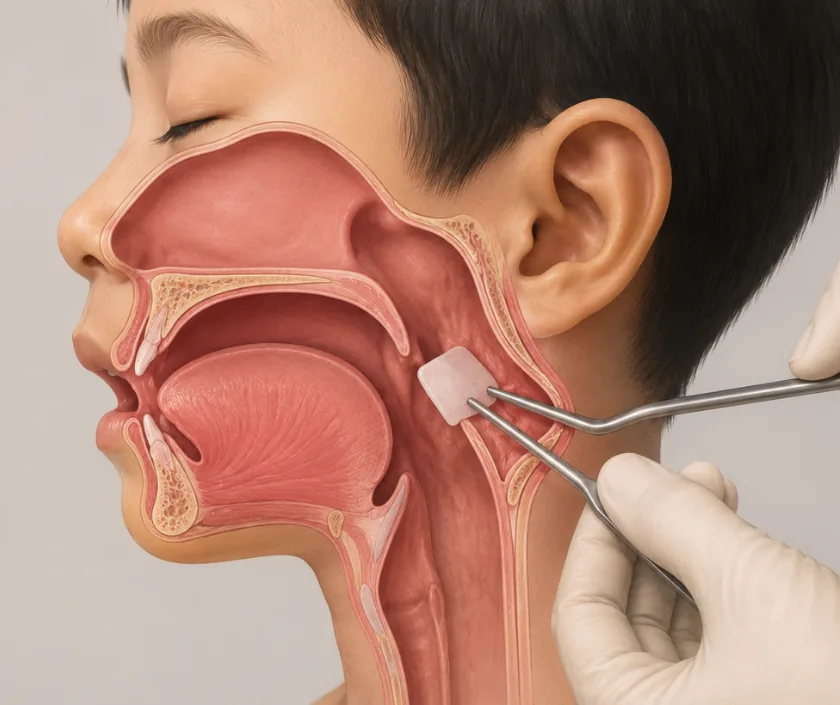
Velopharyngeal insufficiency means the soft palate does not close off the nose during speech, so the voice sounds nasal and air escapes through the nostrils. Surgery narrows that gap, either by rebuilding the palate muscles, adding a flap of tissue from the back wall of the throat or bringing the side walls together. Speech therapy continues afterwards.
Speech needs the soft palate to lift and meet the back and side walls of the throat for most sounds. When that seal is incomplete, air leaks into the nose. Listeners hear a nasal tone, some consonants lose their punch, and the child may snort quietly on certain words.
The problem is common after cleft palate repair, though it also occurs with a hidden submucous cleft or after adenoid tissue shrinks. Assessment comes before any operation. A speech therapist records and rates the speech, and a camera passed gently through the nose or a moving X ray study shows exactly where and how far the gap stays open.
Surgery is then chosen to match the gap seen. Rebuilding the palate muscles suits a short palate that moves poorly, a flap from the back wall suits a wide gap with good side wall movement, and narrowing the side walls suits other patterns. Therapy afterwards teaches the child to use the new seal.
Surgery suits a child whose speech assessment shows the palate physically cannot close the gap, rather than a child whose speech habits can be changed with therapy.
A speech therapist listens, records and rates the speech in detail. This tells the team whether the problem is a true gap in the seal or a learned habit that therapy alone can change.
A fine camera passed through the nose, or a moving X ray study, shows how the palate and throat walls meet during speech. The size and shape of the gap decide which operation suits.
Muscle repositioning, a flap raised from the back wall of the throat, or bringing the side walls together are the usual choices. Each is matched to the pattern seen on the study.
Under general anaesthesia a mouth prop gives the surgeon a clear view. Tissue is raised and stitched to narrow the opening while leaving enough space for breathing through the nose.
Breathing is watched closely on the first night, because the throat is swollen and the opening is now smaller. Fluids start early and soft feeds follow once your child is comfortable.
Your child stays in hospital while breathing, pain and fluid intake are monitored. Snoring is common at first. Cold fluids and soft food are offered, and straws are usually avoided.
Most children are home and eating soft food. School restarts around the second week. Hard, sharp or very hot food is kept away so the healing tissue is not disturbed.
Healing is checked and normal diet is usually allowed. Speech therapy restarts in earnest now, since the child has to learn to use the new seal.
Speech is rated again and compared with the recording made before surgery. Snoring is reviewed too, and a small adjustment is occasionally advised.
Most children sound noticeably clearer, though speech rarely changes overnight. The operation closes the gap, but habits built over years take months of therapy to change, and that stage does most of the remaining work. Some children keep a trace of nasal quality. Snoring is common in the first weeks and usually settles, although breathing during sleep is checked afterwards. A small number need a further adjustment if the gap was not fully closed.
This operation changes the airway at the back of the nose as well as the speech, so both need watching. Parents should hear about the breathing risk clearly before consent.
The throat is sore for a week or two and food needs to stay soft. Watch breathing at night in the early weeks.
It closes the gap. Changing the speech patterns built up over years takes months of therapy afterwards.
Therapy helps a great deal and is always tried, but it cannot close a physical gap that the palate is unable to reach across.
It can also occur in children who never had a cleft, including after tonsil or adenoid surgery.
Assessment tells the difference. If air is escaping through the nose, the cause is physical and needs proper testing.
The right operation here depends entirely on how the palate moves, so we base the plan on assessment with the speech team rather than on the sound of the voice alone.

Cost is shaped by which operation is chosen, the anaesthetic time, the length of stay and the assessment studies done beforehand. Camera examination and speech recordings are often billed separately from the surgery itself. Mediclaim frequently covers speech surgery after a cleft repair, and staff help with pre authorisation. A written estimate follows the assessment.
These are the questions that come up most often in consultation. If yours is not here, send it on WhatsApp and the team will reply, usually the same day.
Ask your question →The published band runs from about Rs 55,000 to Rs 95,000. Which operation is chosen, the anaesthetic time and the hospital stay decide where a case falls. Mediclaim often applies after a cleft repair, so bring the policy papers along.
It is planned work done by teams used to palate surgery. Breathing is the main thing watched, since the opening at the back of the nose becomes smaller. Monitoring on the first night, careful sizing during surgery and close follow up all reduce that risk.
Most children stay one or two nights and eat soft food for a few weeks. School usually restarts around the second week. Snoring in the early period is common and normally settles as swelling goes down.
Many children lose the nasal tone once the seal is closed and therapy has taught them to use it. Speech rarely changes overnight, and months of therapy are usual. A few need a further adjustment when the gap has not closed enough.
A fair trial of speech therapy comes first, because some nasal speech is a habit rather than a gap. When recordings and a camera study show a real opening that therapy cannot close, surgery is discussed. School age is a common time.
Yes, adults with nasal speech after an old palate repair can be assessed and treated. Results depend on how long the speech pattern has been in place, since habits take longer to change. Therapy after surgery matters just as much at that age.
A speech therapist rates the speech and records it, and a fine camera may be passed through the nose to watch the palate move. You will hear which operation fits the pattern seen, what therapy follows and the written estimate.
Seeing patients from across the city and beyond: read about the practice on the plastic surgeon in Surat page, or check what a written estimate covers on the costs and insurance page.
