A diabetic foot can lose skin, soft tissue and even bone shape long before it starts to hurt. Reconstruction rebuilds that damaged foot so the wound closes, the shape supports walking, and the limb stays.
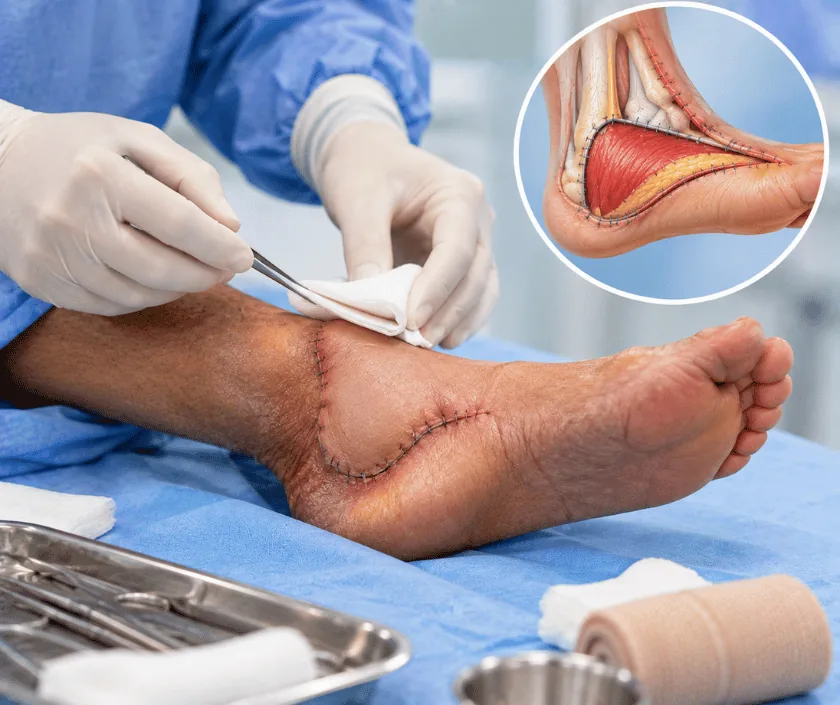
Diabetic foot reconstruction is surgery that rebuilds a damaged foot rather than simply dressing it. Dead tissue and infected bone are removed, blood supply is checked, and healthy skin, muscle or flap tissue is brought in to cover the gap. Pressure points are corrected too, so the repaired foot can take walking again.
Diabetes damages three things in the foot at once. Nerves become dull, so an injury goes unnoticed. Small arteries narrow, so healing slows. Infection then meets a weaker defence. Put those together and a small breakdown can turn into a deep wound that reaches tendon or bone. Reconstruction begins where dressings stop working.
Surgery starts with a clean out. Dead skin, unhealthy fat and infected bone are removed until only living tissue is left. That step alone often changes the shape of the foot, so the plan then moves on to cover. A shallow area may need only a skin graft. A deeper hole over tendon or bone usually needs a flap, which is living tissue with its own blood supply moved from nearby or from another part of the body.
Shape matters as much as cover. If the same spot carries all the load again, the wound simply returns. So a bone that presses, a tight tendon or a clawed toe may be corrected in the same sitting or soon afterwards.
Reconstruction suits a foot that is worth rebuilding and a person who can support the healing that follows. That judgement is made after examining circulation, infection and the shape of the foot.
Pulses are felt, circulation is tested and scans are ordered when needed. Swabs and blood tests show which infection is present. Only then is a reconstruction plan discussed with you and your family.
Under anaesthesia, dead skin, unhealthy fat and infected bone are removed until living tissue bleeds freely. This may be repeated more than once before the foot is ready to be closed.
Depth of the gap decides the method. A graft suits a shallow bed, while exposed tendon or bone usually needs a flap that brings its own blood supply along with it.
Pressure points are corrected within the same plan. A prominent bone may be trimmed, a tight tendon released or a toe straightened so that load spreads evenly across the sole.
Afterwards the foot is splinted or offloaded and kept away from weight while the repair takes. Dressings, sugar control and wound review continue through the early weeks.
Comfort, sugar control and circulation to the repair are watched closely. The foot stays elevated and off the ground, and the first dressing check happens in this window.
Stitches settle and any graft or flap is inspected. Weight stays off the repaired area, so a walker, wheelchair or offloading device is used to move about.
Most repairs have taken by now. Loading returns in stages under guidance, often with a protective shoe or a total contact cast, and walking distance grows slowly.
Skin toughens, swelling settles and footwear is fitted properly. Regular foot checks continue for life, because the same risk factors remain after the wound has closed.
A rebuilt foot is a working foot rather than a cosmetic one. Expect a healed surface, a scar, and a shape that has been altered on purpose to protect it. Sensation usually does not return, because the nerve damage that started the problem remains. Many people walk comfortably again in suitable footwear. Recovery can vary, and a foot that has been damaged for a long time may need more than one stage.
Every foot reconstruction carries real risk, and the same diabetes that caused the wound also affects healing. These points are discussed openly before you decide anything.
Most of the healing happens at home, and what you do there matters as much as the surgery itself.
Nerve damage removes the warning. Some of the most advanced diabetic foot problems cause no pain at all.
A wound over exposed tendon or bone rarely closes with dressings. Surgery gives it the living tissue it needs.
Reconstruction exists precisely to avoid that. Many feet are rebuilt and kept when they are treated in time.
Nerve and vessel damage stays behind. Ongoing checks and correct footwear are what prevent the next breakdown.
Elegance Clinic in Surat treats the diabetic foot as a whole limb problem, not a dressing problem. Dr. Ashutosh Shah plans reconstruction alongside physicians and vascular colleagues, so a foot is rebuilt only when it can heal.

Cost depends on how much tissue must be removed, whether bone is involved and which method of cover is used. A single stage graft sits at the lower end, while a flap with a longer hospital stay sits higher. Most reconstructive admissions of this kind are claimable under mediclaim, and the team helps with the pre authorisation paperwork.
These are the questions that come up most often in consultation. If yours is not here, send it on WhatsApp and the team will reply, usually the same day.
Ask your question →Cost varies with the depth of the damage, whether infected bone must be removed and the type of cover chosen. A written estimate is given after examination and tests. Many admissions of this type are covered by mediclaim, and the paperwork is handled with you.
Surgery goes better once sugar is steadier, so control is improved first whenever time allows. If infection is spreading, cleaning cannot wait, and sugar is corrected alongside it. Your physician and the surgical team work together throughout the admission.
Weight is usually kept off the repaired area for several weeks while the tissue takes. Loading is then added in stages, often with a protective shoe or cast. Recovery can vary with the size of the repair and the state of circulation.
Sensation rarely returns, because the nerve damage that allowed the wound to form is separate from the wound itself. A foot can look and function well while still feeling very little. Daily visual checks therefore continue for life.
Rebuilding is offered when enough living tissue and blood supply remain to support healing, and many limbs are saved this way. Where circulation is very poor or destruction is extensive, a limited amputation may protect health better, and that is discussed honestly.
Come as soon as a wound stops improving, starts to smell, widens, or exposes deeper tissue. Sudden swelling, warmth or a rise in sugar without cause also needs same day review. Waiting usually means a larger operation later on.
Both feet are examined, pulses and sensation are tested, and any wound is measured and photographed. Blood tests, swabs and imaging are arranged as needed. Findings, options and a written estimate are then discussed with you and your family.
Each technique below has its own page explaining how it works and when it is chosen.
Seeing patients from across the city and beyond: read about the practice on the plastic surgeon in Surat page, or check what a written estimate covers on the costs and insurance page.
