Platinum is denser than gold, so the same helpful weight can be made in a thinner implant. That lower profile is the main reason it is chosen for eyelids with thin skin or a previous problem with a visible weight.
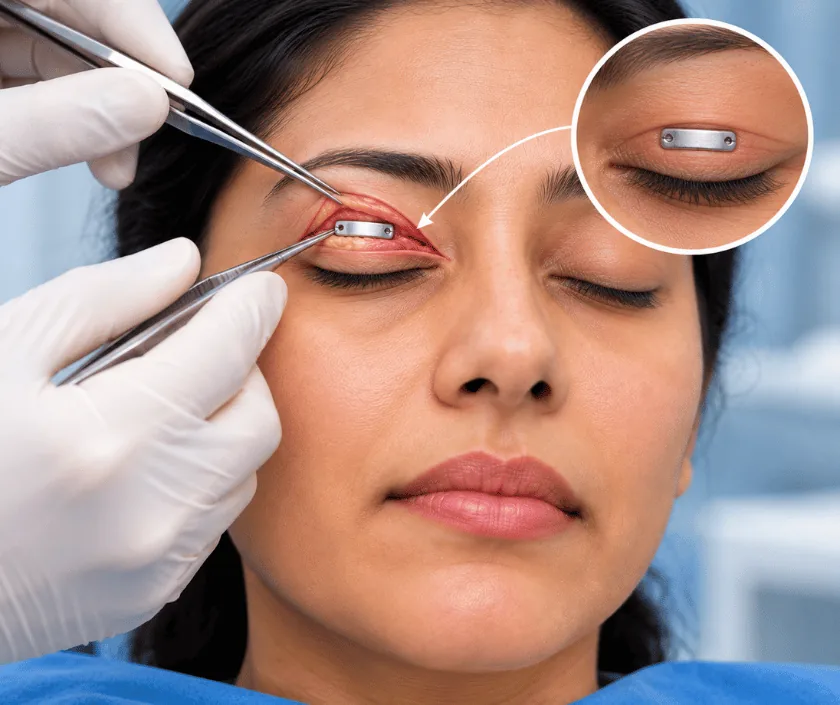
A platinum weight does the same job as a gold weight, helping a paralysed upper eyelid close under gravity. Because platinum is denser, the implant can be flatter for the same weight, so it tends to show less through thin skin. Some designs are made as linked segments that follow the curve of the lid closely.
Eyelid weights all work the same way. The muscle that lifts the lid still functions in facial paralysis, while the muscle that closes it does not, so adding a small load lets gravity finish the movement. What differs between implants is the material, and that difference is essentially one of density.
Platinum is heavier for its size than gold. A surgeon who needs a particular weight can therefore choose a thinner, flatter implant, which sits closer to the tarsal plate and is less likely to create a visible step under the skin. That advantage becomes important in patients with delicate eyelid skin, in those who have had previous eyelid surgery, and in anyone whose earlier gold weight showed through or worked its way towards the surface.
Some platinum implants are made as a chain of linked segments rather than one solid plate. Because the segments move against each other, the implant conforms to the natural curve of the lid and moulds itself less obviously. Placement, sizing and recovery follow the same pattern as a gold weight, with trial weights taped externally before surgery to establish the right load.
This choice is about the eyelid tissue as much as the paralysis, since the benefit lies in a flatter implant profile.
Eyelid closure, tear film and corneal health are checked. Trial weights are taped onto the lid so the smallest load that gives closure without heaviness can be identified.
A solid plate or a linked chain design is selected according to how thin your eyelid skin is and how much cover is available over the implant.
Under local anaesthetic, a short incision within the lid crease exposes the tarsal plate. The implant is fixed with fine sutures and then covered by tissue.
Before the skin is closed, gentle closure is tested with you cooperating, so any obvious mismatch can be corrected during the same procedure.
You are reviewed as swelling settles. Sizing can be revised if closure remains incomplete, and eye protection is adjusted at each visit.
Swelling and bruising of the lid are usual and can make closure look better than it is. Cold compresses, drops and sleeping propped up help.
Stitches settle and swelling falls, so the real effect of the implant becomes clear. Many patients already need much less lubricant.
The crease has healed and the implant profile can be judged fairly. Any exchange of size is considered around this point.
Closure is stable and comfort is much improved. The implant can be removed if facial nerve recovery eventually makes it unnecessary.
Function is very similar to a gold weight, so expect assisted closure rather than a restored blink. The genuine gain is cosmetic and practical at once, since a flatter implant is less likely to show or to press towards the surface. Most patients still use some lubricant and may still tape at night, because gravity works least well lying down. Small differences in lid height between the two sides usually remain.
The risks mirror those of any eyelid weight, and none of them are removed by the choice of metal.
The routine is the same as for any eyelid implant, and consistency matters more than complexity.
Closure depends on the weight, not the metal. Platinum simply delivers that weight in a thinner shape, which is a matter of profile rather than power.
It is less likely to show, yet very thin eyelid skin can still reveal an outline. Assessment of the tissue beforehand matters more than the material.
Small eyelid implants are not a practical problem at security, and patients are given a note about their implant if they want one.
It can be removed or exchanged through the same lid crease if recovery occurs or a different size is needed.
At Elegance Clinic in Surat, the choice between gold and platinum is made on the thickness of your eyelid skin and your history, and Dr. Ashutosh Shah explains the cost difference openly before you decide.

Platinum implants generally cost more than gold ones, and the difference sits in the implant itself rather than in the surgery around it. For that reason the estimate separates the implant cost from the procedure fee, so the comparison between materials is easy to see. Anaesthesia, sizing trials, dressings and follow up reviews are all listed. You receive a written estimate after assessment, and insurance may contribute because the purpose of the procedure is to protect the eye.
These are the questions that come up most often in consultation. If yours is not here, send it on WhatsApp and the team will reply, usually the same day.
Ask your question →Platinum is denser, so the same closing weight can be made thinner and flatter. That lower profile is less likely to show through the skin or press towards the surface, which matters most when the eyelid tissue is delicate.
Usually yes, and the difference lies mainly in the material. The written estimate separates the implant cost from the procedure fee so you can compare the two options honestly before choosing.
Partly. Gravity does the work, so closure is most reliable when you are upright and less so lying flat. Many patients continue taping the lid at night until an eye review confirms it is safe to stop.
That is one of the common reasons for choosing platinum. When an earlier implant became visible or started to work towards the surface, a thinner replacement placed with better tissue cover is often the sensible next step.
It is a short day case done under local anaesthesia, and you go home the same day. Sizing is completed at an earlier visit with trial weights, so the procedure itself is mainly placement and testing of closure.
Not routinely. It is checked at reviews and stays in place while it is doing its job. Exchange is considered if closure becomes incomplete, if the profile shows, or if the facial nerve recovers.
It is a joint decision at consultation. Skin thickness, previous eyelid surgery, any sensitivity to metals and cost all feed into the choice, and both options are explained with their trade offs before you commit.
Seeing patients from across the city and beyond: read about the practice on the plastic surgeon in Surat page, or check what a written estimate covers on the costs and insurance page.
