This page explains surgery for a heavy, hardened limb caused by filariasis. It covers what the operation can reduce, why skin care and compression carry on afterwards, and how a staged plan is built.
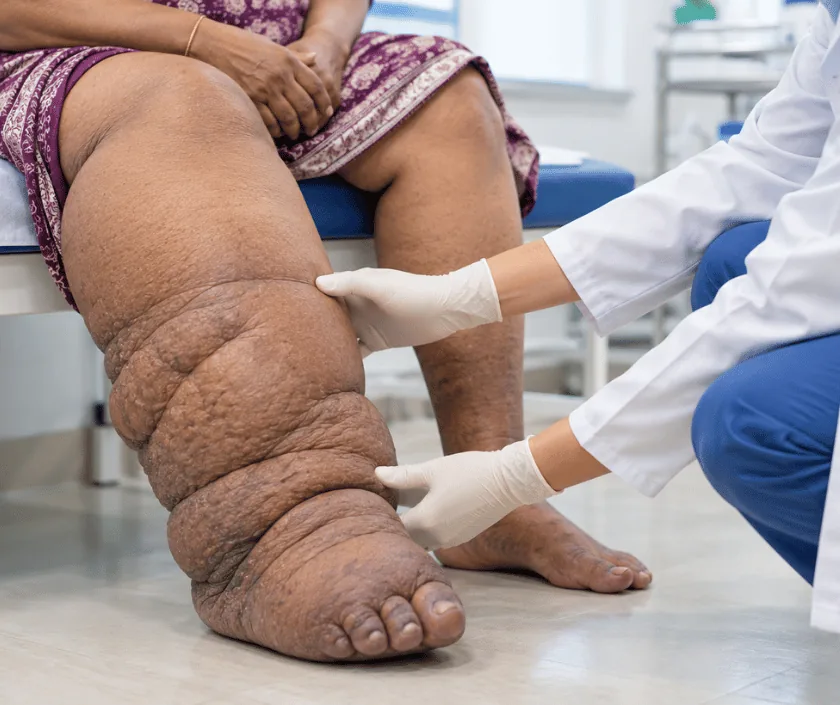
Filariasis limb reduction surgery removes thickened skin and the heavy tissue beneath it, so a swollen leg or arm becomes lighter and easier to keep clean. It does not repair the damaged lymphatic channels, so compression, washing and skin care continue afterwards. Large limbs are often treated in stages rather than one long operation.
In advanced filariasis the lymph channels are blocked, so fluid sits in the limb for years. Over time the skin thickens, folds form, and the tissue under the skin turns firm and fibrous. At that point the swelling no longer goes down with rest or elevation, and the weight makes walking, working and washing difficult.
Surgery targets that fixed bulk. The heavy, hardened layer is removed in planned sections, and the remaining skin is trimmed and laid back down; where too little healthy skin is left, a skin graft covers the area. The limb becomes lighter, moisture stops collecting in deep folds, and shoes or clothing fit more easily. Genital swelling and hydrocele are treated in a similar way when they are part of the picture.
What surgery cannot do is rebuild the drainage system, so fluid will still tend to gather. Compression garments or bandaging, daily washing, careful nail and skin care, and prompt treatment of any infection remain part of life afterwards. Patients who keep up that routine usually hold their result far better.
The limb is measured and photographed, and any infection is settled first. Blood tests, a review of your general health and a compression trial help decide how much of the swelling is fixed tissue.
A large limb is usually treated in more than one sitting. Your surgeon marks which segment goes first, often the part causing the most trouble with hygiene, walking or footwear.
Through planned incisions the thickened skin and the firm layer beneath are excised down to healthy tissue. Bleeding is controlled carefully, since this layer has a rich blood supply.
Remaining skin is trimmed and closed over the reduced limb. If cover is short, a thin skin graft is taken, usually from the thigh, and held in place with a dressing.
Drains and dressings are used at first, then graded compression begins once the wounds allow. Reviews check healing, limb size and whether a further stage is worth planning.
The limb is elevated and dressings stay undisturbed unless there is a concern. Drains may be in place, and pain is controlled with regular medicines.
Dressings are changed and any graft is inspected. Walking short distances starts under guidance, with the limb raised whenever you are resting.
Most wounds have healed and full compression is worn through the day. Many people are back at light work, and swelling has begun to level off.
The limb shape settles and scars soften. Compression, washing and skin care continue, and a further stage can be considered if bulk remains.
This is major surgery on skin that has been unwell for years, so healing takes patience. The likely problems are discussed openly before you agree to a date.

The cost reflects how much tissue is being removed, how many stages are planned, whether grafts are needed and how long you stay in hospital. Genital reconstruction is priced separately from limb work. Compression garments, dressings, physiotherapy and review visits are also part of the true total, so they are listed rather than hidden. You receive a written estimate after assessment, and if a second stage is advised later it is quoted on its own.
These are the questions that come up most often in consultation. If yours is not here, send it on WhatsApp and the team will reply, usually the same day.
Ask your question →Price depends on the size of the limb, the number of stages and whether grafts are required. Garments and dressings add to the total. Once you have been examined you are given a written estimate that sets out surgery, hospital and follow up charges separately.
It can be done safely in many people, but fitness is checked first because blood loss and wound healing need attention. Any active skin infection is treated before a date is fixed. Your heart, kidney and sugar status are reviewed as part of that planning.
Rest with the limb raised comes first, then walking builds up over the following weeks. Many people manage light work once the wounds have healed, though heavy or standing jobs take longer. Healing pace differs from person to person.
A good reduction in bulk and weight is usually achievable, and shoes and clothing often fit again. The limb will not match the other side exactly, and some shape difference stays. Realistic targets are set from your measurements before surgery.
Repeated attacks are not a reason to stay away, but they need controlling first. Washing routines, skin care and medicines settle the inflammation, and surgery is planned during a quiet phase so wounds have the best chance of healing.
Waiting is reasonable while compression and skin care are still reducing the swelling. Surgery is considered once the limb has stopped responding, or when weight, hygiene and repeated infection are affecting daily life. That judgement is made together at review.
The limb is examined and measured, the skin and folds are checked, and your history of fever attacks is taken. Photographs are recorded for comparison. You then hear which stages suit you, what the risks are, and what aftercare will involve.
Each technique below has its own page explaining how it works and when it is chosen.
Seeing patients from across the city and beyond: read about the practice on the plastic surgeon in Surat page, or check what a written estimate covers on the costs and insurance page.
