Once the bulk of a swollen limb has been removed and the swelling has settled, uneven areas, loose skin and awkward bulges often remain. Contouring is the later, smaller operation that tidies that shape.
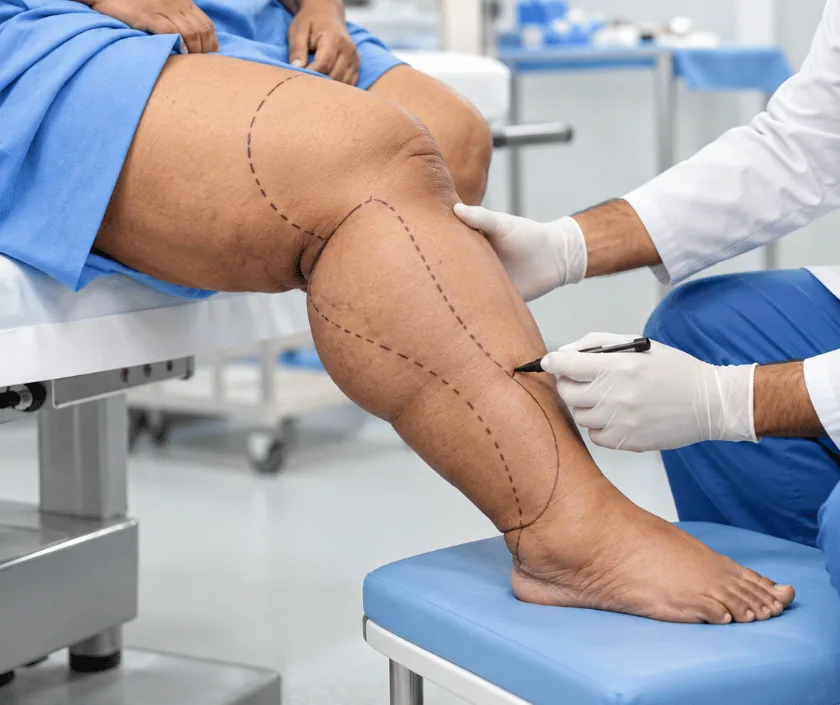
Limb contouring is a refinement operation done after earlier filariasis surgery has healed and the swelling has stabilised. It removes leftover loose skin, evens out steps or bulges along the limb and improves the shape around the ankle, knee or thigh. Because it is a finishing step, it is planned only when the limb has stopped changing.
Reducing a massively swollen limb is rarely a single, tidy operation. Bulk is removed in stages, wounds heal at their own pace, and the limb keeps changing for months afterwards as fluid settles and scars mature. What is left is often a limb that is far lighter and much more usable, yet still uneven. Loose skin may hang below the knee, a step may show where two stages met, or a bulge may sit stubbornly above the ankle.
Contouring addresses those specific areas. Through smaller, planned incisions the surgeon trims excess skin, removes residual fatty tissue and smooths the junctions between previously operated segments. Attention often goes to places that affect daily life most, such as the ankle where footwear sits, the knee where movement is restricted, or a fold that traps moisture.
Timing is what makes this work. Operating while the limb is still settling means the shape will drift again. Waiting until measurements have been steady for months allows the surgeon to correct what will actually remain.
Contouring suits patients who have already been through bulk reduction and now want the shape finished. Readiness of the limb matters more than the wish for improvement.
Measurements from earlier reviews are compared to confirm the limb has settled. Skin quality, scars from previous surgery and the areas that trouble you most in daily life are all assessed together.
The surgeon marks the exact areas to be trimmed or smoothed while you stand, since shape looks different when the limb bears weight. Previous scars are used where possible to avoid adding new ones.
Under spinal or general anaesthesia the marked excess skin and residual tissue are removed through the planned incisions. Junctions between earlier operated segments are smoothed so the transition is less obvious.
Drains are placed where fluid is likely to collect, the wound is closed in layers, and a supportive dressing shapes the limb. Careful closure matters, because skin here has already been operated on once.
A new garment is measured once healing allows, since the old one will no longer fit the changed shape. Skin care and elevation resume as soon as the team advises.
The limb is kept raised, dressings stay undisturbed and pain relief is given. Most patients are up and walking short distances with support, and any drains are monitored before discharge.
Dressings are changed at review visits and drains removed once output settles. Walking increases steadily. Sitting with the limb hanging down is limited, because that encourages swelling at the wound.
Wounds are generally healed and the new garment is worn full time. Many patients return to routine work, while heavy lifting and long periods of standing are still avoided.
Scars fade and soften slowly, and the final shape becomes clear. Compression, elevation and daily skin care continue as they did before, since the lymphatic damage is unchanged.
Contouring improves shape and fit rather than creating a normal limb. Expect a smoother outline, easier footwear and better garment wear, alongside scars that stay visible and a limb that remains larger than the other side. Some irregularity always persists after major reduction surgery. Results hold well in patients who keep wearing compression, and drift in those who stop once the wounds have healed.
Although smaller than debulking, this is still surgery on a swollen limb with previously operated skin, so the same healing concerns apply.
Recovery is shorter than after debulking, but the same habits protect the result you have paid for in time and effort.
Shape is refined only after the limb has settled, because a limb that is still changing will simply drift out of shape again.
Comfort and function drive most of it, including footwear that fits, garments that sit properly and folds that no longer stay damp.
Lymph drainage is still damaged, so compression and elevation continue for as long as the condition does.
Old scars are often used as the route for new incisions, which avoids extra marks, but they cannot be erased.
Elegance Clinic in Surat keeps the same team with a patient from the first swollen limb through to the final contouring stage, so decisions about timing rest on measurements recorded over months rather than on a single visit.

Contouring is quoted once the limb has been reassessed, because the cost depends on how many areas need attention, the expected length of stay and the dressings required afterwards. A written estimate covering surgeon, anaesthesia, theatre, stay and dressings is given before admission, and the new compression garment is quoted separately. Cover for a later stage of treatment varies between insurance policies, so bring your papers along with records of the earlier surgery and the team will help you check what applies.
These are the questions that come up most often in consultation. If yours is not here, send it on WhatsApp and the team will reply, usually the same day.
Ask your question →Pricing follows reassessment, since cost depends on how many areas need correction, the length of stay and the dressings used. A written estimate covering surgeon, anaesthesia, theatre, stay and dressings is given before admission, with the new garment quoted separately.
Timing rests on measurements. Surgery is planned once the limb has stayed stable across several months of review, because operating while it is still reducing means the shape will drift and the benefit will be lost.
It is a smaller operation with a shorter stay, yet it is still surgery on a swollen limb with previously operated skin. Wound healing remains the main concern, so preparation and follow up are handled just as carefully.
Most patients go home after a short stay, then attend for dressing changes over the following couple of weeks. Routine work often resumes around six weeks, while heavy lifting and prolonged standing wait a while longer.
No. The outline becomes smoother and clothes and footwear fit better, but the limb stays larger than the other side and scars remain visible. Some unevenness always persists after major reduction surgery.
Anyone whose limb is still changing in size waits. Unhealed wounds, active infection, fragile grafted skin nearby, continued smoking and uncontrolled diabetes all make this operation unwise until they have been dealt with.
Yes, and it needs to be measured again because the old garment will no longer fit the new shape. Lymph drainage stays damaged, so compression, elevation and daily skin care remain part of the routine.
Each technique below has its own page explaining how it works and when it is chosen.
Seeing patients from across the city and beyond: read about the practice on the plastic surgeon in Surat page, or check what a written estimate covers on the costs and insurance page.
