Parts of a filariasis limb can become so thickened and so often infected that no dressing ever settles them. Those patches can be cut away and the raw surface covered with a thin sheet of skin taken from elsewhere on the body.
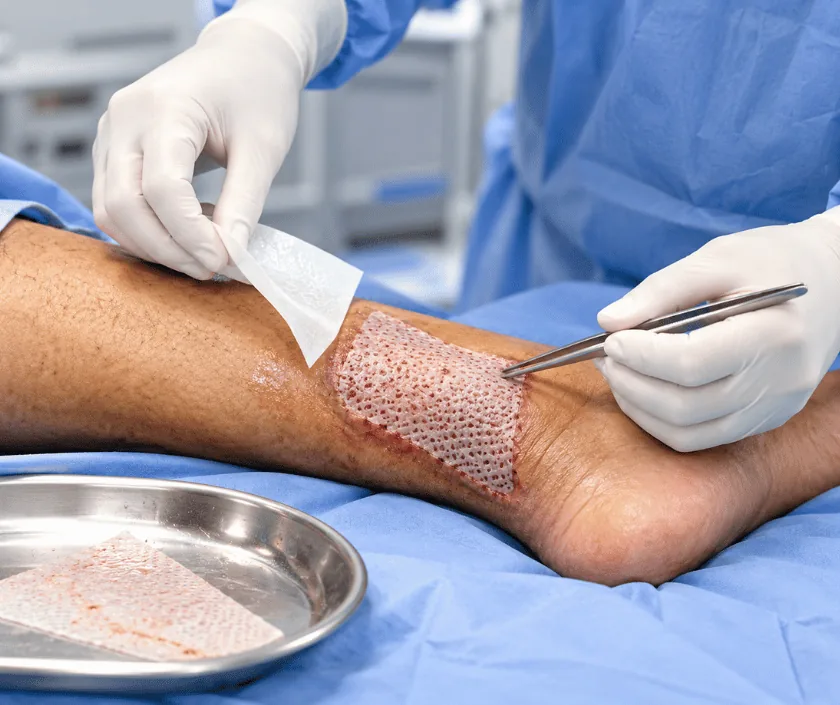
Selective excision and skin grafting treats the worst affected patches of a filariasis limb. The surgeon removes the thickened, repeatedly infected skin together with the tissue beneath it, then covers the raw surface with a thin sheet of skin taken from the thigh. The aim is skin that stays clean and dry rather than a normal looking limb.
In longstanding filariasis the skin over the ankle, foot or lower leg often changes character. It grows thick and hard, the surface becomes warty or cobbled, deep cracks appear, and fluid weeps from them. Bacteria live comfortably in those cracks, which is why some patients suffer one attack of fever and redness after another. At this point the skin is no longer just a covering over the swelling. Instead it has become the source of the trouble.
The operation deals with exactly that. Only the badly affected areas are marked and excised, along with the diseased tissue directly under them, while healthier skin nearby is left alone. Because the resulting raw area is far too wide to stitch closed, it is resurfaced with a graft. A thin sheet of skin is shaved from the thigh, laid over the area and secured, and the donor site is dressed so it can heal on its own.
What this achieves is a clean, dry, manageable surface. Yet the operation treats the covering rather than the drainage, so the tendency to swell continues and compression remains part of life afterwards.
This surgery is chosen when the skin, rather than the sheer bulk of the limb, is what keeps the patient unwell. Suitability depends heavily on how well a graft is likely to take.
Any active infection is treated first with dressings and antibiotics, and diabetes and general health are brought under control. The areas to be removed are marked on the limb so the plan is clear to everybody.
Under spinal or general anaesthesia the marked skin is removed together with the diseased tissue beneath it. The surgeon works down to a healthy, well bleeding surface, because a graft will not take on unhealthy tissue.
A thin sheet of skin is shaved from the thigh with a special blade. Taking it thin allows the donor area to heal by itself, usually within about two weeks, leaving a flat and paler patch.
The sheet is laid over the raw area, trimmed to shape and held with sutures, staples or a tie over dressing. Small holes may be made in it so fluid can escape rather than lift the graft.
A firm dressing and sometimes a splint keep the limb still, since movement is the commonest reason a graft fails. The first dressing change is usually delayed for several days to protect the new surface.
The limb stays raised and undisturbed in hospital. Dressings are left alone deliberately during this period, and pain relief plus antibiotics are given. Movement of the operated limb is kept to a minimum.
The first dressing change shows how much of the graft has taken. Dressings continue and walking is reintroduced gradually. Discomfort at the donor site on the thigh is often greater than at the grafted area.
Grafted skin is usually stable, though still fragile and easily grazed. Compression is restarted once the team is satisfied the surface will tolerate it, and most patients resume light routine work.
The graft softens, flattens and blends a little better, although a colour difference remains. Daily moisturising, skin checks and compression continue as part of long term care.
A graft gives durable, clean cover, not matching skin. The area stays paler, smoother and often slightly sunken compared with skin around it, and the thigh keeps a flat patch where the graft was taken. Occasionally part of a graft fails and needs a second application. Infections generally become much less frequent, yet the limb still swells, so compression and daily care continue for good.
Grafts placed on a swollen limb are more demanding than grafts elsewhere, and the risks are explained honestly before you agree to surgery.
A graft in its early weeks is delicate, and simple habits protect it while the new skin settles.
Grafted skin stays paler, smoother and often slightly sunken, and that difference does not fade away completely.
Only the diseased skin is treated. Lymph drainage stays damaged, so the limb continues to swell and needs compression.
The graft comes from your own body, most often the thigh, which is why the donor area needs its own dressing and time to heal.
Grafted skin is drier and more fragile than normal skin, so daily moisturising and careful protection continue.
Elegance Clinic in Surat treats the skin of a filariasis limb as a problem in its own right, and plans excision and grafting only after infection has been settled and the tissue is ready to accept a graft.

Pricing follows assessment, because the cost depends on how large an area needs excision, how long the hospital stay is likely to be and how many dressing changes will be required afterwards. A written estimate covering surgeon, anaesthesia, theatre, stay and dressings is shared before admission. Should a second grafting session be needed, it is quoted separately at that time. Insurance often covers this surgery when it is documented as treatment for a medical condition, so bring your policy papers and the team will help with the paperwork.
These are the questions that come up most often in consultation. If yours is not here, send it on WhatsApp and the team will reply, usually the same day.
Ask your question →Cost depends on the size of the area excised, the hospital stay and the dressings needed afterwards, so it is quoted after assessment. A written estimate covering surgeon, anaesthesia, theatre, stay and dressings is provided before admission.
It is more demanding than grafting elsewhere, so preparation matters. Infection is cleared, sugar levels and circulation are checked, and surgery goes ahead only when the tissue is healthy enough to support a graft taking.
Expect several days in hospital with the limb raised and dressings undisturbed, then a few weeks of regular dressing changes. Most patients resume light routine activity around six weeks, once the grafted surface has become stable.
No. Grafted skin stays paler, smoother and sometimes slightly sunken, and the thigh keeps a flat, lighter patch where the graft was taken. The aim is skin that stays clean and dry rather than skin that matches.
Anyone with active infection in the area waits until it settles. Smokers who continue smoking, patients with uncontrolled diabetes or poor circulation, and those expecting the graft to look like normal skin are poor candidates.
Part of a graft failing is not unusual on a swollen limb. Small areas are managed with dressings and heal on their own, while a larger failure is treated by regrafting once the surface is healthy again.
The limb and skin are examined, the areas needing excision are marked and explained, and the donor site is shown to you. Photographs may be taken for records, and a written plan with an estimate is given before booking.
Each technique below has its own page explaining how it works and when it is chosen.
Seeing patients from across the city and beyond: read about the practice on the plastic surgeon in Surat page, or check what a written estimate covers on the costs and insurance page.
