Cellulitis is a spreading infection of the skin and the tissue just beneath it, while an abscess is a closed pocket of pus. One is treated mainly with antibiotics, the other usually needs drainage.
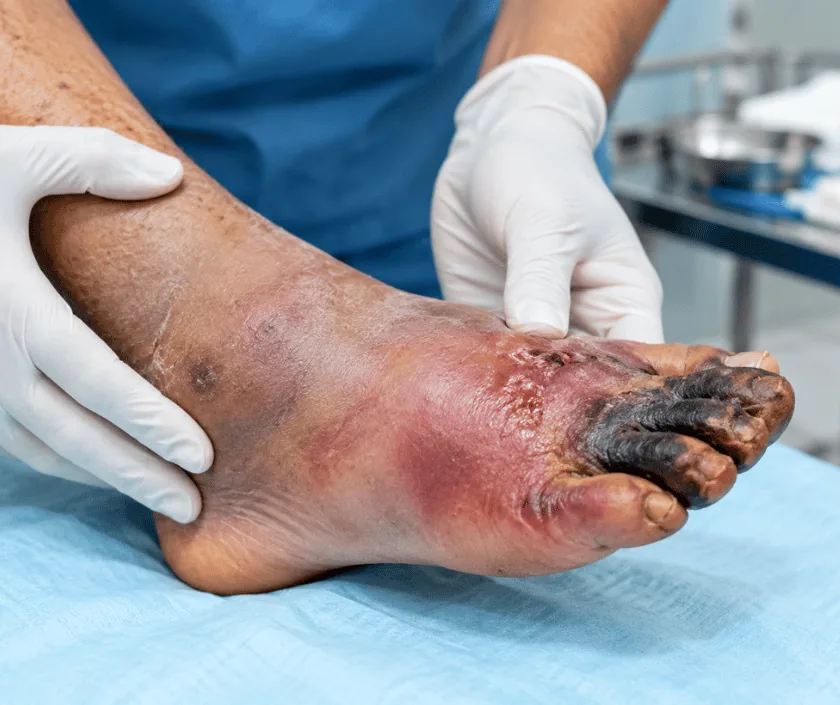
Cellulitis is a spreading bacterial infection of the skin and underlying fat, causing redness, warmth, swelling and pain. An abscess is a pocket of pus that has formed inside that tissue. Antibiotics settle most simple cellulitis, while an abscess almost always needs a small operation to drain it. Deeper or fast spreading infection is treated in hospital, with samples taken to guide the antibiotic choice.
Assessment comes first. The doctor looks at how far the redness extends, whether the area feels tense or soft in the centre, how much pain there is compared with the appearance, and whether there is fever. Marking the edge of the redness with a pen helps show at the next visit whether it is settling or advancing. Ultrasound is useful when a collection is suspected but cannot be felt.
Simple cellulitis is treated with oral antibiotics, rest and elevation of the affected part. Severe or fast moving infection, or infection in someone with diabetes or low immunity, is treated with intravenous antibiotics in hospital.
An abscess is managed differently. Under local or general anaesthesia the cavity is opened, pus is released, internal partitions are broken down, and the space is washed out. Pus is sent for culture, and the wound is packed or left partly open so it heals from the base upward. Larger cavities occasionally need a second look or a small skin graft later.
Choosing between tablets, admission and surgery depends on how deep the infection sits and how the person is otherwise. The decision is reviewed rather than fixed at the first visit.
The extent of redness is marked, the swelling is felt for a collection, and temperature and sugar are checked. Blood tests or an ultrasound scan are added when the picture is not clear from examination alone.
Treatment starts with an antibiotic chosen for the likely organism, given by mouth or by vein according to severity. Any pus or wound swab taken is sent for culture so the choice can be refined.
Under anaesthesia the cavity is opened along a planned line, pus is released, and internal partitions are broken down. Washout follows, and the wound is packed or left open so it drains freely.
Dressings are changed regularly while the cavity closes from the base upward. Progress is checked at each visit, and the antibiotic is stopped or changed once culture results are available.
Underlying causes such as high blood sugar, fungal infection between the toes, or a retained cyst wall are treated. Elective surgery for repeated abscesses is planned once the skin is quiet.
Pain and tension usually ease soon after drainage. Antibiotics continue, the limb is kept elevated, and the first dressing change is done in the clinic.
Discharge from the cavity reduces and the wound begins to shrink. Most people return to desk work in this period, with dressings continuing at home.
Small wounds are commonly closed and scars are still pink. Heavier physical work and gym activity are generally comfortable again by this stage.
Scars fade and soften. Repeated problems such as recurring boils are reviewed, and any planned surgery for them can be arranged.
Most simple abscesses settle well once drained, and the relief is felt within a day. A scar remains at the drainage site, and its size reflects the cavity rather than the incision. Cellulitis usually clears with the right antibiotic, though swelling of the limb can linger for weeks. Recurrence is possible when the underlying cause continues, so treating diabetes, foot fungus or a retained cyst wall matters as much as the surgery.
Treatment is generally straightforward, yet a few problems are worth knowing about in advance.
Simple, consistent wound care at home does most of the work after drainage.
Antibiotics cannot enter a closed pocket of pus, so drainage remains the treatment that resolves it.
Squeezing pushes bacteria into deeper tissue and can turn a small problem into a spreading infection.
Warmth may ease discomfort, but it does not empty a formed cavity, and delay allows the infection to extend.
Stopping early leaves partly treated bacteria behind, which raises the chance of recurrence and resistance.
Elegance Clinic in Surat treats skin and soft tissue infection with an emphasis on finding the cause, not only settling the current episode. Written estimates are given before any planned procedure.

Cost depends on whether treatment is with tablets alone, day care drainage under local anaesthesia, or admission for intravenous antibiotics and formal surgery. Dressings, culture tests and any imaging are counted separately. A written estimate is prepared after examination, so the family knows the likely range before treatment begins, and any change is discussed first. Many insurance policies cover admission for infection, and the team assists with the required documents.
These are the questions that come up most often in consultation. If yours is not here, send it on WhatsApp and the team will reply, usually the same day.
Ask your question →Usually yes, if a pocket of pus has formed. Antibiotics cannot penetrate the cavity wall reliably, so drainage relieves the pain and removes the source. The procedure is often short and done under local anaesthesia in day care.
Cost varies with the depth of the infection, whether admission is required, and the tests involved. A written estimate follows examination, and it separates the procedure, dressings and any imaging so the family can see what each item covers.
For most small and superficial collections, yes. Deeper or very tender abscesses are drained under general or regional anaesthesia so the cavity can be cleared thoroughly, which lowers the chance of a second procedure.
Recovery can vary with cavity size. Pain usually improves within a day of drainage, dressings continue for one to three weeks, and most people return to office work quickly. Larger cavities take longer to close from the base.
Recurrence often points to an underlying cause such as high blood sugar, fungal infection between the toes, a retained cyst wall, or blocked sweat glands. Treating that cause matters as much as draining the current collection.
Some scar is expected at the drainage site, and its size reflects the size of the cavity rather than carelessness. Scars usually soften and fade over months, and treatment can be offered if one stays thick or tight.
The area is examined and the redness marked, sugar and temperature are checked, and an ultrasound scan may be arranged. Treatment options, dressing needs and a written estimate are then explained before anything is carried out.
Infection can enter through a crack between the toes, an insect bite or eczema, and often no entry point is ever found. A limb with lymphoedema or venous disease is more prone to it, and treating that underlying problem is what stops it recurring.
Not necessarily. Some drugs, particularly chemotherapy, keep destroying tissue for days to weeks after leaking out of a vein. If the area is enlarging, blistering or darkening, it needs assessment quickly rather than watching.
Each technique below has its own page explaining how it works and when it is chosen.
Seeing patients from across the city and beyond: read about the practice on the plastic surgeon in Surat page, or check what a written estimate covers on the costs and insurance page.
