Fournier's gangrene destroys the skin and soft tissue of the groin and perineum within hours. Emergency surgery removes the dead tissue first, and reconstruction rebuilds the area once the infection is under control.
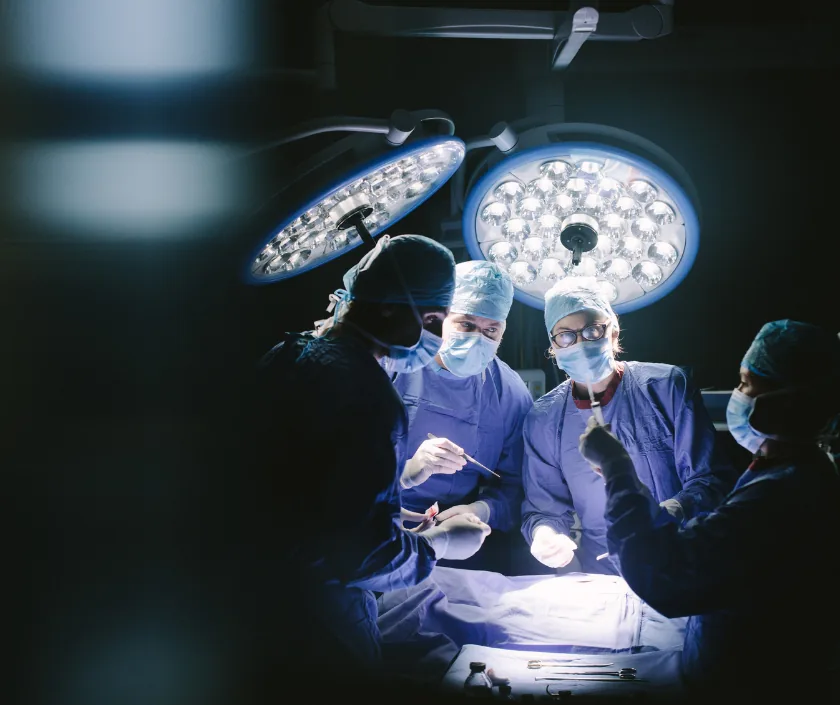
Fournier's gangrene is a fast spreading infection of the perineum, scrotum and lower abdominal wall. Treatment starts with emergency surgery to remove all dead tissue, along with antibiotics and support in hospital. Once the infection settles, reconstruction closes the raw area using dressings, skin grafts or flaps, and a urology or general surgery team often works alongside.
Treatment happens in two clear phases. The first phase is emergency surgery, where all dead and infected tissue is removed until healthy bleeding tissue is reached. Because the infection spreads along the layers under the skin, the wound after surgery often looks far larger than the patient expected. Antibiotics, fluids and close monitoring run alongside, and a urologist or general surgeon may join the operation when the urinary tract or bowel is involved.
Repeat washouts then follow every day or two until tissue stops dying. Only after that does the reconstructive phase begin. Dressings, and sometimes negative pressure therapy, help the raw area fill in with healthy granulation tissue.
Rebuilding skin cover comes last. Split thickness skin grafts suit large flat areas, while local flaps or thigh pouches are chosen when the testicles need soft, protected cover. Each plan is shaped around the individual wound, and it may change as healing progresses.
Emergency debridement is needed by anyone with confirmed or suspected Fournier's gangrene. Reconstruction is planned later, and suitability for that stage depends on how the wound and the person are doing.
On arrival the team checks circulation, blood sugar and kidney function, takes blood and wound samples, and starts strong antibiotics. Surgery is arranged immediately, because every hour of delay lets the infection travel further.
Under general anaesthesia, dead skin, fat and fascia are cut away until healthy bleeding tissue appears. The wound is left open and dressed, and tissue is sent for culture so antibiotics can be adjusted.
Over the next few days the wound is inspected in theatre again, and any newly dead tissue is removed. Washouts continue until the surgeon is satisfied that the infection has stopped advancing.
Dressings or negative pressure therapy encourage healthy granulation tissue. Nutrition, blood sugar and anaemia are corrected during this period, since all three affect whether a graft will take.
Once the bed is clean, cover is provided with a split thickness skin graft, a local flap or a thigh pouch for the testicles. Small further procedures may follow for comfort and contour.
Attention stays on stabilising the body. Expect intravenous antibiotics, fluids, catheter care and close monitoring, along with further planned trips to theatre for washouts.
Dressings continue and the wound begins to look pink and granular. Sitting, walking and eating improve slowly, and physiotherapy usually starts on the ward.
Grafted or flapped areas are generally settled, though they may feel tight, numb or dry. Many people are back to light routine at home by now, and it varies.
Scars soften and colour fades gradually. Some men need a small revision for comfort, contour or scar release, and urinary and sexual function are reviewed.
Survival and control of the infection come first, and reconstruction is judged against that. Skin cover is usually good enough for comfortable clothing, hygiene and sitting, but the area will look different from before. Grafted skin often feels dry, tight or numb, and hair growth may be patchy. Sensation returns slowly and sometimes incompletely. Sexual function depends on how much tissue was lost and on general health.
This is major surgery in an infected field, so complications are not unusual and are discussed openly before each stage.
After discharge, steady daily habits matter more than any single thing done in hospital.
Tablets cannot reach tissue whose blood supply has already died, and surgery is what stops the spread.
Removal stops only where healthy bleeding tissue begins, and leaving infected tissue behind is what puts life at risk.
Most people need several washouts before reconstruction, because dying tissue declares itself over days rather than all at once.
Cover can be safe, comfortable and functional, although colour, texture and hair growth will differ.
Elegance Clinic in Surat treats Fournier's gangrene as a shared emergency, with reconstructive planning starting while the infection is still being controlled. Families are told plainly what each stage is meant to achieve.

Cost depends on how many washouts are needed, the length of hospital stay, the level of monitoring required and the type of reconstruction finally chosen. Because emergency surgery cannot be planned in advance, a written estimate is shared as soon as the extent of tissue loss is known, and it is updated if the plan changes. Insurance and government schemes often cover emergency admissions, and the clinic team helps the family with the paperwork.
These are the questions that come up most often in consultation. If yours is not here, send it on WhatsApp and the team will reply, usually the same day.
Ask your question →Once this infection is suspected, surgery is arranged the same day, often within hours. The infection travels along tissue layers faster than antibiotics can act, so early removal of dead tissue protects both the surrounding tissue and the patient's life.
Dead tissue does not declare itself all at once. Each planned washout removes tissue that has died since the previous visit to theatre, and this continues until the wound bed stays healthy. Reconstruction becomes safer once that point is reached.
Cost varies with the number of washouts, days spent in hospital, monitoring needs and the reconstruction chosen. A written estimate is shared once the extent of tissue loss is known, and it is revised if the plan has to change.
Surgery aims for safe, comfortable cover rather than an unchanged appearance. Grafted skin usually differs in colour and texture, and hair growth may be patchy. Most men find that clothing, sitting and hygiene become comfortable again as healing settles.
Diabetes raises the risk, yet surgery remains the treatment that saves tissue and life. Blood sugar, kidney function and nutrition are corrected alongside the operations, and a physician stays involved throughout, because healing depends heavily on that control.
Recovery can vary a great deal. Hospital stay is often counted in weeks rather than days, and grafts usually settle over roughly six weeks. Returning to work, driving and normal activity depends on wound healing, strength and general health.
In an emergency, assessment is immediate and surgery follows quickly. For later reconstruction, the visit covers wound examination, photographs, blood tests, a discussion of graft or flap options, and a written estimate before any admission is arranged.
Each technique below has its own page explaining how it works and when it is chosen.
This condition sits between reconstructive surgery and mens health. The wider assessment, including function and follow up into adult life, is covered on the sister site.
Seeing patients from across the city and beyond: read about the practice on the plastic surgeon in Surat page, or check what a written estimate covers on the costs and insurance page.
