Gas gangrene is muscle death caused by clostridial bacteria that thrive where oxygen is scarce. Because it advances within hours, management combines immediate surgery to remove dead muscle with strong antibiotics and full hospital support.
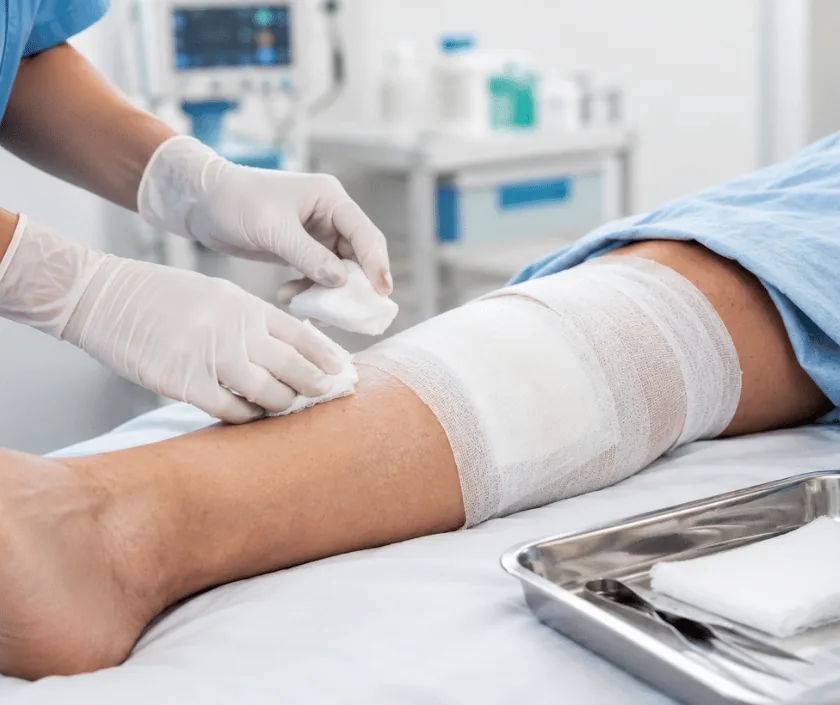
Gas gangrene, also called clostridial myonecrosis, is muscle death caused by bacteria that grow in wounds with a poor oxygen supply. Trapped gas collects in the tissue and the limb swells quickly. Management means urgent surgery to remove all dead muscle, high dose antibiotics and intensive support. When an entire muscle compartment has died, amputation may be the only way to save life.
Care begins the moment the diagnosis is suspected, usually on the strength of the examination rather than any test. Severe pain, tense swelling, a bronze or dusky skin colour and crackling under the fingers point strongly to gas in the tissue. Blood tests, a plain film or a scan can support the picture, yet none of them should delay the operation.
Surgery is wide and deliberate. Muscle that does not bleed or contract is dead and must come out completely, and the compartments are opened so that healthy muscle is no longer squeezed. Wounds are left open, and the person returns to theatre for further inspection while the infection is still settling.
Alongside surgery run high dose antibiotics, fluids, blood transfusion where needed, and support for the kidneys. Once the infection has stopped advancing, attention shifts to closing the defect with dressings, grafts or flaps, and to getting the limb moving again with physiotherapy.
Every person with suspected gas gangrene needs urgent surgery. Whether the limb can be saved, rather than removed, is judged in theatre and reviewed at each washout.
Fluids, oxygen, blood tests and cultures are started at once, along with antibiotics that cover clostridial organisms. Tetanus protection is checked, and the operating theatre is alerted while assessment is still under way.
All muscle that fails to bleed or contract is removed, and the compartments are opened along their length. The surgeon works until healthy tissue is reached on every side, and the wound is left open.
The limb is checked in theatre again after a day or two, and any newly dead muscle is cleared. This is repeated until two consecutive inspections show that the infection has stopped moving.
Antibiotics are adjusted once cultures return. Kidney function, anaemia, blood sugar and nutrition are treated actively, and hyperbaric oxygen may be added where a chamber is available nearby.
When the wound bed is clean, the defect is closed with dressings, a skin graft or a flap. Physiotherapy then restores movement, strength and confidence in the limb over the following weeks.
The body is still fighting the infection. Expect intravenous antibiotics, fluids, pain relief, close monitoring and one or more planned returns to theatre.
Wounds start to granulate and dressings become less frequent. Sitting out of bed, gentle joint movement and better appetite are the usual signs of progress.
Grafted or flapped areas are commonly settled, and walking with support is realistic for many people. Muscle strength lags behind wound healing, so therapy continues.
Scars soften and stamina improves. Some stiffness, weakness or altered shape of the limb may remain, and a further procedure is occasionally offered for contour or scar release.
Stopping the infection is the first measure of success, and appearance comes much later. Wide clearance leaves a defect, so the limb often ends up thinner, scarred and different in shape. Strength usually improves for many months with therapy, though some weakness or stiffness can persist. When amputation was needed, a well shaped stump and early prosthetic fitting give many people good independence.
Gas gangrene is dangerous in itself, and the surgery needed to control it carries real risks that are explained to the family at each stage.
Once home, wound protection and daily exercise carry most of the recovery.
Antibiotics support treatment but cannot reach dead muscle, so surgical removal of that muscle is what stops the disease.
Not always. Early and thorough clearance saves many limbs, and the decision is reviewed at every washout.
Household injuries, injections and closed wounds with poor blood supply can also lead to it, especially when treatment is delayed.
Where available it may help as an addition, yet it never removes the need for surgery to clear dead tissue.
Elegance Clinic in Surat approaches gas gangrene as a race against time, with the reconstructive plan considered from the very first operation. Families are kept informed before each return to theatre.

Emergency care of gas gangrene has no fixed price, because nobody knows at the outset how many operations will be needed. Cost is shaped by the extent of debridement, the days spent in hospital, blood products, antibiotics and the reconstruction chosen at the end. A written estimate is prepared once the first surgery has shown the true extent of the problem, and the family is told promptly if the plan changes. Emergency admissions are often covered by insurance and government schemes, and the team assists with the paperwork.
These are the questions that come up most often in consultation. If yours is not here, send it on WhatsApp and the team will reply, usually the same day.
Ask your question →Immediately. This infection can destroy a muscle compartment within hours, so surgery is arranged as soon as it is suspected, without waiting for scan reports. Antibiotics and fluids are started in parallel while the theatre is being prepared.
Not always. Many limbs are saved when dead muscle is cleared early and thoroughly. Amputation is advised when a whole compartment or limb has died, or when infection keeps spreading despite full clearance and antibiotics.
Cost depends on the number of operations, days in hospital, blood products and the final reconstruction. A written estimate is shared once the extent of muscle loss is known, and any change to the plan is explained before it is carried out.
Surgery is often the reason a very unwell patient improves, since the source of toxins is removed. Anaesthetic and physician colleagues support the person throughout, and the operation is kept as short as clearance allows.
Recovery can vary widely. Wounds commonly need weeks of dressings before cover, and muscle strength returns over months with physiotherapy. Work, driving and heavy activity resume in stages, guided by wound healing rather than by the calendar.
Recurrence in the same treated area is uncommon once dead tissue has been fully removed. A fresh episode can happen after another contaminated injury, so wounds should be cleaned and reviewed early rather than managed at home.
In an emergency the examination happens within minutes and surgery follows. For a wound that is already healing, the visit covers examination, photographs, blood tests, a talk about cover options, and a written estimate before admission.
Each technique below has its own page explaining how it works and when it is chosen.
Seeing patients from across the city and beyond: read about the practice on the plastic surgeon in Surat page, or check what a written estimate covers on the costs and insurance page.
