Infection around a plate, screw, mesh or implant raises one central question. Can the implant stay, protected by healthy tissue brought in over it, or does it have to come out so the infection can settle.
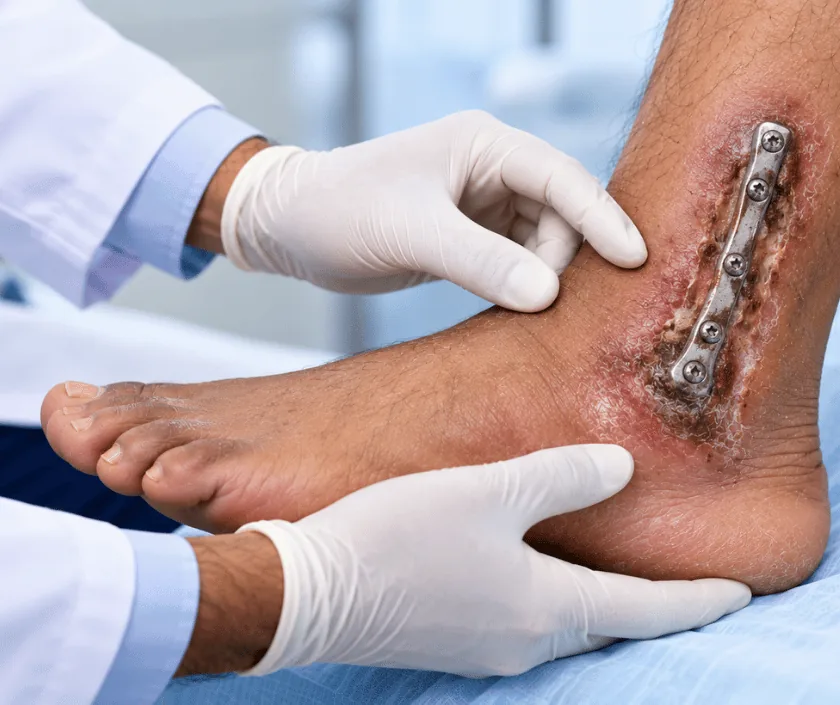
Infected implant salvage means clearing infection around a plate, screw, mesh or similar device and covering it with well supplied living tissue so that it can stay in place. Salvage is realistic when the infection is recent, the implant is stable and the organism is treatable. Once bacteria have built a mature biofilm on the surface, or the implant has loosened, removal usually gives the safer outcome.
Assessment establishes three things. How long the infection has been present, whether the implant is still doing its job, and which organism is responsible. Blood tests, imaging and deep tissue samples taken in theatre answer these questions far better than a swab from a discharging opening, which usually grows skin bacteria rather than the true culprit.
Salvage surgery is thorough. All infected and dead tissue is removed, the implant surface is cleaned mechanically and washed with large volumes of fluid, and dead space around it is eliminated. Well supplied tissue is then brought over the implant as a muscle or fasciocutaneous flap, because thin scarred skin cannot protect a device or deliver antibiotics to it.
Targeted antibiotics run for a prolonged course afterwards, guided by the surgical cultures and by a physician. If infection persists despite this, or if the implant is loose, removal is planned and reconstruction is staged once the tissue is quiet again.
Salvage is attempted when keeping the implant clearly benefits the patient and the infection is still at an early stage. The plan is reviewed again during surgery, once the tissue can be seen.
History, examination, blood tests and imaging establish how long infection has been present and whether the implant is stable. A plan is made for both outcomes, salvage and removal, before entering theatre.
Infected and dead tissue is excised, several deep samples are taken for culture, and the implant surface is cleaned mechanically. Large volume washout follows, and any dead space is opened out fully.
With the tissue visible, the surgeon judges implant stability and the extent of infection. Salvage proceeds if findings are favourable, and removal is done instead when the implant is loose or tissue is heavily involved.
A muscle or fasciocutaneous flap is moved over the implant to fill dead space and provide a blood supply. Drains are placed, and the flap is monitored closely during the first days.
A prolonged targeted antibiotic course is planned with a physician, based on the deep cultures. The site is reviewed regularly, and imaging is repeated if symptoms return.
The flap is checked frequently and the limb or area is rested and elevated. Intravenous antibiotics run, drains stay in place, and movement is restricted to protect the repair.
Drains are removed and dressings become less frequent as the flap settles. Antibiotics often continue at home, and gentle mobilisation begins under supervision.
The flap is usually stable and comfortable, and the wound has healed. Blood tests are repeated, and physiotherapy progresses towards fuller use of the area.
Swelling of the flap reduces and it blends better with surrounding skin. Review continues, since infection around an implant can return quietly long after treatment.
Salvage succeeds more often when it is attempted early and when the flap chosen brings genuinely healthy tissue. Even so, infection can return, and some patients eventually need the implant removed once its job is done. The flap usually looks bulky at first and settles over months, leaving a patch that differs in colour and texture. Function generally improves, though stiffness at the site can persist.
This surgery carries the risks of any flap operation, along with the uncertainty of treating infection around a foreign surface.
Protecting the flap and completing the antibiotic plan carry most of the result once you are home.
Bacteria on an implant surface sit within a biofilm that resists drugs, so surgery to clean the surface and cover it is essential.
Not always. When infection is early and the implant is stable and still needed, salvage with thorough washout and flap cover is often the better choice.
Grafts need a well supplied bed and cannot survive on bare metal, which is why a flap carrying its own blood supply is used.
Closed skin can hide continuing infection at the implant surface, so antibiotics are completed and the site is reviewed for a long period.
Elegance Clinic in Surat plans implant salvage together with the treating orthopaedic or general surgeon, and prepares for both outcomes before surgery begins. Patients are told frankly when removal is the wiser path.

Cost depends on the size and type of flap needed, the length of admission, the number of theatre visits and the duration of antibiotic treatment. Imaging and repeated cultures add to it. A written estimate is given after assessment, and it shows the surgical and medical parts separately, since antibiotics often continue for weeks after discharge. Where the implant must be removed instead, a revised estimate is prepared and explained before that surgery is arranged.
These are the questions that come up most often in consultation. If yours is not here, send it on WhatsApp and the team will reply, usually the same day.
Ask your question →Sometimes. Salvage works best when infection is recent, the implant is still firmly fixed and the organism responds to antibiotics. Thorough surgical cleaning and cover with well supplied tissue are what make the difference, not antibiotics alone.
Bacteria attach to implant surfaces and build a protective biofilm layer. Drugs reach the surrounding tissue but not the organisms inside that layer, so surgery is needed to clean the surface and remove infected tissue around it.
It rests on how long infection has been present, whether the implant is loose, how much tissue is involved and whether the implant is still needed. The final judgement is often made in theatre, once tissue can be seen directly.
Cost reflects the flap used, hospital stay, theatre visits and the antibiotic course. A written estimate is given after assessment, with the surgical and medical parts shown separately, and it is revised if the plan changes during treatment.
Recovery can vary. Flaps usually settle over about six weeks, while antibiotics may continue for longer. Return to work depends on the site treated, and physical or heavy work generally resumes later than desk based work.
It can be, provided blood sugar is controlled and blood supply is adequate. Diabetes raises the risk of flap problems and further infection, so a physician is involved and the plan may be staged to keep each operation short.
Expect examination of the site, review of previous operation notes and imaging, blood tests and a discussion of both salvage and removal. A written estimate and the likely antibiotic duration are explained before surgery is booked.
Each technique below has its own page explaining how it works and when it is chosen.
Seeing patients from across the city and beyond: read about the practice on the plastic surgeon in Surat page, or check what a written estimate covers on the costs and insurance page.
