Wet gangrene is tissue death with infection on top, so the part becomes swollen, moist and foul smelling. Treatment removes the dead tissue quickly, controls the infection, and then looks at the blood supply feeding the limb.
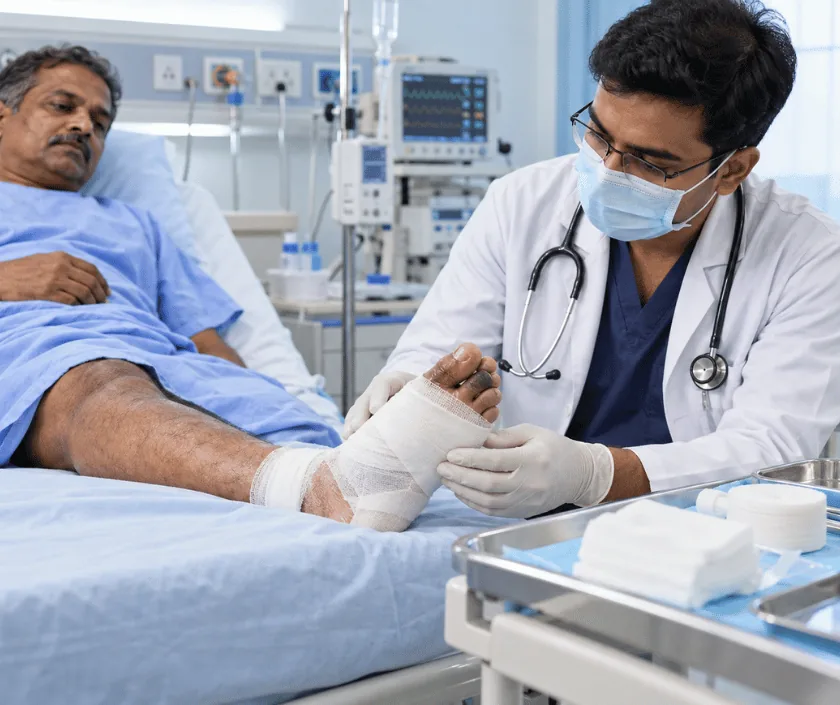
Wet gangrene means tissue has died and become infected at the same time, most often in a toe, foot or leg with poor blood supply or uncontrolled diabetes. Because the infection can enter the bloodstream, surgery to remove dead tissue is arranged urgently. Antibiotics, sugar control and tests of the arteries follow, and the level of any amputation is decided only after the tissue declares itself.
The first job is to stop the infection travelling. Under anaesthesia, dead skin, fat, tendon and sometimes bone are removed until living tissue is reached, and pus collections are drained fully. Cultures are taken so that antibiotics can be matched to the organism rather than guessed at for long. This early operation is about safety and drainage, not about closing the wound.
Attention then turns to the blood supply. Pulses are examined, a Doppler study is done, and an angiogram may be advised when flow looks poor. Where a blockage is found, a vascular colleague may open or bypass the artery, because a wound with weak flow will not heal however carefully it is dressed.
Once infection is controlled and flow is as good as it can be, the wound is prepared with dressings or negative pressure therapy. Closure may then be by direct suture, a skin graft or a flap, and a planned amputation is sometimes the option that gives the quickest return to walking.
Urgent debridement is offered to everyone with wet gangrene. How much of the limb can be preserved depends on the blood supply, the spread of infection and general health.
Blood tests, cultures, a sugar profile and a check of the pulses come first, along with antibiotics and fluids. Any collection of pus is identified, and the timing of surgery is set within hours rather than days.
Dead and infected tissue is removed until healthy bleeding tissue appears, and pus tracks are laid open. The wound is dressed and left open, and samples are sent to guide the antibiotic plan.
Doppler examination, and an angiogram where indicated, show whether flow reaching the wound is enough for healing. Angioplasty or bypass may be arranged with a vascular colleague before any attempt at closure.
Regular dressings or negative pressure therapy clean the bed and encourage granulation tissue. Sugar control, anaemia correction and nutrition are pushed hard during this phase, since they decide whether closure will hold.
A settled wound is closed with sutures, a skin graft or a flap. When healing at that level is unlikely, an amputation is planned at the lowest level that can heal and still allow walking.
Antibiotics, fluids and pain relief continue while the wound is inspected daily. Sugar levels are checked frequently, and a second visit to theatre is sometimes planned.
Discharge is common at this stage with a dressing plan. The wound looks cleaner, swelling reduces, and walking aids or offloading footwear are arranged.
Many wounds are closed or well grafted by now. Standing and walking distance improve steadily, though the foot may still need protected footwear.
Skin becomes tougher and gait settles. Ongoing foot care, sugar control and yearly review help protect the limb, since a second episode is possible.
Much depends on the blood supply and on sugar control, not on surgical skill alone. Many people keep a functional foot when treatment starts early, while others do better with a planned amputation and a good prosthesis. Wounds usually close, though the shape of the foot changes and protective footwear becomes part of daily life. Sensation rarely returns in a neuropathic foot, so regular checking remains important.
Surgery in infected and poorly supplied tissue carries risks that are discussed frankly before consent.
Home care decides much of the outcome, and simple daily habits protect the result.
Infection usually extends beyond what is visible, so clearance continues until healthy bleeding tissue is reached.
Most amputations for wet gangrene involve a toe or part of the forefoot, and the level is chosen to keep walking possible.
Healing depends on sugar control, so both are treated together from the first day rather than one after the other.
Applied dressings cannot revive dead tissue, and delay while trying them allows the infection to reach deeper structures.
Elegance Clinic in Surat treats wet gangrene as a combined problem of infection, circulation and diabetes rather than a wound alone. Each stage is explained to the family before it is carried out.

The cost of treating wet gangrene depends on how much tissue has to be removed, whether the arteries need treatment, the number of dressings and theatre visits, and the type of closure at the end. Emergency debridement is priced separately from any later reconstruction, and a written estimate is shared as soon as the first assessment is complete. Insurance and government schemes commonly cover emergency admission and surgery, and the team helps families gather the documents needed for approval.
These are the questions that come up most often in consultation. If yours is not here, send it on WhatsApp and the team will reply, usually the same day.
Ask your question →It is urgent. Infected dead tissue keeps releasing bacteria into the bloodstream, so surgery is usually arranged within hours of assessment. Waiting for the black area to separate on its own risks sepsis and the loss of more of the limb.
Often yes, especially when treatment begins early and the arteries are open or can be opened. Salvage depends on blood flow, the spread of infection and sugar control, and the answer becomes clearer after the first debridement.
Cost varies with the extent of tissue removal, hospital days, any artery treatment and the final closure. A written estimate is shared after assessment, and the family is told before any additional procedure is added to the plan.
Age alone rarely rules out surgery. Physician and anaesthetic colleagues assess heart, kidney and sugar status first, and the operation is kept limited where possible, because leaving infected tissue behind carries the greater risk.
Recovery can vary. Small wounds may close within a few weeks, while larger defects need dressings for longer before a graft or flap. Blood supply and sugar control influence the timeline more than the size of the wound does.
A second episode is possible, particularly when diabetes or artery disease continues. Daily foot inspection, well fitted footwear, sugar control and early review of any new wound reduce that chance considerably.
Expect examination of the wound and pulses, blood tests, a sugar profile and often a Doppler study. The surgical plan, the likely number of stages and a written estimate are discussed before admission is arranged.
Each technique below has its own page explaining how it works and when it is chosen.
Seeing patients from across the city and beyond: read about the practice on the plastic surgeon in Surat page, or check what a written estimate covers on the costs and insurance page.
