The tip of the elbow is bone covered by loose skin and a thin sac of fluid, with nothing else in between. Patients who push themselves up in bed rest their whole upper body weight on those two small points.
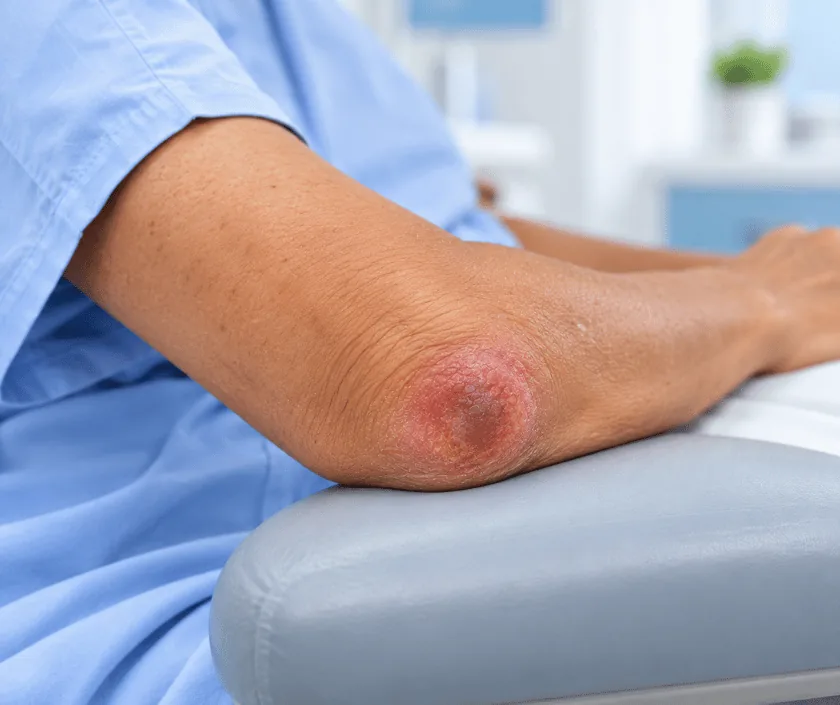
An elbow pressure sore forms over the bony tip of the elbow, known as the olecranon, in people who lean on their elbows to shift position in bed or who rest them on a hard armrest. The skin there is thin and mobile, so wounds reach bone easily. Care combines padding, changed positioning, wound cleaning and, when bone is exposed, tissue cover.
Rest your elbow on a hard table and you can feel exactly why this happens. The olecranon is a sharp projection of the ulna, one of the forearm bones, and the skin over it is thin and slides freely. Underneath sits a small fluid filled sac called a bursa that helps the skin glide, but it offers no real cushioning against sustained pressure.
Sores here have two common causes. The first is bed mobility, where a patient repeatedly digs both elbows into the mattress to shift the hips or reach for something. The second is prolonged resting on an armrest, a wheelchair support or a bed rail. Damp bedding, friction from sliding and thin skin in older patients all make it worse.
An important point is that not every swollen elbow is a pressure sore. The bursa itself can become inflamed or infected, causing a tender, warm swelling with intact skin. That condition needs a different approach, so examination distinguishes between the two before any treatment starts.
Most elbow sores are managed without an operation. Surgery becomes relevant when dead tissue must be removed, when the bursa is infected or when bone lies exposed.
The elbow is examined to separate a pressure sore from an inflamed bursa, and the depth of any wound is checked. Imaging is arranged when the bone or joint may be involved.
Elbow padding is fitted and the way the patient moves in bed is changed, often using a trapeze bar, a hoist or attendant assistance instead of pushing up on the elbows.
Dead tissue is cleared and dressings are matched to the wound bed. Cultures guide antibiotics if infection is present, and protein intake is reviewed at the same time.
An infected or persistently swollen bursa may be drained or removed. This is planned carefully because the skin over the elbow is thin and heals slowly under tension.
When bone or joint lies exposed, a local flap brings padded tissue with its own blood supply across the elbow, and the arm is then rested in a protective position.
The arm is rested in the position advised, often with a light splint. Dressings stay dry, and the elbow is kept off the mattress with soft padding.
The wound is reviewed and stitches are checked. Gentle finger and shoulder movement is usually encouraged so the whole arm does not become stiff.
Bending and straightening are normally being restored under guidance. Leaning on the elbow is still avoided, and padding continues during transfers.
Most people use the arm normally again. Because the skin over a healed elbow stays thin, padding is often advised whenever the arm rests for long periods.
Elbow wounds usually close well once the pressure is removed, and most people regain a comfortable range of movement. Skin over the joint remains thin, so it can break down again if the elbows are used for pushing up in bed. Some stiffness may persist if the arm was rested for a long time. Recovery can vary with age, nutrition and the underlying medical condition.
The elbow moves constantly and its skin is thin, which makes healing here less forgiving than on other parts of the body.
Protecting the elbow at home is mostly about changing habits that developed over months. Alternatives need to be in place before the old ones can stop.
The bone lies just under the skin, so even a small wound at the elbow tip can expose bone or reach the joint.
An inflamed or infected bursa can look similar with intact skin, and it is treated in a different way after examination.
Total rest leads to stiffness. Guided movement alongside protection from pressure gives a better long term result.
The skin over a healed elbow stays thin, so padding and changed transfer habits remain worthwhile.
Elbow wounds are often treated as an afterthought. At Elegance Clinic in Surat, Dr. Ashutosh Shah looks at how the patient actually moves in bed, because that habit usually explains the wound.

Treatment ranges from padding and dressings through to drainage of a bursa or a local flap, so the cost varies accordingly. A written estimate is given once the elbow has been examined and the depth of the wound is known, and any insurance cover is discussed at the same time.
These are the questions that come up most often in consultation. If yours is not here, send it on WhatsApp and the team will reply, usually the same day.
Ask your question →It depends on whether padding and dressings are enough or whether drainage of a bursa or flap cover is required. A written estimate is prepared after examination, and any insurance cover is explained during the same consultation.
A tense, warm swelling with unbroken skin often points to an inflamed bursa rather than a pressure sore. The two look similar to families but need different treatment, so examination before starting any dressing is important.
Shallow wounds often close within a few weeks once the pressure is removed. Deeper ones that expose bone take longer and may need surgical cover. Recovery can vary with nutrition, age and how much the arm is used.
Most people regain comfortable movement. Gentle guided exercises usually begin early to prevent stiffness, while leaning on the elbow is avoided until the wound is judged secure by the treating team.
A trapeze bar above the bed, a bed rail used with the hands rather than the elbows, or assistance from an attendant all work. The right option is chosen according to arm strength and the home setup.
It can, since the skin over the joint stays thin after healing. Continuing to use padding, keeping bedding dry and avoiding the habit of pushing up on the elbows are what prevent a repeat.
When redness over the elbow does not fade, when the skin breaks, or when the joint becomes swollen and warm. Early review is usually simple and prevents the wound from reaching bone.
Seeing patients from across the city and beyond: read about the practice on the plastic surgeon in Surat page, or check what a written estimate covers on the costs and insurance page.
