A deep bedsore leaves a hollow that dressings cannot fill, because there is nothing left to grow across the bone. Flap surgery borrows healthy tissue from beside the wound and moves it in with its own blood supply.
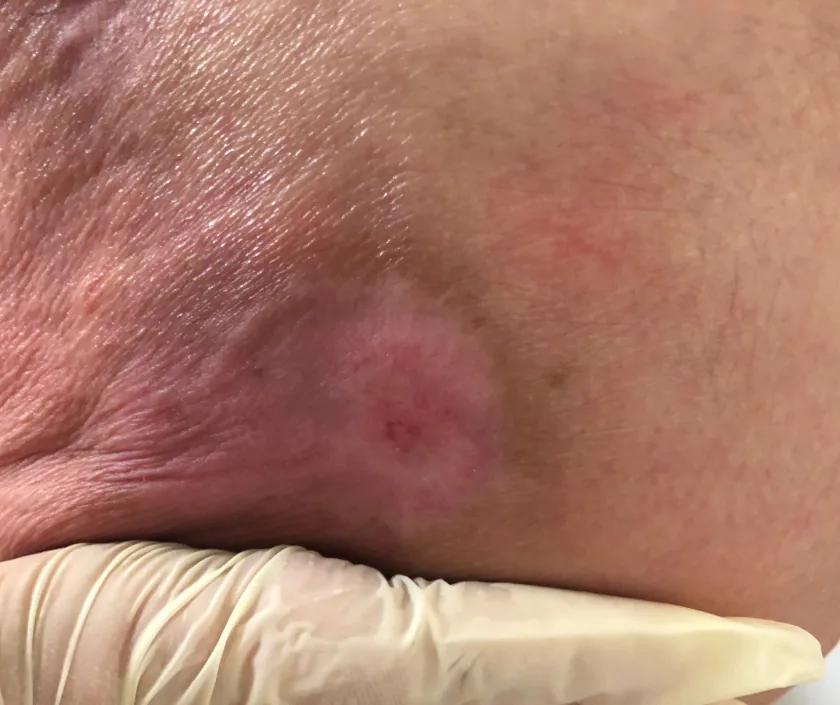
Flap surgery for a bedsore moves a block of nearby skin, fat and often muscle over the wound while keeping its own blood vessels attached. Unlike a skin graft, a flap brings thickness and circulation, which is what a deep cavity over bone needs. It follows debridement and infection control, and it works only when the pressure that caused the sore is corrected afterwards.
When a pressure sore reaches bone, the body cannot bridge the gap on its own. There is no fat or muscle left to fill the hollow, and the exposed bone has no surface that new skin can creep across. A flap solves both problems at once by moving healthy tissue from beside the wound into the defect, complete with the blood vessels that feed it.
Several types are used, chosen by site. Some are rotated around a pivot point, some slide across, and some carry muscle with them to add bulk and improve resistance to infection. At the sitting bones and the hip, muscle is often included because those areas take real load. The donor area beside the wound is then closed directly.
What matters for families is the sequence. The wound is cleaned first, sometimes more than once, and infection is settled. Nutrition, haemoglobin and blood sugars are corrected. Only then is the flap planned, because tissue moved onto an unhealthy bed or into an undernourished patient is likely to break down.
Flap surgery gives the best result in patients whose wound is clean, whose general health has been optimised and who have real support for positioning afterwards.
Blood tests, sugar control and nutrition are reviewed, wound swabs guide antibiotics, and imaging is arranged when the bone underneath appears to be involved in the wound.
All dead and infected tissue is removed, including any unhealthy bone surface, until the wound bleeds cleanly. This may be staged over more than one visit to theatre.
The design is chosen for the site and for the tissue available nearby, keeping future options open in case another operation is ever needed at the same area.
The flap is raised with its blood supply intact, moved into the defect and stitched without tension. Drains are placed, and the donor area beside it is closed directly.
Positioning keeps all pressure off the repair while it settles. Drains are removed as output falls, and sitting or lying on the area is reintroduced gradually.
You are positioned strictly off the operated area. Flap colour is checked regularly, drains stay in place, and pain relief is adjusted so turning remains comfortable.
Drains come out as drainage settles and the suture line is inspected at each review. Protein rich food and any prescribed supplements matter as much as the dressings.
The repair is usually strong enough for graded pressure. Sitting or lying on the area begins in short timed spells, with the skin checked after each one.
Most people are back to a normal routine on a suitable cushion or mattress. Daily skin checks continue, because flap skin never becomes as tough as normal skin.
Most flaps settle well and the wound stays closed, which usually transforms daily life for the patient and the family. The area may look slightly raised at first and flattens over months. Flap skin remains less tolerant of pressure than normal skin, so care continues for life. Recovery can vary with nutrition and general health, and a further operation is sometimes needed if the sore returns.
Flap surgery is a substantial operation and carries real risks, which are set out before consent so that expectations are clear from the start.
The operation buys a closed wound. What happens at home over the following months decides whether that closure holds.
Grafts are thin and need a healthy bed, so over bone or in weight bearing areas they usually fail where a flap holds.
Pressure is reintroduced in timed stages over weeks, because the tissue needs time to tolerate load safely.
Debridement, infection control and nutrition come first, since a flap placed on an unhealthy bed is likely to fail.
It closes the wound. Cushions, turning, nutrition and daily skin checks are what prevent the sore from returning.
Flap reconstruction at Elegance Clinic in Surat is planned in stages, with the wound prepared properly before any tissue is moved. Dr. Ashutosh Shah explains each stage and the reason for it before proceeding.

The estimate reflects the site of the sore, how many debridements are required and the type of flap chosen, along with the length of stay. A written figure is given after examination and blood tests, and admissions of this kind are usually processed under mediclaim with documents from the treating team.
These are the questions that come up most often in consultation. If yours is not here, send it on WhatsApp and the team will reply, usually the same day.
Ask your question →The estimate depends on the site, the number of cleaning procedures needed and the flap chosen, along with the length of stay. A written figure is shared after examination, and most such admissions are handled under mediclaim.
It is performed regularly in this group. Fitness is assessed with blood tests and a physician review, anaesthesia is planned to suit the condition, and infection is treated first. Closing a draining wound often improves general health.
Protected positioning is usually needed for several weeks, after which pressure is reintroduced in timed stages. Full settling of the flap takes months. Recovery can vary with nutrition, diabetes control and how strictly the schedule is followed.
Partial breakdown is treated with dressings and sometimes a smaller repair. If a larger area fails, another flap can often be planned, which is why the first design is chosen to preserve future options.
A graft needs a healthy bed with good blood supply and stays thin afterwards. Over exposed bone or in areas that take body weight it usually fails, so a flap is preferred for deep pressure wounds.
It can if pressure returns to the area. Recurrence becomes far less likely when a suitable cushion or mattress, regular position changes, dry skin and good protein intake become part of daily routine.
When a wound reaches bone or tendon, when it has stopped improving over several weeks, or when infections keep returning. Earlier assessment usually means a smaller operation and a shorter stay.
Each technique below has its own page explaining how it works and when it is chosen.
Seeing patients from across the city and beyond: read about the practice on the plastic surgeon in Surat page, or check what a written estimate covers on the costs and insurance page.
