The heel has thin skin, a curved bone and almost no muscle to absorb pressure, so a sore can appear within days of immobility. Getting the heel off the bed matters as much as any dressing applied to it.
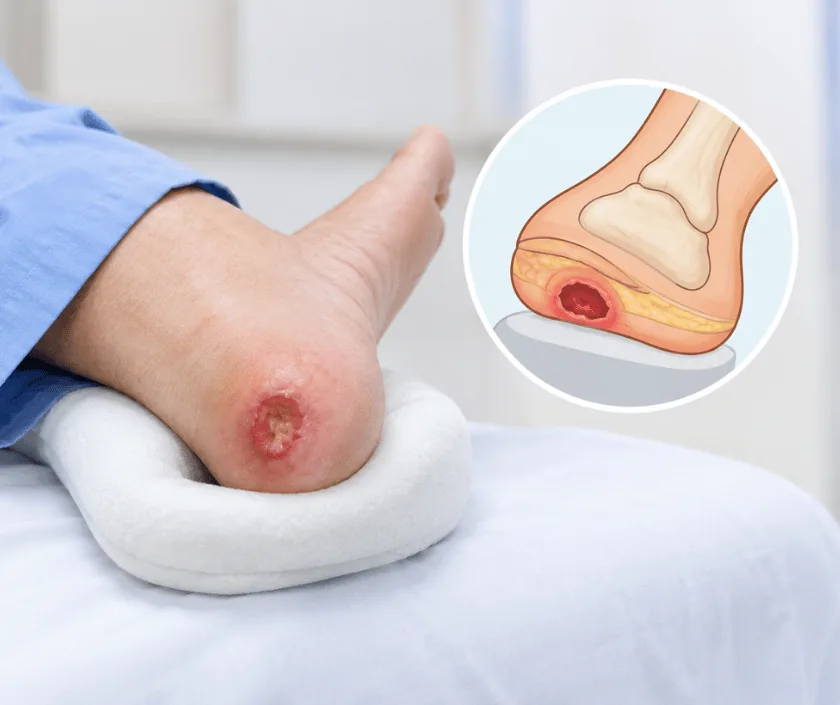
A heel pressure sore forms when the back of the heel rests against a bed or footrest without relief. Because the skin sits almost directly on bone, damage reaches deep tissue fast. Treatment removes dead tissue, checks the blood supply to the foot and keeps the heel floating clear of the surface, with surgery reserved for wounds that expose bone or tendon.
Look at the back of the heel and you are looking at one of the least protected areas of the body. A curved bone called the calcaneus sits under a thin layer of skin and fat, with no muscle in between. When someone lies on their back for hours, the full weight of the leg presses that small curved surface into the mattress.
The first sign is often a purple or maroon patch, sometimes with a blister. Under it, deeper tissue may already be damaged. Heel wounds are also unusual because circulation matters so much. Many patients who develop them are older, diabetic or have narrowed leg arteries, and a wound cannot heal on a foot that is not receiving enough blood.
For this reason, assessment covers the pulses in the foot, sensation, sugar control and footwear as well as the wound itself. In some cases a stable dry scab acts as a natural cover and is protected rather than removed. That decision is a medical one and should never be taken at home.
Most heel sores are managed without an operation. Surgery becomes relevant when dead tissue must be removed or when bone and tendon are exposed and need cover.
Pulses in the foot are felt and further vascular tests may be advised. Healing depends on blood flow, so this comes before any decision about removing tissue from the heel.
The heel is lifted clear of the mattress, usually with a pillow supporting the calf so the foot hangs free. Casts and splints are checked and adjusted where they press.
Dressings are selected for the state of the wound, moist ones for a soft base and protective ones for a stable dry scab. Sugar control and nutrition are corrected in parallel.
Loose dead tissue is removed once the circulation is known to be adequate. This may be done in stages, and cultures guide antibiotics if infection is present.
When tendon or bone lies exposed, a local flap or a skin graft over healthy tissue is planned to give durable cover before walking is resumed.
The heel is kept completely free of the bed. Dressings are checked, pain relief is adjusted and the foot is watched for colour, warmth and swelling.
Wound review continues at set intervals. If a graft or flap was used, the dressing is left undisturbed until the team opens it, and the leg stays elevated.
Many wounds have closed or shrunk considerably. Weight bearing may be reintroduced in stages with protective footwear if the heel tolerates contact.
Skin over a healed heel stays fragile, so well fitted footwear, daily foot checks and continued sugar control remain part of ordinary routine.
Heel wounds are slow, and honest expectations help. Many close with consistent offloading and dressings, though healing can take weeks or longer when circulation or diabetes is involved. Skin over a healed heel remains thinner than normal, so pressure and friction must be avoided long term. If blood flow to the foot is poor, treating that comes first and the wound outcome depends heavily on it.
Heel wounds carry particular risks because the tissue layer is thin and blood supply is often already reduced. These points are discussed before any procedure.
The single most useful thing at home is keeping the heel off every surface it touches. The other points support that one.
A dry, firm and stable scab can act as a natural cover, and removing it without assessing blood flow may make the wound worse.
A cushion under the heel still presses on it. The heel needs to float clear, with support placed under the calf instead.
Circulation, diabetes and nutrition all decide whether a heel wound heals, so medical review matters as much as dressings.
Reduced sensation from diabetes or nerve damage can hide a deep wound, which is why daily visual checks are advised.
Heel wounds at Elegance Clinic in Surat are assessed for blood supply and diabetes control before anything is planned for the wound itself. Dr. Ashutosh Shah explains why a particular heel is being treated the way it is.

Charges vary widely because some heel wounds need only dressings and offloading while others require debridement or flap cover. A written estimate is prepared after the foot has been examined and the circulation assessed, so that you know the likely course before treatment begins.
These are the questions that come up most often in consultation. If yours is not here, send it on WhatsApp and the team will reply, usually the same day.
Ask your question →It depends entirely on what the wound needs, from simple dressings with offloading to debridement or flap cover. A written estimate is given after the foot is examined and circulation is assessed, so there are no surprises later.
No. A dry, firm scab may be protecting the tissue underneath, and removing it without knowing the blood supply can enlarge the wound. Any decision about removing tissue is made after examination and circulation testing.
Healing is usually slow because the tissue layer is thin and blood flow is often reduced. Many wounds take weeks, and longer when diabetes or artery disease is involved. Consistent offloading is what shortens the timeline most.
Most people return to walking once the wound is closed and the heel tolerates contact. Protective footwear is usually advised, and the skin over a healed heel stays thinner, so friction and pressure need continued attention.
Not at all. Many heal with offloading, suitable dressings, better nutrition and sugar control. Surgery is considered when dead tissue must be removed or when tendon or bone is exposed and needs cover.
A wound on the foot cannot heal without adequate blood flow. Checking pulses and, if needed, arranging vascular tests tells the treating team whether the wound can heal and whether circulation must be improved first.
As soon as a purple patch, blister or open area appears on the heel. Early assessment often prevents a small area of damage from becoming a deep wound that exposes bone or tendon.
Each technique below has its own page explaining how it works and when it is chosen.
Seeing patients from across the city and beyond: read about the practice on the plastic surgeon in Surat page, or check what a written estimate covers on the costs and insurance page.
