The greater trochanter is the wide bump of the thigh bone you feel at the side of the hip. Lying on one side for hours presses the skin against it, and a sore can reach the joint if it is left alone.
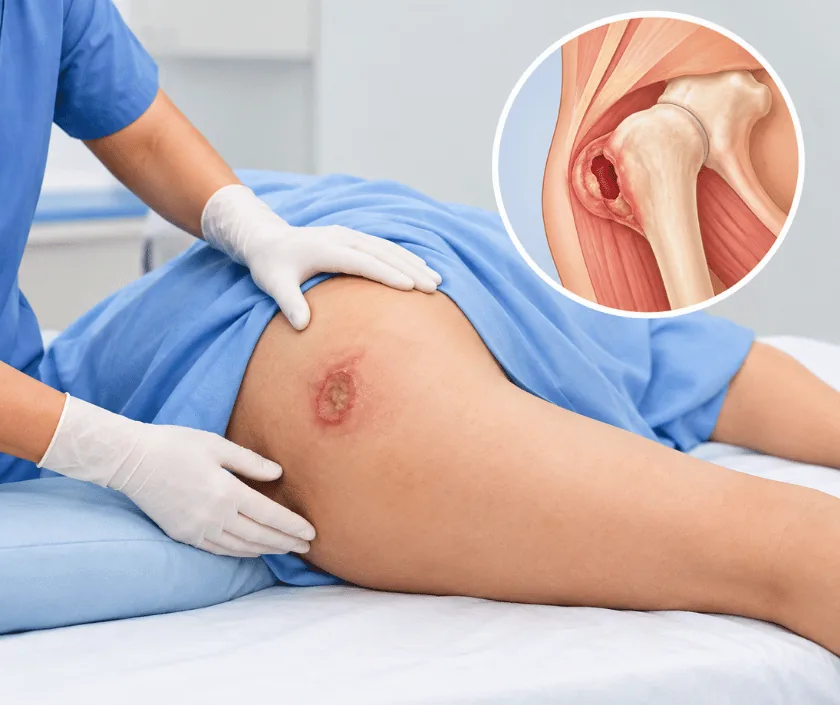
A trochanteric pressure sore develops over the bony bump at the outer hip, usually in someone who lies on one side for long periods. Dead tissue and any infected bone are removed first, then a flap of nearby muscle and skin is moved across to pad the area. Turning schedules and mattress choice are corrected at the same time.
Place your hand on the side of your hip and press gently. The hard ridge under your fingers is the greater trochanter, the upper part of the thigh bone where several muscles attach. Only a thin layer of tissue covers it, so when a person lies on one side without moving, the skin over that ridge is trapped between the bed and the bone.
Sores here often start as a dusky purple patch that later opens. Because the bone is close, the wound can tunnel sideways and downwards, sometimes towards the hip joint itself. Patients who are unconscious, sedated, frail or recovering from a stroke are at particular risk, since they cannot turn themselves or feel the discomfort that would normally make them move.
Assessment therefore looks past the visible opening. The depth of the cavity, whether the bone is exposed and whether the joint is involved all change the plan. Some wounds need more than one round of cleaning before healthy tissue can be brought in to cover them.
The aim is a stable, padded cover over the bone. That is achievable when infection has been controlled and the person can be positioned off the operated hip during healing.
The cavity is probed gently and imaging may be advised to see whether the bone or joint is involved. Blood tests check nutrition, sugar control and markers of infection before planning.
Dead skin, unhealthy muscle and any soft or infected bone surface are removed. More than one session is sometimes needed before the wound bed is ready to accept a flap.
Cultures guide antibiotic choice, and dressings or negative pressure therapy are used while swelling settles and the surrounding tissue becomes healthy enough for surgery.
A flap of nearby muscle and skin, commonly from the outer thigh, is rotated over the trochanter. Drains are placed, and the flap is designed to lie without tension.
Strict positioning keeps weight off the operated hip while the flap settles. The wound is reviewed regularly, and turning routines are taught to the family before discharge.
The patient is kept off the operated hip using pillows or a positioning wedge. Drains stay in, pain relief is given, and the flap colour is checked several times a day.
Drains are removed as the fluid reduces and stitches are watched for any separation. Protein rich feeding continues, and gentle joint movement may be started if advised.
The suture line is usually strong enough for controlled side lying on a pressure redistributing surface, though the schedule is set by the treating team rather than by comfort.
Most patients are back to their normal positioning routine. Daily skin checks over both hips continue, since the opposite side now carries more of the load.
A healed flap gives the hip a padded cover and usually ends the cycle of dressings. The contour may look slightly bulky at first and settles over months. Recovery can vary with age, nutrition and how well positioning is maintained. Because the opposite hip now takes more pressure, many families find that the second side needs just as much attention as the treated one.
The hip is a mobile area, so movement and pressure both work against early healing. These risks are explained plainly before you agree to surgery.
Once home, the turning routine becomes the treatment. Written timings on a chart near the bed help attendants stay consistent through the night as well as the day.
Skin can close over a cavity that is still open underneath, which is why depth is assessed rather than assumed.
Turning helps, though a hard or sagging mattress can still concentrate pressure at the hip between changes.
These wounds can tunnel towards the hip joint, so pain on moving the leg is always taken seriously.
Even patients who remain in bed benefit from flap cover, since it ends the discharge and lowers infection risk.
Elegance Clinic in Surat treats hip bedsores as a nursing problem and a surgical one together. Dr. Ashutosh Shah reviews the mattress, the turning routine and the nutrition alongside the wound itself.

The final figure depends on wound depth, the number of cleaning procedures needed and whether the bone is involved. A written estimate follows the first examination and blood tests, and admissions of this kind are usually taken up under mediclaim with the documents provided by the treating team.
These are the questions that come up most often in consultation. If yours is not here, send it on WhatsApp and the team will reply, usually the same day.
Ask your question →The estimate depends on how deep the wound runs, how many debridements are required and which flap is used. A written figure is shared after examination. Most such admissions are processed under mediclaim, and the required paperwork is explained beforehand.
Age alone does not rule it out. Fitness is assessed with blood tests and a physician review, anaesthesia is chosen to suit the general condition, and infection is treated first. For many frail patients, closing a draining wound actually improves overall health.
The suture line usually needs several weeks before it tolerates any pressure, and full settling of the flap takes longer. Recovery can vary with nutrition, diabetes control and how strictly the positioning schedule is followed at home.
Gentle joint movement is usually encouraged early to prevent stiffness, while direct pressure on the operated side is avoided until the wound is judged secure. Walking or transfers resume according to the underlying medical condition.
That risk is real, because turning shifts the load to the opposite side. Daily skin checks on both hips, a pressure redistributing mattress and regular position changes are the practical way to prevent it.
No. Shallow wounds with a healthy base may heal with pressure relief, dressings and better nutrition. Surgery is advised when the cavity is deep, the bone is exposed or the wound has stopped improving.
Sooner is better. A dark patch that does not fade, a wound that leaks fluid or any wound not improving over a few weeks deserves an assessment before it tunnels further towards the joint.
Seeing patients from across the city and beyond: read about the practice on the plastic surgeon in Surat page, or check what a written estimate covers on the costs and insurance page.
