Large or deep wounds that expose bone, tendon or metalwork will not close on their own. Reconstruction brings healthy tissue with its own blood supply into the gap so the area can heal and then stay healed.
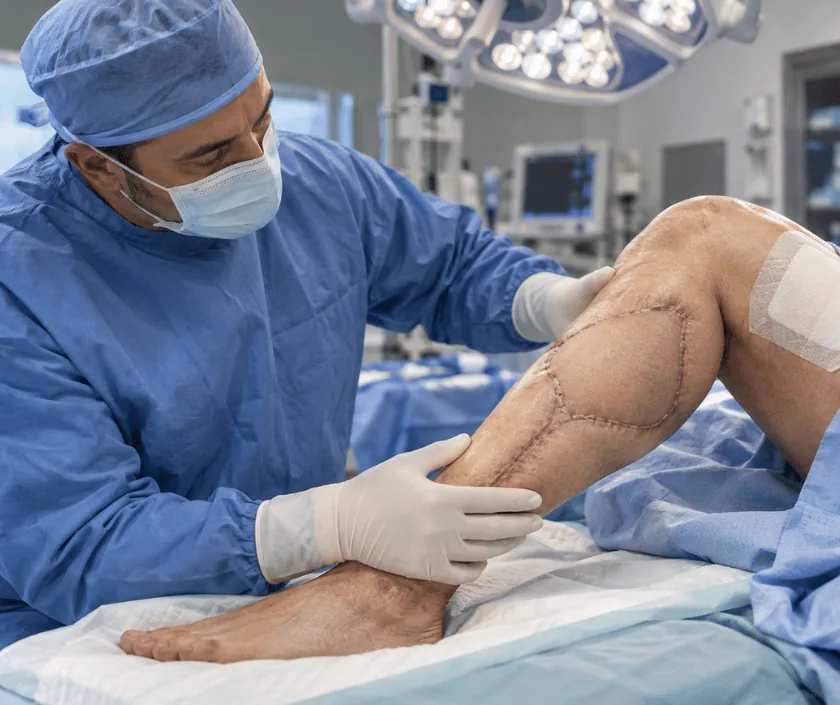
A complex soft tissue defect is a wound too large, too deep or too poorly supplied to heal by dressings alone. Reconstruction fills it with living tissue moved from nearby or from a distant site, using local flaps, regional flaps or microsurgical free flaps. The choice depends on what is exposed, how big the gap is and which blood vessels are available.
Wounds differ in more than size. A shallow wound over healthy muscle will granulate and take a skin graft happily. A deep wound with bare bone, exposed tendon or a plate showing at its base will not, because a graft needs a living bed to feed on. That distinction drives every decision that follows.
Reconstruction supplies what the wound lacks. Living tissue is moved into the gap carrying its own blood supply, which brings circulation, helps fight infection and provides durable padding. Nearby tissue can sometimes be rotated across as a local flap. Larger or more awkward defects need tissue taken from elsewhere and joined to vessels at the wound under a microscope.
Preparation matters as much as the flap itself. Dead tissue is removed, infection is controlled and the wider picture is addressed, including diabetes, nutrition and smoking. Reconstruction placed onto a clean, healthy bed has a far better chance than the same operation rushed over tissue that was never ready.
Suitability depends on the wound, your general health and the state of the blood vessels nearby. More than one assessment is often needed before a plan is fixed.
The defect is measured and its base examined for exposed structures. Swabs, blood tests and imaging of the blood vessels may be arranged before any decision on the flap is made.
Dead and infected tissue is removed, sometimes over more than one visit to theatre. Dressings hold the wound in good condition until it is genuinely ready for cover.
Local, regional and free flap options are weighed against the size of the defect, what is exposed and the donor scars each would leave. You are shown what every choice involves.
Your flap is raised with its blood supply and set into the defect. In free flap surgery, arteries and veins are joined under a microscope and blood flow is confirmed before closing.
Flap colour and warmth are checked frequently in the first days. Physiotherapy begins as soon as it is safe, since stiffness and weakness build quickly without it.
You stay in hospital with the flap monitored closely. Positioning, warmth and fluid balance are managed carefully, and movement is deliberately restricted.
Drains are removed and dressings settle into a routine. Sitting, standing or partial weight bearing begins gradually where the site allows.
Wounds are usually healed and rehabilitation is well advanced. Return to light work is common, though limb function is still improving.
Swelling reduces and the flap softens. Thinning or contour adjustment can be considered now if the reconstructed area is bulky.
A successful flap closes the wound and protects what lies beneath, which is the main goal. The reconstructed area usually looks different from surrounding skin in colour and texture, and sensation is often reduced. Bulk sometimes needs thinning at a later sitting. Donor sites leave scars of their own. Function tends to improve steadily for months with rehabilitation, and outcomes are judged across that longer period.
These operations carry significant risks, and they are explained fully before consent is taken.
A flap needs steady blood flow, protection and movement in the right measure, so instructions at discharge are specific.
A graft needs a living bed. Over bare bone, tendon or metalwork it will not take, so tissue with its own blood supply is required.
The right operation is the one the wound needs. A well chosen local flap can outperform a complicated free flap in the correct situation.
Rehabilitation, swelling control and review continue for months, and function often improves long after the skin has healed.
Smoking narrows small vessels and is among the strongest factors working against flap survival, which is why stopping is emphasised so firmly.
Elegance Clinic in Surat plans limb and wound reconstruction around what the defect actually needs, with preparation, surgery and rehabilitation treated as one pathway.

Cost reflects the complexity of the reconstruction, the number of trips to theatre for cleaning, the length of stay and whether microsurgery is involved. Imaging of blood vessels and physiotherapy also form part of the total. After assessment we set out a written estimate covering each element. Insurance commonly contributes when the wound follows trauma, infection, diabetes or cancer treatment.
These are the questions that come up most often in consultation. If yours is not here, send it on WhatsApp and the team will reply, usually the same day.
Ask your question →The total depends on the type of flap, the number of theatre visits needed to clean the wound, length of stay and whether microsurgery is used. Imaging and physiotherapy add to it. A written estimate follows assessment, and insurance often contributes.
Flap failure, bleeding, clotting and infection are the main concerns, alongside the general risks of a long anaesthetic. Most flaps survive when patients are selected carefully and monitored closely, but the early days remain the critical period.
Several days is usual so the flap can be watched closely, and longer if the wound needed cleaning first. Light activity often returns around six weeks, while limb function keeps improving with rehabilitation for months.
The reconstructed area usually differs in colour and texture, and sensation is often reduced. Donor sites carry their own scars. The primary aim is durable cover and function, with contour refined later if the tissue is bulky.
Diabetes does not rule you out, though control matters a great deal. Blood sugar, circulation in the limb and infection are assessed first. Poorly controlled diabetes raises the chance of wound problems, so it is addressed before surgery.
After dead tissue has been removed and infection is settling, which sometimes means more than one visit to theatre. Some wounds are covered early, while others need days of preparation. That timing is judged wound by wound.
The wound is examined and photographed, exposed structures are identified and imaging or blood tests may be arranged. Flap options and their donor scars are explained, and you receive a written estimate with the likely stages set out.
Each technique below has its own page explaining how it works and when it is chosen.
Seeing patients from across the city and beyond: read about the practice on the plastic surgeon in Surat page, or check what a written estimate covers on the costs and insurance page.
