A hypertrophic scar sits raised and red, yet it stays inside the borders of the original wound. With steady treatment over months, many of these scars flatten, soften and fade enough to stop drawing attention.
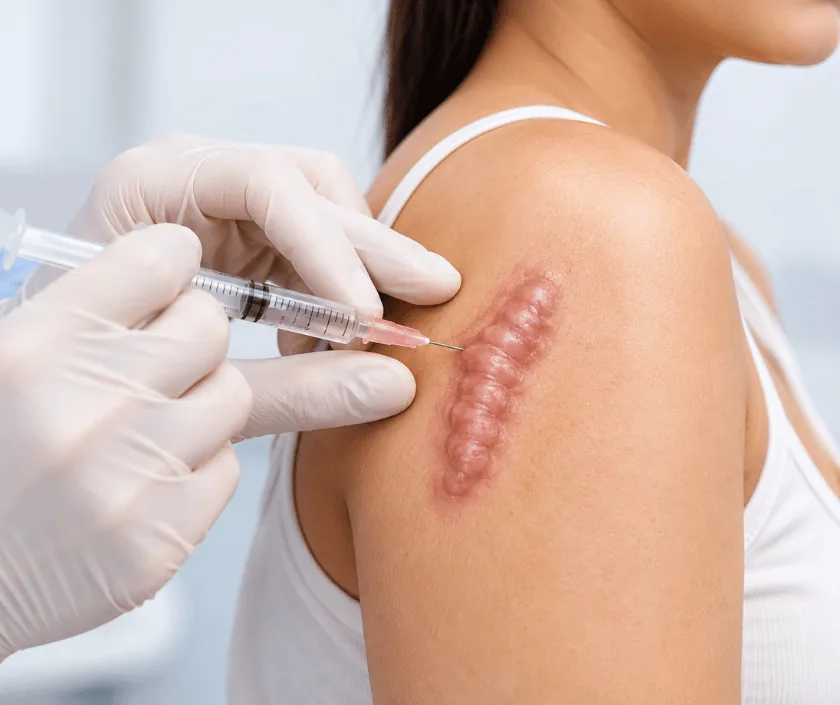
Hypertrophic scars are raised scars that stay within the original wound. Treatment usually begins with pressure, silicone and massage, and steroid injections are added when a scar stays thick. Surgery is kept for scars that limit movement or fail to settle. Most plans run over months rather than weeks, and results vary between people.
Skin repairs itself by laying down collagen. Sometimes it lays down more than the wound needs, and the scar rises above the surrounding surface. That raised, firm, often red or itchy scar is called hypertrophic. It usually appears in the first few weeks after an injury, a burn or an operation, and it stays inside the outline of the wound that caused it.
Keloids behave differently. A keloid keeps growing past the original wound edge and spreads into skin that was never cut or burned. Patients confuse the two constantly, and the difference matters because keloids are more stubborn and return more readily. Looking at the border of the scar is the simplest guide: within the line suggests hypertrophic, beyond the line suggests keloid.
Position also plays a part. Scars over the chest, shoulder, upper back and across joints face more tension and tend to thicken. Age, skin tone, wound infection and slow healing all push a scar towards thickening as well. Understanding which pattern you have shapes the treatment plan, so assessment comes before any procedure.
Treatment is chosen to match the age, site and thickness of the scar rather than applying one method to everyone. A short examination usually settles the plan.
The scar is examined for height, colour, border and effect on movement. Photographs are taken so change can be judged later, and the likely pattern of scarring is explained in plain language.
Silicone gel or sheeting, massage and pressure garments come first. This stage runs for months, and many scars soften enough here that no procedure is needed at all.
If the scar stays thick, steroid is injected into it at intervals. Several sittings are usual, and the response is checked each time before the next one is given.
When a scar limits movement or has stopped responding, it can be excised and closed in a way that lowers tension, sometimes with a Z shaped rearrangement of skin.
Silicone, sun protection and massage continue after any procedure. Review appointments are spaced across the following year, because scars keep changing long after the skin has closed.
Expect soreness, mild swelling and a dressing over the wound. Simple pain relief usually covers it, and the area is kept clean and dry.
Stitches are removed or begin to dissolve. The new scar looks pink and slightly raised, which is entirely normal at this stage.
Silicone and massage are in full routine by now. Most people are back at work and normal activity, avoiding heavy strain on the area.
Colour fades and the scar flattens gradually. Final appearance is judged around a year, and any touch up step is considered only after that.
Treatment aims to flatten and soften a scar, not to erase it. Skin that has been injured will always carry some mark, and the honest goal is a scar that is thinner, paler and less noticeable. Response varies between people and between sites on the same body. Some scars settle quickly with silicone alone, while others need injections and time. Judging the outcome fairly usually means waiting close to a year.
Every scar treatment carries some risk, and these are discussed openly before anything is started.
Most of the work happens between visits, so a simple daily routine matters more than any single appointment.
Most raised scars are hypertrophic and stay within the wound. A keloid spreads into untouched skin, which is a different problem needing different treatment.
Surgery on its own can be followed by the same thickening again. Silicone, pressure and review afterwards are what hold the improvement.
Over the counter oils may soften dry skin, but they do not reliably flatten a thick scar. Silicone and pressure have far better support.
Older scars respond more slowly, yet injections, resurfacing and revision can still improve height, colour and tightness.
Elegance Clinic in Surat treats scars as a course of care rather than a one off appointment, with time given to explain what each stage can and cannot do.

Scar treatment is usually a course rather than a single procedure, so cost depends on how many sittings are needed and which methods are used. After examining the scar we share a written estimate that covers the planned steps, consumables and review visits. Insurance may contribute when a scar restricts movement or follows an injury, and the clinic team can help you check what your policy allows.
These are the questions that come up most often in consultation. If yours is not here, send it on WhatsApp and the team will reply, usually the same day.
Ask your question →Cost depends on the method chosen and the number of sittings needed. Silicone and pressure are inexpensive but run for months, while injections and surgery add to the total. A written estimate is shared after the scar is examined, so there are no surprises later.
The measures used are well established and most people tolerate them well. Steroid injections can lighten or thin nearby skin, and surgery carries the usual risks of bleeding, infection and slow healing. All of this is explained before you decide anything.
Many people return to desk work within a few days. Stitches come out or dissolve over one to two weeks, and heavy lifting or sport waits longer. The scar itself keeps changing for months after the skin has closed.
No treatment removes a scar entirely, because injured skin always heals with a mark. The realistic aim is a flatter, softer, paler line that draws less attention and stops itching or pulling. Improvement builds slowly across several months.
People with a raised scar that has stayed within the original wound usually do well, especially if it itches, catches or limits movement. Active infection, uncontrolled diabetes and continued smoking make results less predictable and are addressed first.
Silicone and massage can begin once the wound has fully closed, often within a few weeks. Injections are considered when thickening becomes clear. Surgery is usually delayed until the scar has matured, since operating on an active scar can make it worse.
The scar is examined and photographed, and its border is checked to tell a raised scar from a keloid. Your history, healing pattern and goals are discussed, and a stepped plan with a written estimate follows before anything is booked.
Seeing patients from across the city and beyond: read about the practice on the plastic surgeon in Surat page, or check what a written estimate covers on the costs and insurance page.
