Implant based reconstruction rebuilds breast shape using a soft silicone implant rather than tissue from elsewhere on your body. It is one of several routes open to you after mastectomy, and choosing it is entirely your decision.
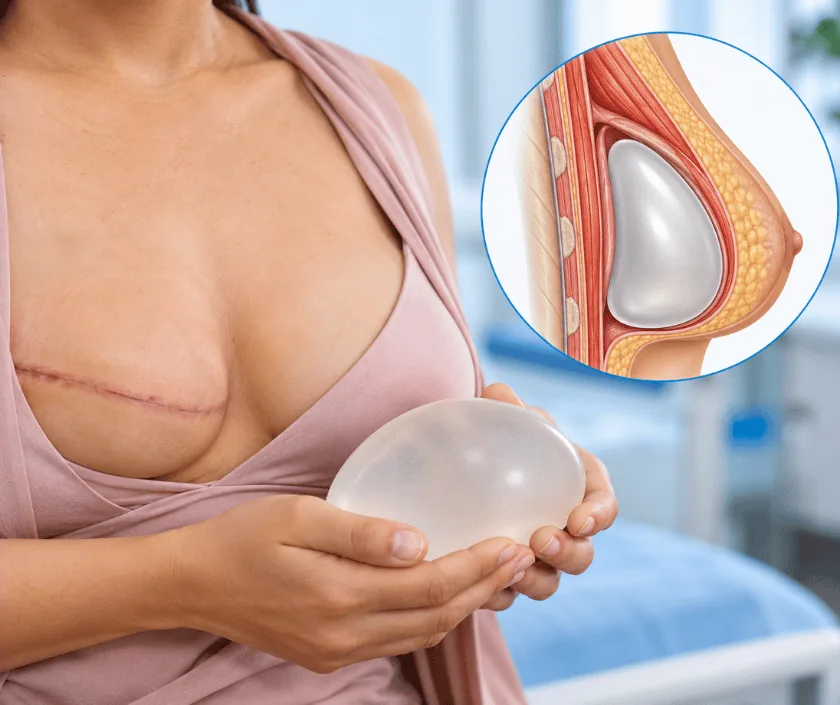
Implant based breast reconstruction restores breast shape after mastectomy by placing a silicone implant under the skin or chest muscle. It avoids a second surgical site on the body, so recovery is often quicker than flap surgery. Sensation in the reconstructed breast is usually reduced. Radiotherapy, either past or planned, can affect whether an implant is the right choice.
After a mastectomy the breast skin remains but the breast tissue underneath has been removed. An implant fills that space, giving back a shape under clothing and, for many women, a sense of the body looking more like itself. The implant sits either directly under the skin or behind the chest muscle, depending on skin quality, chest shape and whether radiotherapy is part of the plan.
Sometimes the implant goes in during the same operation as the mastectomy, which is called immediate reconstruction. Other times a soft tissue expander is placed first and the skin is stretched gradually before a lasting implant replaces it. Delayed reconstruction, done months or years after cancer treatment, is equally valid and gives you time to think.
Whichever route is chosen, this is reconstruction rather than replacement. The new breast will not behave like the original one. It will not change with weight in the same way, and feeling in the skin is usually reduced. Knowing that in advance helps you judge whether the trade is one you want to make.
Implant reconstruction fits some women well and others less so, and the honest answer depends on your skin, your cancer treatment and what matters most to you.
You meet the surgical team, usually alongside your cancer doctors. Options are laid out without pressure, photographs are discussed, and you are welcome to take the information home and come back with questions.
Chest skin, breast size on the other side and the wider cancer plan are all reviewed. Blood tests and a fitness check are arranged, and a written estimate is given before admission.
Surgery is done under general anaesthesia. The surgeon works through the mastectomy scar where possible, so no extra long incision is needed on the chest.
A pocket is made under the skin or behind the chest muscle. Sometimes a soft supportive mesh is used to hold the implant in position. Size is checked while you are on the table.
The skin is closed in layers and a fine drain may be left for a few days. You wake in recovery with a supportive garment already in place.
Chest tightness and soreness are normal and are managed with regular medicines. Most women are up and walking the day after surgery, with a drain still in place.
Drains are removed once output settles and dressings are reviewed. Tiredness is common. Lifting, driving and overhead reaching are kept limited during this window.
Swelling has usually settled a good deal and the shape is easier to judge. Many women return to office work and gentle exercise around this point.
The final shape becomes clear as scars soften. Any second stage, such as nipple reconstruction or adjustment of the other breast, is planned from here.
An implant gives shape rather than a copy of the breast you had. Under clothing the difference is often hard to notice, while without clothing the reconstructed side usually looks and feels different, sits differently when you lie down, and does not soften or move in the same way. Sensation is reduced, sometimes markedly. Scars settle over many months but never vanish. Most women weigh this honestly and still find the result worthwhile.
Every operation carries risk, and reconstruction after cancer surgery is no exception. These are discussed openly before you decide.
Simple habits in the first few weeks make a real difference to how comfortably the chest heals.
Rebuilding the breast is part of recovering from cancer treatment, and many women describe it as helping them feel whole again.
An implant does not cause cancer to return. Follow up scans and examinations continue as usual after reconstruction.
Delayed reconstruction is a genuine option years after mastectomy. Taking time to think does not close the door.
Implants may need replacing or adjusting at some stage, so a further operation later is part of the picture.
Elegance Clinic works alongside your cancer team in Surat, so reconstruction is planned around your treatment rather than in isolation.

Implant based reconstruction is priced case by case, because the implant chosen, the need for mesh, the length of stay and whether surgery is combined with mastectomy all change the total. After assessment you receive a written estimate that lists surgeon fees, anaesthesia, the implant, hospital stay and follow up visits. Many insurance policies in India cover reconstruction after cancer surgery, and the team will help you prepare the paperwork.
These are the questions that come up most often in consultation. If yours is not here, send it on WhatsApp and the team will reply, usually the same day.
Ask your question →Reconstruction following mastectomy for cancer is covered by many health insurance policies in India, though the extent varies between insurers and plans. Ask for a written estimate and share it with your insurer before admission, so you know what is approved and what you will pay yourself.
Neither timing is simply safer. Immediate reconstruction means one anaesthetic and usually preserves more skin, while delayed reconstruction gives time for cancer treatment to finish and for you to decide calmly. The choice depends on your tumour, planned radiotherapy and your own preference.
Most women stay one or two nights and feel sore for the first couple of weeks. Desk work often becomes possible within a few weeks, while heavier lifting and exercise take longer. Recovery can vary, so the team will guide you by your own progress.
Sensation in the skin over the reconstructed breast is usually reduced, and for some women it is largely absent. The breast will also feel firmer than natural tissue. Many women adjust well over time, but it helps to expect a different feel rather than the old one.
It is possible, but radiotherapy makes skin tighter and raises the chance of hardening around an implant. Some teams place a tissue expander first and decide later, while others suggest using your own tissue instead. Your radiotherapy plan is discussed before anything is fixed.
No. Living without reconstruction, or using an external prosthesis inside a bra, is a completely reasonable choice that many women make and are happy with. Reconstruction is offered as an option, never as something you are expected to accept.
You talk through what the mastectomy has involved, what your cancer plan looks like and what you hope for. The chest is examined, options are compared, and photographs may be taken with consent. You leave with written information and a cost estimate, and no pressure to book.
Seeing patients from across the city and beyond: read about the practice on the plastic surgeon in Surat page, or check what a written estimate covers on the costs and insurance page.
