Revision surgery adjusts a breast reconstruction that has changed, hardened or never quite settled the way you hoped. Work ranges from small refinements such as fat grafting through to exchanging an implant for reconstruction using your own tissue.
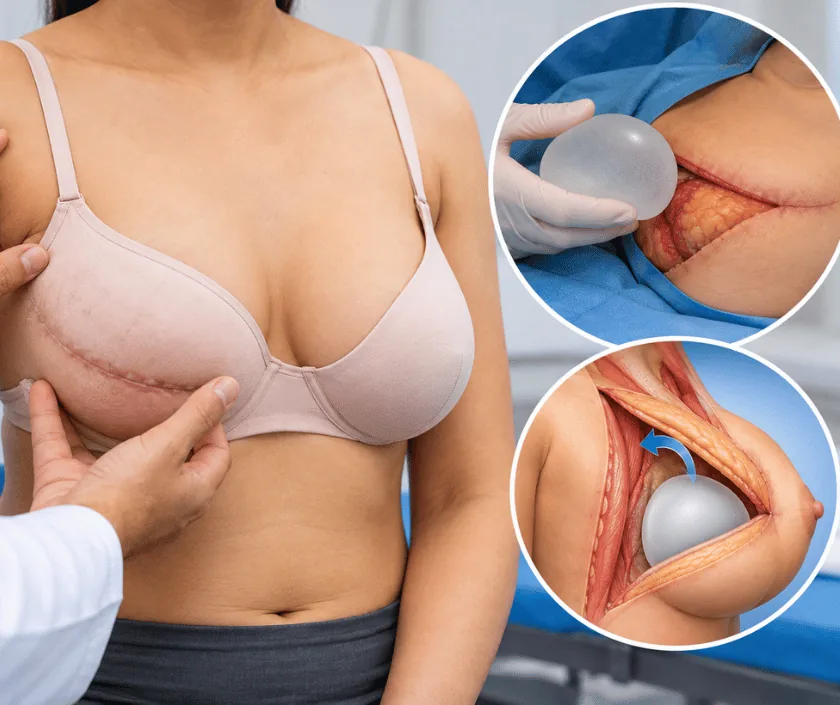
Revision breast reconstruction improves or corrects a reconstruction done earlier. Common reasons include hardening around an implant, loss of shape, asymmetry, rippling or a flap that needs contouring. Work can be minor, such as fat grafting, or major, such as replacing an implant with your own tissue. The plan depends on what went wrong and what you want now.
Reconstruction is rarely finished in one operation. Shape settles, scars mature, weight changes and implants age, so many women reach a point where something no longer looks or feels right. Revision surgery exists for exactly that, and needing it is not a sign that the first operation failed.
What is done depends on the problem. Firmness around an implant may need the scar capsule released or removed and the implant exchanged. A flap that looks flat in one area can be softened with fat grafting taken from the tummy or thighs. Scars can be revised, folds released, and volume added or reduced to improve the match with the other side.
Some revisions are large. Where an implant has repeatedly hardened, or the skin has thinned after radiotherapy, converting to reconstruction with your own tissue is often the more durable answer. That is a major operation and deserves the same unhurried discussion as the original decision did.
Revision suits women whose reconstruction has changed or never fully met their goals, provided general health allows further surgery.
The reconstruction is examined and you describe what bothers you. Old operation notes and imaging are reviewed, and photographs may be taken with your consent.
Small refinements and major conversions are set out separately, with the recovery each demands. Nothing is booked until you have had time to weigh the options.
Minor revisions may be done under local anaesthesia as a day case, while capsule surgery, implant exchange or flap conversion needs general anaesthesia.
This may involve releasing or removing the scar capsule, exchanging an implant, grafting fat to improve contour, revising scars or transferring a flap.
Results are assessed once swelling settles. A further small step is sometimes planned, since staged refinement usually gives a better outcome than one large attempt.
Recovery depends on the scale of surgery. Minor work causes little more than soreness, while capsule or flap surgery needs pain relief and rest.
Dressings are reviewed and any drains removed. Swelling is at its most noticeable now, so judging the result at this stage is misleading.
Shape becomes clearer as swelling goes. Most women are back to normal routine, with exercise reintroduced according to what was done.
The result settles fully. Fat grafting in particular takes months to show its true volume, and a further session is sometimes planned.
Revision usually improves things rather than transforming them. Tissue that has been operated on before, and possibly treated with radiotherapy, is less forgiving, so gains tend to be measured rather than dramatic. Fat grafting partly reabsorbs, which is why more than one session is often planned. Firmness can return after capsule surgery. Setting a clear, modest goal for each stage gives a far better experience than hoping one operation will settle everything.
Operating on tissue that has already been through surgery, and sometimes radiotherapy, carries added risk, and that is discussed openly.
Instructions vary with the scale of surgery, and following the specific plan you are given matters more than general advice.
Reconstruction is usually staged, and results change over years. Revision is a normal part of the pathway rather than a sign of error.
It improves an existing reconstruction. Limits set by scarred tissue and previous surgery remain in place.
Some of the grafted fat reabsorbs, so more than one session is often needed to reach the contour you want.
Capsule surgery, implant exchange or conversion to your own tissue are all options, and the choice depends on your skin and history.
Elegance Clinic in Surat looks at the whole history before proposing revision, and says so honestly when the realistic gain is modest.

Revision covers everything from a short day case procedure to a major conversion to your own tissue, so costs vary widely. After assessment you receive a written estimate for the specific plan agreed, listing surgeon and anaesthesia fees, theatre, any implant, hospital stay, dressings and follow up. Where more than one stage is expected, each is quoted separately. Insurance cover for revision after cancer reconstruction varies between policies in India, so check yours with the estimate to hand.
These are the questions that come up most often in consultation. If yours is not here, send it on WhatsApp and the team will reply, usually the same day.
Ask your question →Usually not. Reconstruction is normally staged, and bodies change over years as scars mature, weight shifts and implants age. Most revisions are refinements rather than corrections of a mistake, and they are anticipated as part of the overall plan.
The scar capsule around the implant can be released or removed, and the implant exchanged at the same time. Where firmness keeps returning, or the skin has thinned after radiotherapy, converting to reconstruction with your own tissue is often more durable.
Fat is taken by gentle liposuction from the tummy or thighs, processed, and injected in small amounts into hollows or thin areas. Part of it reabsorbs over the following months, so more than one session is commonly needed to reach the contour wanted.
Give the original reconstruction time to settle, which usually means several months at least. Swelling distorts shape and scars keep softening, so an early judgement often leads to unnecessary surgery. Your surgeon will advise when the picture looks stable.
It depends entirely on the scale of the work, from a short day case to a major flap conversion. A written estimate is prepared after assessment for the plan agreed. Insurance cover for revision varies between Indian policies, so check yours in advance.
It can improve the match noticeably, particularly under clothing. Scarred tissue is less forgiving than untouched tissue, so gains are usually measured rather than dramatic, and a realistic goal for each stage gives the most satisfying outcome.
It can be done, but treated skin heals more slowly and tolerates implants poorly. That is why revision after radiotherapy often means bringing in healthy tissue from elsewhere rather than simply exchanging a device. The skin is assessed carefully first.
Seeing patients from across the city and beyond: read about the practice on the plastic surgeon in Surat page, or check what a written estimate covers on the costs and insurance page.
