A tissue expander is a temporary implant that is slowly filled over several visits to stretch the chest skin. Once there is enough space and softness, it is exchanged for a breast implant or combined with your own tissue.
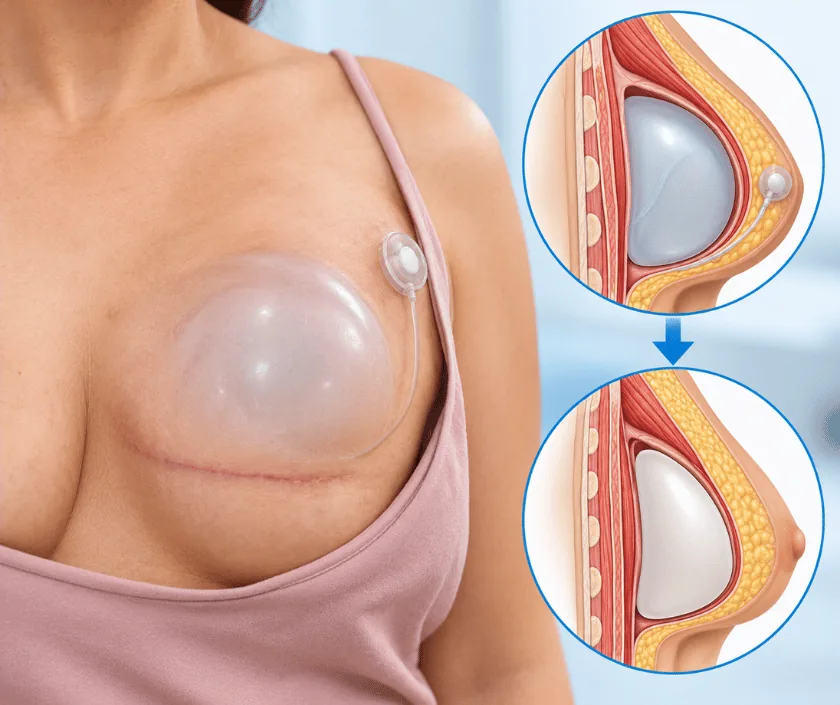
Tissue expander reconstruction is a staged approach. A soft expander is placed under the chest skin or muscle and filled with sterile salt water over a series of clinic visits, stretching the skin gradually. Once the pocket is large enough, a second operation swaps the expander for a breast implant. The process takes months rather than weeks.
Mastectomy leaves the chest flat and the skin tight against the ribs. There is often not enough loose skin to hold a full sized implant straight away. An expander solves that by creating space slowly. It is placed at the first operation, usually only partly filled, so the skin is not stressed while it heals.
Once the wounds have settled, you come back to the clinic every week or two. Sterile salt water is added through a small valve that sits under the skin and is located with a magnet. Each fill feels tight for a day or so, then eases. How many visits you need depends on the size you and the surgeon are aiming for.
When the pocket is right, a second and shorter operation removes the expander and places the final implant. Some women have a flap added at this stage instead. Staging the work in this way asks for patience, yet it gives the skin time to adapt and gives you time to settle on the size you want.
Expansion asks for regular visits over several months, so it fits some lives better than others.
The team explains both stages and what the months in between will feel like. You see the expander, learn how fills are done, and receive a written estimate covering the whole pathway.
Under general anaesthesia the expander is placed, often behind the chest muscle or under a supportive mesh, and partly filled. A drain is usually left for a few days.
Every week or two, sterile salt water is added through the port using a fine needle. Most women describe pressure rather than sharp pain, and the tightness eases within a day or two.
Once the target size is reached, the expander is left in place for a while so the skin relaxes and the pocket softens before the exchange.
A shorter second operation removes the expander and places the final implant. Shape, position and symmetry with the other side are adjusted at this sitting.
Soreness and a band like tightness across the chest are normal. Walking begins the day after surgery and pain relief is given regularly.
Drains come out and dressings are checked. Arm movement is kept gentle. Fills usually begin once the surgeon is happy the skin has healed.
Life carries on around the clinic visits. Tightness returns for a day or so after each fill, then settles as the skin stretches.
Healing is quicker than after the first operation. The reconstructed shape becomes clearer over the following months as swelling goes and scars soften.
Expansion builds a pocket, not a natural breast. After exchange the reconstructed side sits higher and firmer than the other breast and moves less when you change position. Sensation over the skin is usually reduced. Ripples can sometimes be felt or seen where skin is thin. Symmetry improves once the second side is adjusted, though a close match rather than a matched pair is the honest aim.
The expander stage carries its own risks, over and above those of the mastectomy itself.
Between fills there is little to do beyond sensible care and reporting anything that feels wrong.
It is a temporary step. The shape during expansion looks firm and high, and it improves at the exchange operation.
Most women describe pressure and tightness for a day or two rather than sharp pain, and it eases as the skin adapts.
Stretching skin faster than it can adapt puts the wound at risk. The pace is set by the skin, not the calendar.
Plans are often adjusted midway, including switching to your own tissue if radiotherapy becomes necessary.
Staged reconstruction depends on steady, familiar care over many months, and Elegance Clinic in Surat keeps the same team with you from the first fill to the exchange.

Because expander reconstruction happens in stages, the cost is spread across two operations and a run of clinic visits. The expander, the final implant, anaesthesia, hospital stay and each fill appointment all feed into the estimate. After assessment you are given a written figure covering the whole pathway, so there are no surprises partway through. Where reconstruction follows cancer surgery, many insurers in India cover a substantial part, and the team helps with the paperwork.
These are the questions that come up most often in consultation. If yours is not here, send it on WhatsApp and the team will reply, usually the same day.
Ask your question →The number depends on how much the skin has to stretch and the size you are aiming for. Fills are usually spaced a week or two apart and continue for several months. Your surgeon gives you a rough plan at the start and adjusts it as the skin responds.
Most women feel pressure and tightness rather than sharp pain after each fill, easing within a day or two. Simple pain relief is usually enough. If a fill causes lasting discomfort, the next one can be made smaller or delayed a little.
Sometimes yes, but radiotherapy changes skin quality and can affect how well the final implant settles. Your cancer team and surgeon will discuss the order of treatment, and they may suggest using your own tissue at the exchange instead.
It is quoted as one written estimate covering both operations, the devices and the fill visits, given after your assessment. Costs differ with implant choice, hospital stay and whether the other breast is adjusted. Insurance often contributes when reconstruction follows cancer surgery.
During expansion the chest looks firm and rounded, and the shape can seem high or unnatural for a while. Most women manage well with normal clothing. Appearance improves once the expander is exchanged for the final implant.
That is allowed and it happens. The expander can be removed, or the plan can be switched to reconstruction using your own tissue. Nothing about the staged approach locks you into a fixed outcome, and the team expects questions along the way.
Smoking narrows small blood vessels, and the stretched skin over an expander depends on that blood supply. Wound breakdown and infection are considerably more likely. Stopping well before surgery, and staying stopped, makes a real difference to how the reconstruction goes.
Seeing patients from across the city and beyond: read about the practice on the plastic surgeon in Surat page, or check what a written estimate covers on the costs and insurance page.
