Skin is the body first defence against germs, and a burn removes it exactly where the body is most vulnerable. Infection control is the daily routine of clean technique, watchful dressing changes and early wound closure that keeps that risk down.
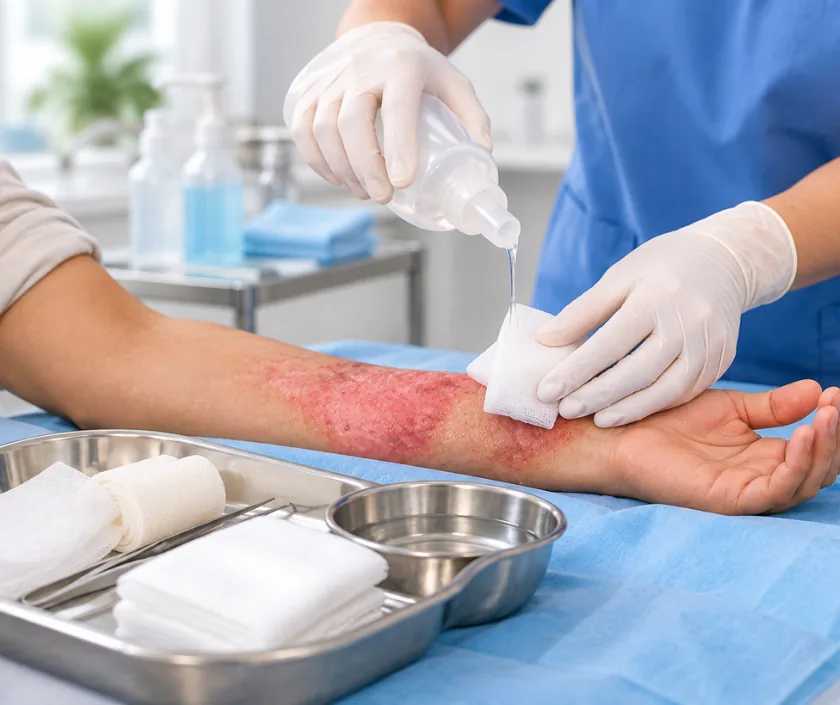
Burn wound infection control is the set of routines that stop germs from taking hold in a wound that has lost its skin barrier. It combines strict hand hygiene, clean dressing technique, removal of dead tissue, antimicrobial dressings, good nutrition and early wound closure. Swabs and blood tests guide treatment, so antibiotics are used when they are needed rather than routinely.
Two things make burns unusually prone to infection. First, the protective skin layer is gone, leaving warm, moist, protein rich tissue that bacteria thrive in. Second, a large burn dampens the immune response throughout the body, so the usual defences are weaker just when they are needed most. Preventing infection is therefore a daily routine rather than a single treatment.
Practical prevention starts with hand hygiene, gloves and gowns, and a clean dressing environment. Wounds are washed, loose dead tissue is removed, and an antimicrobial dressing is applied at intervals suited to the product. Dead tissue is taken away in theatre when there is a lot of it, since anything dead cannot be defended by the immune system. Nutrition matters too, because healing and immunity both depend on protein and calories.
Detection relies on watching trends. Increasing pain, a change in wound colour or smell, a wound that stops healing, a failing graft, rising temperature or altered blood tests all prompt review. Swabs or tissue samples identify the organism, and antibiotics are then chosen to match rather than given blindly. Ultimately, closing the wound with a graft is the most reliable way to end the risk.
Every burn needs clean handling, but some patients need barrier nursing, isolation and closer surveillance than others.
Hands are washed and gloves changed between patients and between wounds. Dressings are done in a dedicated space with sterile packs, and visitors are guided on when to enter and what to touch.
At each change the wound is washed, loose dead tissue is trimmed and the whole surface is examined in good light. Photographs are often taken so subtle changes can be compared over days.
A dressing suited to the wound is applied, often containing silver or another antimicrobial. Change intervals follow the product and the amount of discharge, since needless changes disturb healing tissue.
Where dead tissue is extensive, it is removed in theatre and the area is grafted as soon as the bed allows. Closing the wound is the single most effective step against ongoing infection.
Swabs, tissue samples and blood cultures identify what is actually growing. Antibiotics are then targeted to the organism, and the course is reviewed rather than continued indefinitely.
Wounds are cleaned and dressed, dead tissue is assessed, and baseline swabs may be taken. Nutrition support usually starts early.
Dead tissue is removed and grafting is planned. Dressing intervals settle into a routine, and any infection is treated on the basis of test results.
Most wounds are closed or nearly closed. Attention shifts to graft care, itching and the first stages of scar management.
Infection risk is largely behind you. Scar softening, pressure garments and joint movement become the focus of review visits.
Careful technique makes infection much less likely, though it cannot rule it out entirely in a large burn. Many patients pass through the whole admission with clean wounds. Others develop an episode of infection that is identified on testing and treated, sometimes delaying grafting by a week or two. Outcome depends on burn size, general health and how quickly wounds can be closed.
Infection is the complication itself, so the risks here concern how it behaves and what treating it involves.
Wounds often continue healing after discharge, and simple habits at home make a real difference to how they finish.
Given routinely they do not reach the wound surface well and encourage resistant germs. Clean technique, removal of dead tissue and early closure work far better.
Some dressings produce a smell of their own, and dead tissue smells before any infection is present. Assessment looks at pain, appearance, blood tests and swabs together.
Open wounds dry out, deepen and collect contamination. A moist wound under an appropriate dressing heals more comfortably and more safely.
Temperature commonly rises after a major burn from the injury itself. Doctors look at the whole picture before concluding that infection is the cause.
Elegance Clinic in Surat treats infection control as a daily discipline in burn care, with dressing routines, nutrition and surgery planned as one connected process.

Wound care is billed on the basis of how often dressings are changed, which materials are used, and whether sedation or theatre time is needed. A large burn requiring frequent antimicrobial dressings costs considerably more than a small wound dressed twice a week.
Because of that variation, a written estimate is given after the wound has been assessed, and it is updated as treatment progresses. Inpatient dressing care within an admission is usually covered by mediclaim, and our team assists with the paperwork.
These are the questions that come up most often in consultation. If yours is not here, send it on WhatsApp and the team will reply, usually the same day.
Ask your question →A written estimate is prepared after assessment, since cost follows the size of the wound, the dressing materials chosen, how often changes are needed and whether sedation or theatre time is involved. The estimate is updated as the wound changes.
Dressings and wound care carried out during an inpatient admission are usually covered under mediclaim. Outpatient dressing visits after discharge may be treated differently depending on your policy, so it is worth confirming the terms with the billing team.
No. They are prescribed when signs and test results point to infection in the body rather than germs simply living on the wound surface. Using them routinely encourages resistant organisms without protecting the wound.
Watch for pain that increases instead of settling, spreading redness around the wound, unusual discharge or smell, and fever with shivering or drowsiness. Any of these should be reported promptly rather than waiting for the next scheduled visit.
It can. An infected wound often takes longer to close and may heal with a thicker, more irregular scar. Preventing infection and closing the wound early are two of the most useful things that can be done for scar quality.
It depends on the dressing type and how much the wound is discharging. Some antimicrobial dressings stay in place for several days, which is more comfortable and disturbs healing tissue less than daily changes. The nursing team sets the interval.
Usually yes, with guidance. Visitors are asked to wash their hands, limit numbers, avoid visiting while unwell and not touch dressings or equipment. During dressing changes or periods of isolation, visiting may be restricted for a time.
Seeing patients from across the city and beyond: read about the practice on the plastic surgeon in Surat page, or check what a written estimate covers on the costs and insurance page.
