Scar behind the knee shortens as it heals, leaving the leg bent and the heel struggling to reach the floor. Knee contracture release restores that missing skin, so the limb can straighten and carry weight normally again.
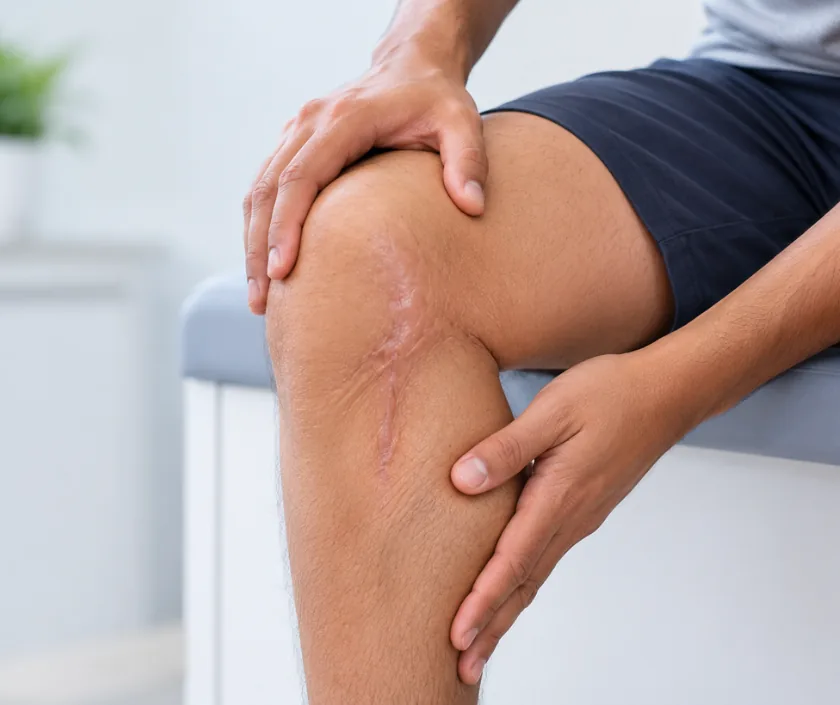
Knee contracture release divides the tight scar band behind the knee and resurfaces the gap with a skin graft or a flap, so the leg can straighten. Correction is taken carefully, since nerves and vessels behind the joint shorten along with the scar. Extension splinting and gait training afterwards protect the range that surgery restores.
Standing is efficient because a straight knee stacks bone over bone and lets muscles rest. Burn scar behind the joint takes that away. As the band tightens, the leg settles into a bend, thigh muscles have to work throughout standing, and the person tires quickly. Many people also start walking on the toes of that side, since the heel can no longer reach the ground comfortably.
Consequences spread beyond the knee. Steps shorten, stairs become slow, squatting and sitting on the floor may be impossible, and the opposite leg takes extra load. Skin in the crease often splits when the joint is pushed straight, which stings and bleeds. In children the whole limb can grow unevenly if the knee stays bent for years.
Release restores the missing length of skin. Once the band is divided the knee comes straighter, and the raw area is covered with a graft or a flap. Splinting then holds the position while therapy retrains standing, walking and balance around the improved shape.
Surgery suits a knee held bent by skin and scar, once the burn has healed and the joint retains some movement.
The knee is examined relaxed and under gentle pressure, and walking is watched. Pulses and sensation in the foot are recorded, because these become the reference point for checks after surgery.
Scar behind the knee is released across the direction of pull. Structures in the popliteal area are respected, and the leg is straightened only to the point where they remain comfortable and well perfused.
Narrow bands can be lengthened with Z shaped local flaps. Larger raw areas need a thick graft, and an unstable base over the joint may be better served by a flap with its own blood supply.
A padded splint holds the knee at the corrected angle before the person wakes. That position protects the graft during healing and prevents the crease folding back on itself.
Remaining tightness is taken up over the following weeks with adjustable splints and therapy. Slow lengthening allows nerves and vessels to adapt, which forcing the joint straight would not.
Leg rests in the splint, slightly raised to control swelling. Foot colour, warmth and sensation are checked at regular intervals.
Dressings come down and graft take is assessed. Standing and short walks with support usually begin, with the splint reapplied between sessions.
Walking distance, stair practice and stretching increase. Splints are adjusted as the knee opens, and scar care starts once the skin has closed.
Gait is reviewed and grafted skin gradually softens. Night splinting often continues, while growing children are followed closely for renewed tightening.
Walking usually becomes easier and less tiring once the knee straightens, though a small residual bend often remains when deeper structures have shortened over years. Grafted skin behind the knee stays different in colour and is a little less elastic. Splint wear and physiotherapy after surgery shape the final outcome heavily. Some tightening may return with time, and children can need a further release as they grow.
Behind the knee sit important nerves and vessels, so the risks here deserve a careful conversation.
Keeping the leg straight between exercise sessions is the single most useful thing you can do at home.
Activity keeps muscles working, yet a mature scar band has no stretch and needs to be divided surgically.
Nerves and vessels behind the knee shorten with the contracture. Gradual correction with splints is safer than a forced result.
Scar contracts most when the limb is still. Night splinting is exactly what protects the range gained.
Careful splinting and rest in the early days allow most grafts to take, after which movement is reintroduced in stages.
Lower limb burn reconstruction at Elegance Clinic in Surat is planned alongside physiotherapy, so splint fitting and walking practice are ready when the dressing comes down.

Since a bent knee limits walking and standing, insurers treat this release as reconstructive surgery rather than cosmetic work. The final figure depends on the size of the release, whether a graft or a flap is used, anaesthesia, length of stay, splints and the physiotherapy that follows. A written estimate is prepared before admission, together with help on the insurance file.
These are the questions that come up most often in consultation. If yours is not here, send it on WhatsApp and the team will reply, usually the same day.
Ask your question →Treatment generally falls within Rs 45,000 to Rs 1.6L. Extent of the release, choice of graft or flap, anaesthesia, hospital stay, splints and physiotherapy all affect what you pay. An itemised written estimate is given before the surgery date is fixed.
Policies usually accept it, since the operation restores walking and weight bearing rather than appearance. Photographs, a record of the fixed bend and a treatment plan are typically requested. Waiting periods and room rent conditions within your policy continue to apply.
Important nerves and vessels run through this area, which is why correction is limited to what they tolerate. Foot circulation and sensation are checked repeatedly afterwards. Graft loss and infection remain possible and respond well to early treatment.
Supported walking often starts within the first two weeks, once the graft is settling. Independent walking usually follows over the next few weeks. Night splinting and stretching normally continue for months, because that is what preserves the correction.
Most people gain a great deal of extension, although a small bend can remain where deeper tissues shortened over years. Skin behind the knee will look grafted. Continued splinting and therapy often add a little more range slowly.
Treatment is usually advised when the bend affects walking or the way the limb is growing. Delay can lead to lasting deformity. Since scar does not lengthen with the bone, another release is sometimes needed later in childhood.
Knee movement is measured, walking is observed and the foot is tested for pulses and sensation. Photographs are taken for records and insurance. Skin cover options, splinting and the physiotherapy programme are explained, followed by a written estimate.
Each technique below has its own page explaining how it works and when it is chosen.
Seeing patients from across the city and beyond: read about the practice on the plastic surgeon in Surat page, or check what a written estimate covers on the costs and insurance page.
