Scar across the groin holds the hip bent, so standing tall becomes impossible and walking turns into a stoop. Release surgery restores length in that fold, letting the leg line up under the body again.
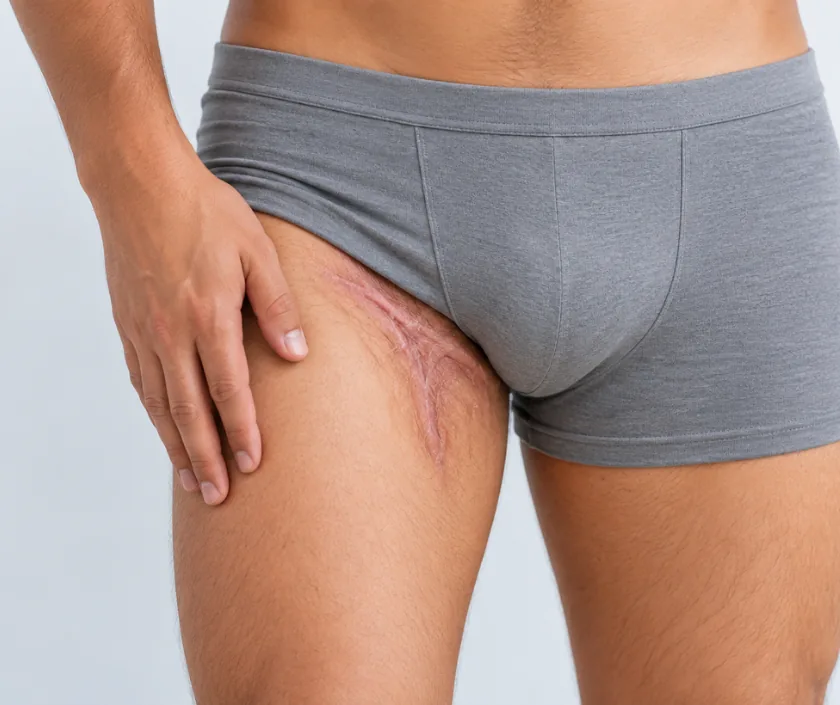
Groin contracture release divides the burn scar band that holds the hip bent, then resurfaces the gap with a skin graft or a local flap. Positioning the hip straight afterwards, with prone lying and night splinting, is essential. Physiotherapy retrains walking and posture, because months of stooping shorten muscles as well as skin.
Skin across the front of the hip stretches with every step. Burn scar in that fold shortens as it matures, so the thigh is gradually pulled up towards the chest and the hip never reaches a straight line. People compensate without realising, tilting the pelvis and arching the lower back to stay upright. Over months that habit produces back pain along with the original stiffness.
Walking changes in visible ways. Steps shorten on the affected side, the body leans forward, and running or climbing stairs becomes exhausting. Sitting can be uncomfortable too, since the scar tugs whenever the position changes. Skin deep inside the fold stays warm and damp, which encourages soreness, itching and repeated minor infections.
Surgery restores the missing length. Once the band is divided the hip can be straightened, and the raw area is covered with a graft or a flap of nearby healthy tissue. Positioning afterwards holds the leg extended while healing takes place, and physiotherapy then rebuilds normal walking.
Release helps when scar across the groin, rather than the hip joint itself, is holding the leg bent.
Straightening is measured with the person lying flat and again face down, which separates skin tightness from joint stiffness. Walking is observed and photographed, and the spine is checked for the curve that develops with long standing contracture.
Under anaesthesia the scar is cut across the fold until the thigh comes down into line. Femoral vessels and nerves lie deep to this area, so dissection stays superficial and controlled throughout.
Local skin can sometimes be rearranged as Z shaped flaps. A wide defect is usually grafted, and when the base is deep or unstable a flap from the abdomen or the thigh gives more durable cover.
The hip is settled in an extended position before dressings go on. Careful padding of pressure points matters here, because the area sits under body weight whenever the person lies down or sits.
Physiotherapy begins with standing and short walks, then adds stretches to lengthen muscles shortened by years of bending. Prone lying periods through the day help hold the hip flat as the scar matures.
Leg is kept straight and supported, and the dressing is protected during transfers. Nursing help with hygiene keeps the area dry and clean.
Graft take is reviewed, and short supervised walks usually begin. Sitting is planned in stages, since bending the hip stretches the fresh repair.
Stretching, walking distance and stair practice increase steadily. Prone lying at intervals through the day becomes part of the routine.
Gait and posture are reviewed, and back pain often eases as the pelvis settles. Night positioning may continue, and children are followed as they grow.
Posture and walking usually improve markedly once the hip can extend, though muscles shortened over years need time to lengthen and may keep a small limitation. Grafted skin in the fold looks different and stays slightly less elastic than normal skin. Positioning and physiotherapy at home decide much of the outcome. Some tightening can recur, particularly in children, so planned review continues for a long period.
The groin is a moist, mobile area, which shapes the specific risks of surgery here.
Healing in a skin fold needs attention to dryness and position, so the home routine is quite specific.
Gait changes because the hip physically cannot straighten. Training alone does not lengthen a fixed band of scar.
Controlled walking and positioning protect the result. Long periods curled up in bed allow the fold to tighten again.
Healing is demanding in a moist fold, yet careful positioning, dryness and dressing care allow most grafts to take well.
Pain often settles once the pelvis returns to a normal tilt, so the release itself frequently improves it.
Groin and lower limb reconstruction at Elegance Clinic in Surat is planned with walking in mind, so physiotherapy and positioning are organised before the operation date.

Groin contracture release restores standing, walking and posture, so insurers normally treat it as reconstructive surgery rather than cosmetic work. Charges depend on the size of the release, whether a graft or a flap is used, anaesthesia, length of stay and the physiotherapy planned afterwards. You receive a written estimate, along with help preparing the insurance file, before admission.
These are the questions that come up most often in consultation. If yours is not here, send it on WhatsApp and the team will reply, usually the same day.
Ask your question →Charges for this operation typically lie inside Rs 45,000 to Rs 1.6L. Size of the release, the choice between a graft and a flap, anaesthesia, hospital stay and planned physiotherapy all influence the total. A written estimate is shared before you are admitted.
Cover is usually available, because the operation restores standing and walking rather than changing appearance. Insurers typically ask for photographs, a note on the limitation and the surgical plan. Policy waiting periods and room rent limits apply in the normal way.
Release here is routine reconstructive work, with dissection kept superficial because major vessels and nerves lie deeper. Infection and partial graft loss are the more likely problems in a moist fold. Both are far easier to manage when reported promptly.
Short supervised walks often start within the first week or two, once the graft is settling. Distance and stair work build up over the following weeks. Stretching and prone lying usually continue for months to hold the hip in its new position.
Standing upright generally becomes possible again, though muscles shortened over years may keep a small residual bend. Skin in the fold stays visibly grafted. How much posture improves depends greatly on positioning and physiotherapy done at home.
Yes, and it is often advised when a contracture is affecting gait, squatting or the growing spine. Because scar does not lengthen as the child grows, another release may be needed later. Review continues through the growing years.
Hip movement is measured lying flat and face down, walking is observed, and the spine is examined for compensating curves. Photographs support both records and insurance. Skin cover options, positioning and physiotherapy are then explained with a written estimate.
Each technique below has its own page explaining how it works and when it is chosen.
Seeing patients from across the city and beyond: read about the practice on the plastic surgeon in Surat page, or check what a written estimate covers on the costs and insurance page.
