A weak or missing section of the abdominal wall can follow surgery, injury, infection or tumour removal. Reconstruction restores the muscle layer and its cover, so the abdomen holds its shape and daily movement feels secure again.
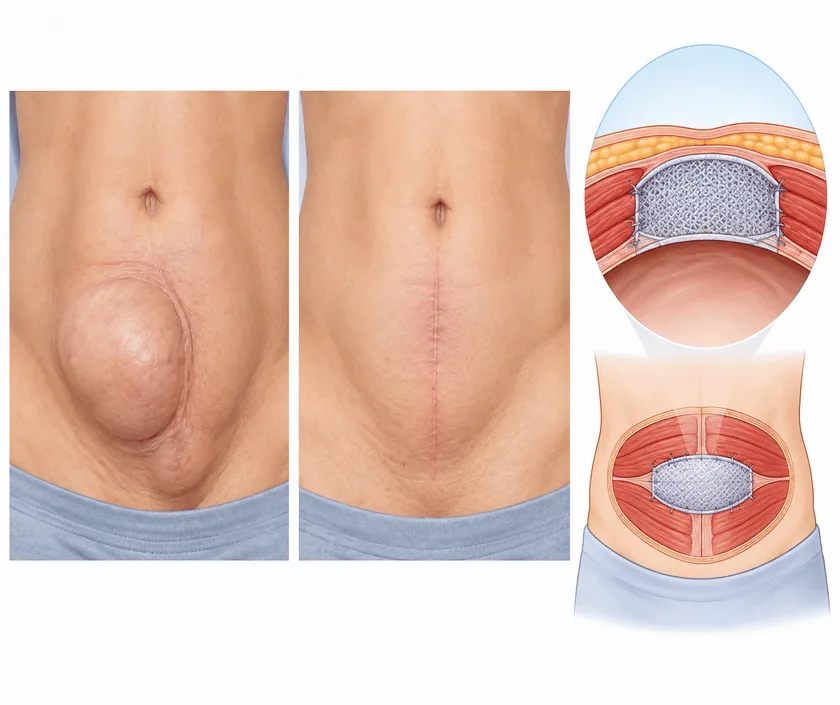
Abdominal wall defect reconstruction rebuilds the muscle and fascia layers that hold the abdomen together, then covers them with healthy skin. Surgeons release the muscles, bring them back towards the midline and reinforce the repair with mesh where that suits the case. The aim is a strong, closed abdomen that supports posture, breathing and everyday movement.
The abdominal wall is far more than skin. Beneath the fat lie broad sheets of muscle and fascia that hold everything in place and work with the diaphragm each time you breathe, cough or lift. When part of that layer is lost through surgery, infection, injury or tumour removal, the abdomen bulges, feels weak and often becomes uncomfortable.
Assessment starts with an examination and usually a scan, which shows the width of the gap, the state of the muscles on either side and whether bowel is involved. Your surgeon also reviews previous operations, any mesh already in place, weight, blood sugars and smoking, since each of these changes what is realistic and when surgery should happen.
The operation restores layers. Muscle and fascia are released and brought back towards the midline so the wall can work again. Mesh is often added for reinforcement, placed in a plane chosen to suit the case. Where skin is missing or unhealthy, a flap or graft provides cover. Drains are used, and the repair is protected carefully during early recovery.
Reconstruction suits people whose abdominal wall no longer supports them and who can prepare for a planned operation followed by a structured recovery.
You are examined and scanned, and previous operation notes are reviewed. Weight, blood sugar control, nutrition and smoking are addressed in the weeks beforehand, since preparation strongly influences how well the repair holds.
Old scar tissue, failed mesh and unhealthy tissue are removed. Bowel is freed carefully from the abdominal wall, which is often the longest and most delicate part of the operation.
Muscles are released and brought back towards the midline so the wall can act as one unit again. Tension is judged carefully, because a repair pulled too tight can restrict breathing.
Where suitable, mesh is placed in a plane chosen to support the repair. In an infected field your surgeon may use biological material or rely on your own tissue instead.
Skin is closed over the repair, with a flap or graft when cover is short. Drains reduce fluid collection, and an abdominal binder is often fitted before you first get up.
You are encouraged to sit and stand early with support. Pain relief, breathing exercises and gentle walking begin, while drains stay in place until fluid output settles.
Eating returns to normal and walking distance increases. Discharge follows once the wound is dry and pain is controlled with tablets. Lifting remains off limits.
Most people feel far steadier. Driving and desk work are usually discussed at review, while heavy lifting, gym training and manual jobs wait longer.
Strength keeps improving with guided exercise. Scars soften, swelling settles, and the repair is checked at review for any early sign of recurrence.
Most people gain a flatter, stronger abdomen and find daily tasks easier. Scars are long, and the contour will not match an abdomen that never had surgery. Numbness above the scar is usual and often persists. Recurrence remains possible, particularly with smoking, weight gain or heavy lifting too early, so reviews and a graded return to activity are part of the treatment.
Abdominal wall reconstruction is a large operation and complications do occur, so the risks are set out clearly beforehand.
The first weeks at home protect the repair while the layers knit together.
Mesh reinforces a repair. Without restoring the muscle layer and giving healthy cover, a large defect tends to come back.
Weight before surgery affects how well the repair holds. Preparing first usually gives a stronger and longer lasting result.
This operation is about function and strength. Contour improves for many people, though the shape differs from cosmetic surgery.
Tissue takes months to gain strength. Returning to heavy work too soon is among the commonest reasons that repairs fail.
Abdominal wall work benefits from preparation and clear timing, so the plan here includes an unhurried consultation, a written estimate before admission and structured recovery advice.

Every abdominal wall is different, so cost depends on the size of the defect, the technique needed, the type and amount of mesh, whether flap cover is required and the length of stay. A written estimate is prepared after assessment. It separates surgeon and anaesthesia fees, mesh, theatre and ward charges and review visits, with help offered for insurance claims.
These are the questions that come up most often in consultation. If yours is not here, send it on WhatsApp and the team will reply, usually the same day.
Ask your question →An estimate is written after assessment, because the technique, the amount of mesh, the need for flap cover and the length of stay all differ between patients. Every element is itemised in writing before admission.
Mesh is used in most planned repairs because it reinforces the muscle layer. Where infection is present, biological material or your own tissue may be preferred. The choice is explained before you agree to surgery.
Desk work often resumes well before manual work does, and timing is agreed at review rather than fixed in advance. Recovery can vary with the size of the repair, your fitness and the demands of your job.
Recurrence is possible with any repair. Reaching a healthy weight, controlling blood sugars, stopping tobacco and building strength slowly all reduce the chance. Reviews look for early signs so they can be managed simply.
Often yes. Excess weight puts continuous strain on a fresh repair and raises the risk of wound problems. Support and a realistic target are discussed at consultation, along with when surgery can be booked.
Sometimes it is combined with stoma reversal, mesh removal or removal of excess skin, provided that doing so is safe. Combining procedures is judged case by case and discussed openly at consultation.
You are examined, scans and previous notes are reviewed, and the options are explained with drawings. Preparation, likely recovery and time off work are covered. A written estimate follows once the plan is agreed.
Seeing patients from across the city and beyond: read about the practice on the plastic surgeon in Surat page, or check what a written estimate covers on the costs and insurance page.
