Large hernias leave the abdominal muscles pulled apart to the sides, so the wall no longer works as one unit. Component separation releases those layers carefully and brings the muscles back to the midline where they belong.
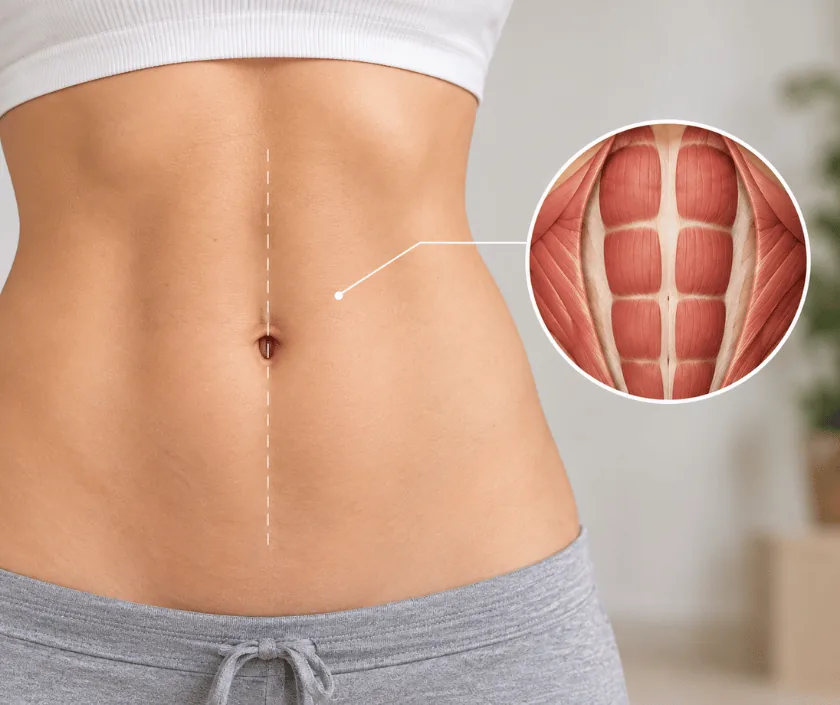
Component separation is a surgical technique used for large hernias, where the abdominal muscles have retracted sideways. The surgeon releases one layer of the abdominal wall so the muscles can slide back towards the midline without excessive tension. Mesh usually reinforces the repair, and the result is a wall that works as a single unit again.
In a large hernia the two halves of the abdominal wall drift apart. Muscles that should meet in the middle sit out to the sides, shortened and stiff, and simply pulling them together would put the repair under dangerous tension. Tension of that kind causes pain, restricts breathing and is among the main reasons repairs fail.
Releasing a layer solves the problem. In the anterior approach, the sheath on the outer side of the muscle is divided so the whole unit slides inwards. In the posterior approach, the release is made behind the muscle, creating a space where mesh can sit safely away from the bowel. Choice depends on the hernia, on previous surgery and on the state of the skin.
Once the muscles reach the midline they are joined, and mesh is usually added as reinforcement. The abdominal wall then functions as a single sheet again, supporting the spine, helping you cough and taking the strain when you lift. Drains, a binder and a graded exercise plan protect the repair while it gains strength.
This technique suits people with a large hernia or lost abdominal wall who are prepared for a substantial operation followed by a structured recovery.
A scan measures the width of the defect and the condition of the muscles. Your surgeon chooses between an anterior or posterior release, and preparation begins with weight, nutrition, fitness and blood sugar.
Old scar tissue is removed and bowel is separated from the abdominal wall. This stage is meticulous, since adhesions from earlier surgery can be dense and take considerable time.
One layer of the wall is divided along its length on each side. Muscles then slide towards the midline, allowing closure without the tension that causes pain and failure.
The fascia is brought together and stitched in the middle. Breathing pressures are watched, because a repair made too tight can push the diaphragm upward and restrict the lungs.
Mesh is placed in the plane chosen for reinforcement, drains are inserted and skin is closed. A binder is usually fitted before you first stand up.
Pain relief and breathing exercises come first, with early sitting and standing under supervision. Drains stay while output settles, and eating restarts gradually.
Walking distance grows steadily. Discharge home follows once pain is controlled with tablets and the wound is dry. Lifting and straining remain off limits.
Most people feel far more secure in the abdomen. Driving and lighter work are usually discussed at review, while gym training and manual work wait longer.
Core strength improves with a guided programme. Scars soften, and reviews check the midline repair for any early sign of the hernia returning.
Most people gain a closed midline, a stronger core and noticeably easier daily movement. The abdomen looks flatter, though long scars remain and the shape is not that of cosmetic surgery. Numbness above the scar is usual. Recurrence stays possible, particularly with smoking, weight gain or early heavy lifting, so graded exercise and regular review form part of the treatment.
This is a major operation with a real complication rate, and the risks are discussed in detail before you decide.
The repair gains strength slowly, so habits in the first months genuinely shape the result.
Mesh bridges a gap but does not restore muscle function. Releasing and joining the muscles is what makes the wall work as one again.
A careful release shifts the layers rather than removing them, and the wall generally becomes stronger overall once the midline is closed.
Deep layers need months to reach full strength, which is why lifting is reintroduced in stages under guidance.
Excess weight strains a fresh repair from the first day. Reducing it beforehand improves both safety and the durability of the result.
Large hernia work needs preparation, honest discussion and a clear plan, so consultations here are unhurried and a written estimate is issued before admission.

Cost varies with the width of the hernia, the release chosen, the mesh used, whether flap cover is needed and the length of stay, so an estimate is prepared after assessment. The written estimate separates surgeon and anaesthesia fees, mesh, theatre and ward charges and review visits. Where insurance applies, the team will help with the paperwork.
These are the questions that come up most often in consultation. If yours is not here, send it on WhatsApp and the team will reply, usually the same day.
Ask your question →An estimate follows assessment, since the width of the hernia, the release chosen, the mesh used and the length of stay all differ between patients. Each item appears in the written estimate before admission.
Pulling widely separated muscles together creates high tension, which causes pain, restricts breathing and often leads to failure. Releasing a layer lets the muscles reach the midline and be joined safely.
Usually yes, because mesh reinforces the joined midline while the tissues gain strength. The type and plane are chosen to suit the case, and the reasoning is explained before surgery.
Light activity comes first, with heavier lifting reintroduced in stages once the repair has settled. Timing is judged at review rather than fixed in advance, and physiotherapy guides safe progression.
Contour usually improves because the muscles return to the midline. Long scars remain, and the result differs from cosmetic surgery. The aim throughout is strength and function rather than appearance alone.
Recurrence remains possible with any large repair. Stopping tobacco, keeping to a healthy weight, controlling blood sugars and building strength gradually all lower the chance. Reviews look for early signs.
Preparation usually covers weight, blood sugar control, nutrition, breathing exercises and stopping tobacco. Fitness before surgery has a strong influence on healing, so time spent preparing is rarely time wasted.
Seeing patients from across the city and beyond: read about the practice on the plastic surgeon in Surat page, or check what a written estimate covers on the costs and insurance page.
