Wounds over the buttock and the sitting bones often follow long periods of pressure, infection or previous surgery. Reconstruction removes unhealthy tissue and brings in well padded flaps, so the area can heal and take weight again.
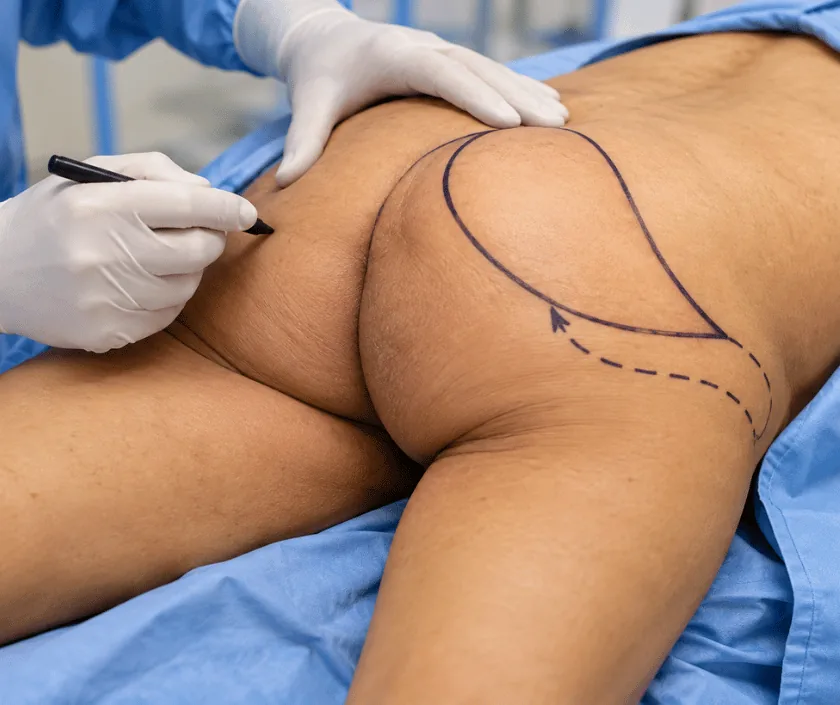
Gluteal and ischial defect reconstruction treats wounds over the buttock and the sitting bones, most often pressure sores. Treatment removes dead tissue and any infected bone, then covers the area with a padded flap of muscle or skin. Because these wounds return when pressure continues, seating, turning and skin care form part of the plan.
Skin over the buttock and sitting bones is squeezed between body weight and bone whenever you sit or lie in one position. If that pressure is not relieved, blood flow stops, tissue dies from the inside outwards, and an ulcer forms. What shows on the surface is often much smaller than the damage underneath.
Assessment therefore looks deeper than the visible wound. Your surgeon checks how far the cavity extends, whether bone is involved, and what caused the pressure in the first place. Nutrition, continence, muscle spasm, seating and the cushion in use are all reviewed, since surgery without changing those factors tends to end in recurrence.
Treatment removes the ulcer, its lining and any infected bone, then fills the space with a flap. Gluteal muscle, hamstring muscle or a local skin flap can each provide padding over the bone. Position after surgery is controlled carefully, and sitting is reintroduced gradually according to a written programme.
Surgery suits people whose wound will not close with pressure relief and dressings alone, and whose seating and general health can be managed alongside.
The wound is measured and probed, imaging checks the bone, and blood tests review nutrition and infection. Seating, cushions and continence are assessed, because these decide whether healing will last.
The ulcer, its fibrous lining and any dead or infected bone are removed. Bone samples may be sent for culture so that antibiotics can be matched to the organism.
Gluteal muscle, hamstring muscle or a local skin flap is selected to give padding over the bony point. Flaps are planned so that further options remain available in future.
The flap is moved in and stitched without tension, filling the cavity and cushioning the bone. Drains are placed to stop fluid gathering underneath the repair.
Lying position is controlled after surgery, and sitting restarts in short, timed periods. A written programme sets out how those minutes increase week by week.
Position is managed carefully to keep all pressure off the repair. Pain relief, antibiotics and drain care continue, and nursing staff assist with turning and hygiene.
The wound is checked regularly and drains are removed as output falls. Pressure relief carries on strictly, and discharge is planned once the wound looks settled.
Sitting is usually being built up in timed periods. Reviews check the flap, the skin around it and the cushion in use, adjusting the programme where needed.
Most people are back to their usual seating routine. Skin checks continue daily at home, and scars are reviewed for any early sign of breakdown.
Most wounds close well once unhealthy tissue is removed and a padded flap is used. Even so, these ulcers can return if pressure, moisture or nutrition are not managed, so surgery is only part of the treatment. Scars and areas of numbness remain. Recovery can vary, and the staged sitting programme matters, since returning to full sitting too early is a common reason repairs break down.
Wounds in this area carry a real risk of returning, and that is discussed honestly before surgery.
Life after surgery centres on relieving pressure and checking the skin every day.
Damage starts next to the bone and spreads outwards, so the cavity underneath is usually far larger than the opening on the skin.
Dressings help a shallow wound. A deep cavity with exposed bone needs surgery and padded tissue cover before it can close reliably.
Sitting restarts in timed periods and builds slowly. Going back to full sitting too quickly is among the commonest causes of breakdown.
These wounds return when pressure, moisture or nutrition are unchanged. Managing those factors is as important as the operation itself.
Pressure wounds need surgery alongside a workable plan for seating and skin care, so both are discussed here, with a written estimate provided before admission.

Cost depends on the depth of the wound, whether infected bone must be removed, the flap chosen and the length of stay, so an estimate follows assessment. The written estimate separates surgeon and anaesthesia fees, theatre charges, ward stay, dressings and review visits. Cushions and seating equipment are quoted separately where they are needed.
These are the questions that come up most often in consultation. If yours is not here, send it on WhatsApp and the team will reply, usually the same day.
Ask your question →An estimate is written after assessment, since the depth of the wound, removal of infected bone, the flap chosen and the length of stay all vary. Seating equipment is quoted separately where it is required.
Pressure is the underlying cause, so an ulcer returns when relief, moisture control or nutrition remain unchanged. Surgery closes the wound, while seating, turning and skin care keep it closed.
Sitting restarts in short timed periods and increases gradually over the following weeks, guided by how the wound looks at review. Rushing this stage is a frequent cause of breakdown.
Where bone is involved, the infected part usually has to be removed for healing to succeed. Samples go for culture so antibiotics can be matched, and the plan is explained before surgery.
That depends on your seating position, weight and mobility, so an assessment is made rather than a general recommendation given. The chosen cushion is reviewed regularly as it wears.
Shallow wounds sometimes heal with strict pressure relief, good nutrition and dressings. A deep cavity with exposed bone rarely does, and waiting too long tends to make the eventual surgery larger.
Help with turning, hygiene and the sitting programme makes a real difference, especially early on. Support needs are discussed before discharge so arrangements can be put in place.
Seeing patients from across the city and beyond: read about the practice on the plastic surgeon in Surat page, or check what a written estimate covers on the costs and insurance page.
