When ribs or the breastbone are removed or destroyed, the chest loses its firm frame. Reconstruction restores that support and covers it with healthy tissue, so breathing feels steadier and the organs underneath are protected once more.
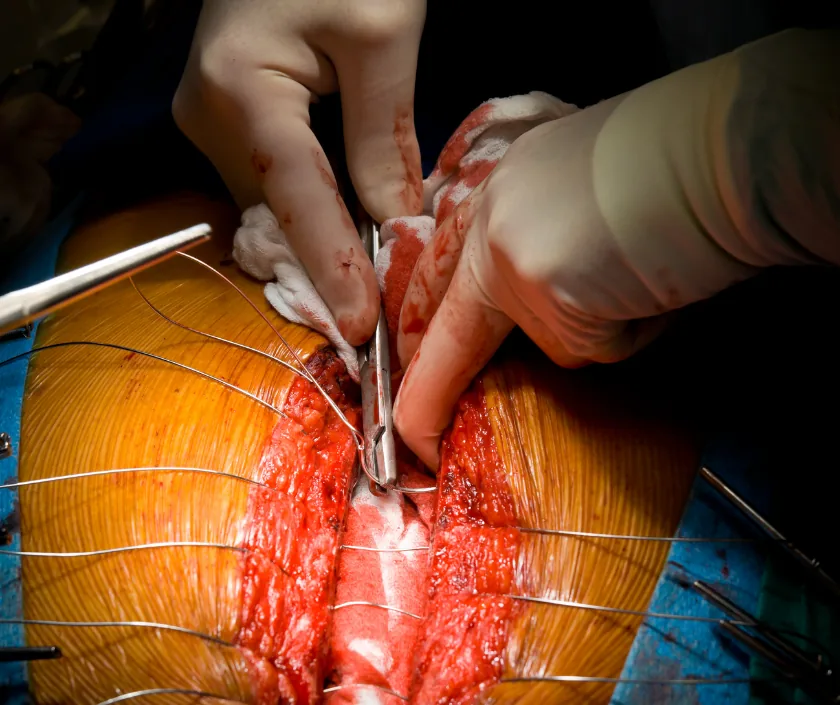
Rib and sternal defect reconstruction rebuilds the bony frame of the chest after ribs or the breastbone are removed for tumour, infection or injury. Mesh, a plate or a bone graft restores support, and muscle is brought over it for healthy cover. The goal is a chest that stays firm during breathing and heals without repeated wound problems.
Ribs and the breastbone give the chest its shape and hold the lungs in a working position. Losing one or two ribs is often tolerated well. Once three or more have gone, or a large part of the breastbone is removed, the chest can flex inward as you breathe in, and that makes each breath less efficient.
Reconstruction has two parts. First the frame is restored, using a synthetic mesh, a rigid plate fixed to healthy rib ends, or occasionally a bone graft. Selection depends on where the gap sits, how big it is and whether infection has been present. Where infection was active, surgeons often avoid metal and rely on your own tissue instead.
Second comes cover. Muscle from the back, chest or abdomen is moved over the repair with its blood supply intact, and skin is closed above it. Cover of this kind protects any implant, fills dead space where fluid could otherwise gather, and gives the wound its best chance of settling quietly.
This surgery suits people whose chest frame has been lost or destroyed and who are fit enough for a planned operation followed by a period of recovery.
Scans show which ribs and how much breastbone are involved. Lung function and heart health are checked, and the team decides in advance whether mesh, a plate or your own tissue suits the gap best.
Tumour or infected bone is removed with a margin of healthy tissue around it. Samples usually go to the laboratory, and the wound is washed thoroughly before anything is put back.
Mesh is stretched across the gap, or a plate is fixed to sound rib ends. Support is set at the right tension so the chest holds its shape without pressing on the lung beneath.
A flap of muscle is raised and laid over the repair, filling space and protecting the implant. Skin is closed above it, sometimes with a graft when the surface is wide.
Drains remove fluid while the layers seal. Breathing physiotherapy begins early, and pain relief is adjusted so that you can cough and clear your chest comfortably.
Close monitoring is usual, sometimes in intensive care. Oxygen, pain relief and chest physiotherapy come first, and you are helped to sit up and breathe deeply as soon as it is safe.
Walking on the ward improves, drains are removed as output falls, and most people go home once the wound is dry. Written instructions cover dressings and activity limits.
The frame is usually settling well by now. Light activity feels natural again, and driving or office work is discussed at review, along with a slow return to lifting.
Scars soften, sensation gradually returns, and any implant is checked for position and comfort. Cancer follow up carries on under the treating team where that applies.
Support and cover are usually restored well, and breathing tends to feel steadier once the chest holds its shape. Even so, the area may look and feel different, with visible scars and patches of numbness. Some people notice firmness where mesh or a plate sits. Recovery can vary with the size of the gap, past radiation and lung health, and heavy lifting is reintroduced slowly.
Rebuilding the chest frame is major surgery, and an honest discussion of the risks helps you plan ahead.
The repair needs quiet weeks to settle, and simple routines make a real difference to how it heals.
Modern implants are well tolerated. Some people feel firmness or a mild ache in cold weather, yet daily life is rarely affected by it.
Small gaps often need nothing at all. Larger ones leave the chest unstable, which makes breathing harder and puts the organs beneath at risk.
Ribs and the breastbone do not regrow across a wide defect, so support has to be provided by mesh, a plate or a graft.
Some chests need cleaning first and rebuilding later, especially after infection. Staging the work protects the final result and lowers the risk.
Rebuilding the chest frame calls for careful planning with the treating team, so the approach here is unhurried, clearly explained and set out in writing before admission.

Cost depends on how much bone is missing, whether mesh or a fixation plate is used, the flap needed for cover and the length of stay. For that reason a written estimate is prepared after assessment rather than quoted over the phone. The estimate separates surgeon and anaesthesia fees, implants, hospital charges and review visits, and the team will help if an insurance claim is involved.
These are the questions that come up most often in consultation. If yours is not here, send it on WhatsApp and the team will reply, usually the same day.
Ask your question →Pricing follows assessment, because implants, theatre time and hospital stay differ widely between cases. Once scans have been reviewed you receive a written estimate that lists surgeon fees, anaesthesia, mesh or plate, ward charges and follow up visits.
Implants used for the chest wall are designed to stay in place and are generally well tolerated. They are avoided where infection is active. Any discomfort, loosening or exposure is checked at review and managed if it arises.
Many people notice steadier breathing within the first few weeks, while the deeper healing carries on for months. Progress is checked at each review. Recovery can vary with the size of the gap and general health.
Light activity usually returns first, with heavier lifting reintroduced gradually once the repair has settled. Timing is judged at review rather than fixed in advance, and physiotherapy helps rebuild shoulder and trunk strength safely.
Yes, though irradiated skin heals slowly and needs a flap with its own blood supply for cover. Extra planning goes into the choice of tissue, and healing is monitored more closely than usual afterwards.
Often it does. Where infection has been present, cleaning may come first and rebuilding later, so that support is placed into healthy tissue. The plan is explained clearly before you agree to surgery.
Bring recent scans, operation notes, biopsy reports and a list of your medicines. Details of heart or lung conditions help too. A written estimate is issued once the plan has been discussed and agreed.
Each technique below has its own page explaining how it works and when it is chosen.
Seeing patients from across the city and beyond: read about the practice on the plastic surgeon in Surat page, or check what a written estimate covers on the costs and insurance page.
