A tendon is a cord that pulls a joint, and it has to glide freely to do that job. When one lies open in a wound it dries and stiffens, so cover with soft, well supplied tissue is needed early.
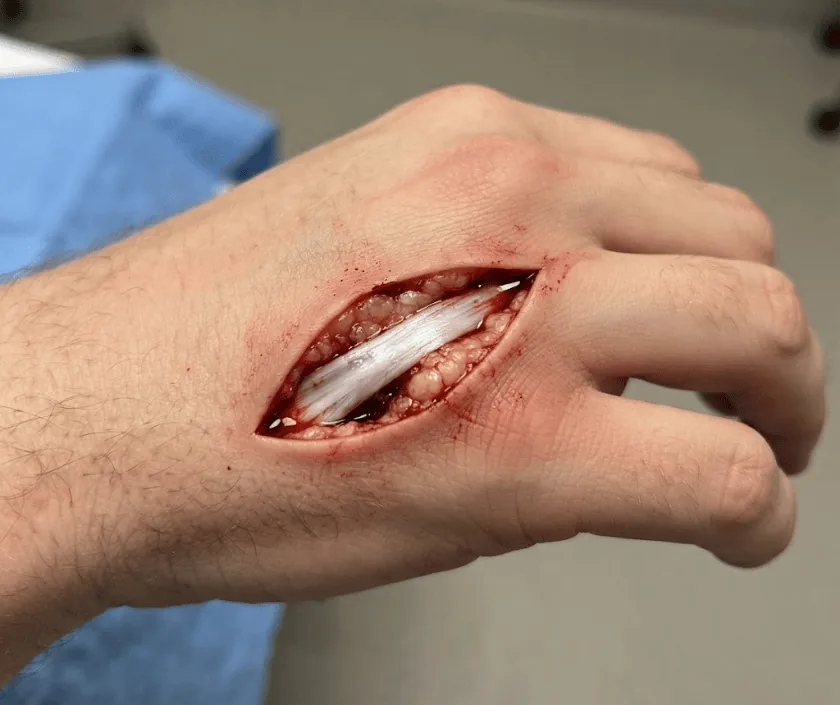
A tendon that lies exposed in a wound loses its slippery outer covering and begins to dry. Dressings cannot restore that, and a graft laid straight onto a bare tendon usually sticks it down, which costs movement. The usual plan is to cover the tendon with a flap and then begin therapy so it can glide again.
Most tissues in the body sit still. A tendon does not. It slides back and forth every time you bend a finger, lift a foot or straighten a knee, and that movement is exactly what a wound over a tendon threatens.
Each tendon is wrapped in paratenon, a thin slippery layer that feeds it and lets it glide. Injuries which peel the skin away often strip that layer too. What is left behind is a pale cord with almost no surface circulation, and it starts to dry within days. Drying leads to fraying, fraying leads to death of the cord, and the muscle attached to it can then no longer do its work.
There is a second problem. Even when a wound over bare tendon is closed with a simple skin graft, the graft sticks to the tendon. Sliding stops, and the joint stays stiff however hard you work at exercises. This is why surgeons prefer to move soft, well supplied tissue over an exposed tendon, and why therapy begins as soon as the cover is safe.
Cover is offered when there is a tendon worth saving and enough blood supply to support new tissue over it. Sometimes the honest answer is a different operation altogether.
Movement of each finger or joint is tested, sensation is checked and circulation is assessed. Photographs are taken, and swabs are sent if the wound looks infected.
Dead tissue is removed and the tendon is kept moist with dressings from that moment on. Any frayed part of the tendon is trimmed back to healthy cord.
Small areas may be covered by a local flap rotated from beside the wound. Larger areas usually need a free flap taken from the thigh or forearm and joined to nearby vessels.
The flap is raised, moved and stitched into place, and a splint holds the limb in a safe position. The donor area is closed or grafted at the same sitting.
A therapist begins guided movement once the flap is secure, aiming to get the tendon sliding before scar tissue has a chance to set.
The limb is splinted and elevated, and the flap is checked often. Pain relief is given regularly. Gentle movement of joints away from the wound is usually encouraged.
Swelling settles and the splint may be adjusted. Therapy sessions begin or increase, following a protocol matched to the tendon involved.
Most patients are using the hand or foot for light tasks. Scar massage is under way, and the flap begins to soften and thin.
Movement usually keeps improving slowly. Some patients have a further small operation to release scar tissue or to thin the flap.
Movement rarely returns to exactly what it was. The realistic aim is a healed wound and a useful hand or foot, with grip and step that work for daily tasks. Flaps often look bulky at first and thin over months. How much glide returns depends on the tendon, the joint and the effort put into therapy, so results can vary widely between patients.
Every option here has drawbacks, and it is better to hear them before surgery than afterwards.
The operation buys the tendon a chance. What you do over the following weeks decides how much of that chance is used.
A graft sticks to a bare tendon and stops it sliding. Soft cover with its own blood supply is used instead.
Therapy is what restores glide. Without it, scar tissue tends to fix the tendon in place.
A small opening over a drying tendon can cost the movement of a whole finger, so it is reviewed early.
Cover is one stage. Tendon reconstruction or a scar release is sometimes needed later on.
At Elegance Clinic in Surat, hand and limb reconstruction is planned together with therapy, so the surgical plan and the movement plan are agreed at the same time rather than one after the other.

What you pay depends on the type of cover chosen, whether microsurgery is involved and how much therapy the plan includes. A local flap is estimated differently from a free flap, which needs longer theatre time and closer monitoring afterwards. A written estimate is prepared once the wound and the tendon have been assessed, and splints and therapy sessions are listed within it. Insurance cover for reconstruction after injury is common, though the wording of each policy differs.
These are the questions that come up most often in consultation. If yours is not here, send it on WhatsApp and the team will reply, usually the same day.
Ask your question →It depends on whether a local flap or a free flap is used, how long theatre takes and how much therapy is planned. A written estimate follows assessment and lists surgery, splints and therapy separately, so the whole plan is visible.
Age by itself is rarely the deciding factor. Circulation, heart and lung fitness and sugar control matter more. Where a long microsurgical operation would be too much, a smaller local flap or a staged plan is often possible instead.
Light use often begins within a few weeks, guided by the therapist. Full strength takes longer and varies with the tendon involved. Splints protect the repair in between, and pushing ahead of the protocol risks losing what surgery gained.
Usually not to what it was before the injury. The realistic aim is a healed wound and enough movement for daily tasks. How much glide returns depends on the tendon, the joint and how consistently therapy is followed.
Over a bare tendon a graft tends to stick down and block sliding, so movement suffers. Grafts are useful where healthy tissue still covers the tendon, and flaps are chosen where the tendon lies open.
Quickly. A tendon left uncovered dries out within days and can then die, which costs the movement it controlled. Even before surgery the wound is kept moist so that the tendon does not deteriorate further.
Each joint is tested for movement and sensation, circulation is checked and the wound is photographed and dressed. You then hear which cover suits, what therapy will involve and what the written estimate includes before anything is scheduled.
Each technique below has its own page explaining how it works and when it is chosen.
Seeing patients from across the city and beyond: read about the practice on the plastic surgeon in Surat page, or check what a written estimate covers on the costs and insurance page.
