A wound that stays open for weeks usually has a reason behind it. This page explains how non healing wound treatment finds that reason, prepares the wound bed and closes it with the simplest method that will last.
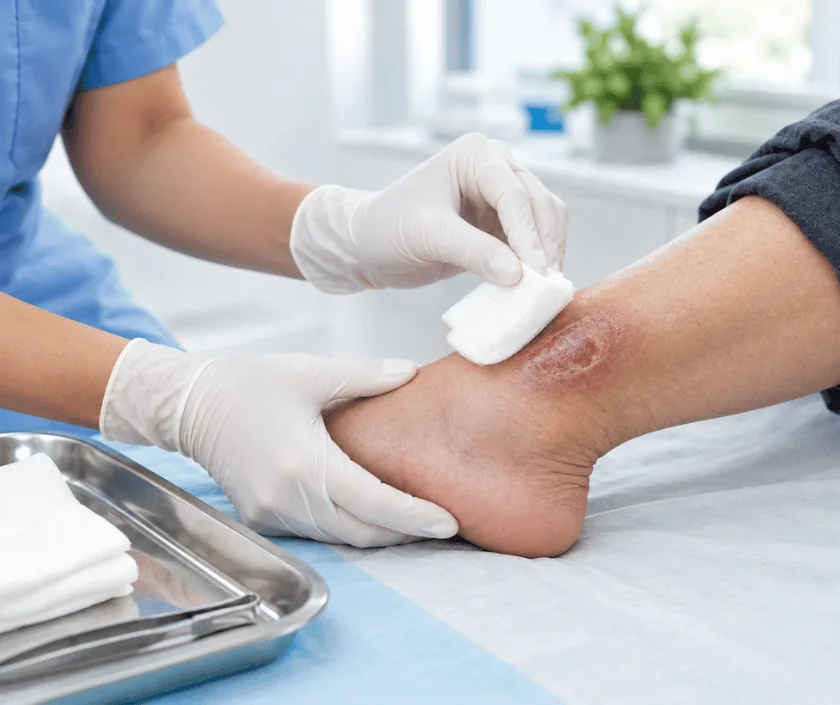
Non healing wound treatment begins by finding why the wound is stuck. Blood supply, infection, pressure, diabetes and rarer causes are all checked. Dead tissue is then removed to create a clean bed, and the wound is closed with dressings, a skin graft or a flap. Treating the underlying cause is what keeps it closed.
Most wounds close on their own within a few weeks. When one stays open beyond that, something is holding it back. Poor circulation, ongoing infection, repeated pressure, raised blood sugar, swelling or dead tissue in the wound bed are the usual culprits, and more than one can be present at the same time.
Assessment therefore starts with the person, not only the wound. Pulses and blood flow are checked, swelling is assessed, blood tests look at sugar and nutrition, and a swab or tissue sample identifies bacteria. Where a wound has been open a long time or looks unusual, a small sample may be sent for testing to rule out other causes.
Once the cause is clear, the wound bed is prepared. Dead and unhealthy tissue is removed, infection is controlled and moisture is balanced with the right dressing. Some wounds then close by themselves. Others need a skin graft, and deep wounds with exposed bone or tendon need a flap that brings its own blood supply.
History, examination and tests build a picture of blood flow, infection, swelling and sugar control. Imaging or a tissue sample is added when a wound looks unusual or has been open a long time.
Dead and unhealthy tissue is removed, in theatre if the wound is deep. A clean, bleeding surface is the base every closure method needs, and reaching it may take more than one sitting.
Antibiotics follow culture reports rather than guesswork. Compression, elevation or negative pressure dressings reduce swelling and fluid so new tissue can grow across the surface.
Small clean wounds may close directly. A skin graft suits broad shallow areas, while a flap is chosen when bone, tendon or hardware lies exposed and needs durable padded cover.
The original cause is treated alongside the wound, whether that means sugar control, footwear, compression or a vascular referral. Review continues until the skin is stable.
Discomfort settles with simple pain relief. Dressings stay dry, and the area is rested or elevated as the team advises.
Dressings are changed on a set schedule and graft or suture lines are checked. Many people manage light daily activity by this stage.
New skin is usually sturdy enough for normal use. Compression garments or footwear continue if swelling or pressure caused the wound.
Scars soften and fade slowly. Ongoing care of the underlying cause is what keeps the area healthy over time.
Wounds that have resisted healing can be unpredictable. Possible setbacks are explained before treatment starts.

There is no single price for a wound that has been open a long time, because the work needed varies so much. Number of cleaning sittings, dressing type, use of negative pressure therapy, whether a graft or flap is required, and any hospital stay all shape the total. You receive a written estimate after assessment, and the insurance desk explains what your policy is likely to cover.
These are the questions that come up most often in consultation. If yours is not here, send it on WhatsApp and the team will reply, usually the same day.
Ask your question →Cost is quoted after assessment, since the plan depends on wound size, depth, dressing needs and whether surgery is required. A written estimate is given before anything is booked. Where treatment is for a medical condition, many insurance policies contribute towards admission and surgery.
A wound showing little progress after several weeks of proper care is treated as stalled. That is the point to look harder for a cause rather than continue the same dressing, because time alone rarely fixes the underlying problem.
No. Some wounds close once infection, swelling or pressure is addressed and the right dressing is used. Surgery is suggested when dead tissue must be removed, or when bone, tendon or a large raw area needs proper cover.
Wound surgery is a routine part of reconstructive practice and is planned around your general health. Anaesthesia is chosen to suit you, and existing conditions such as diabetes or heart problems are reviewed beforehand. Possible complications are explained so you can weigh them up.
That depends on the cause, the size of the wound and your general health. Shallow wounds may close within weeks once the cause is treated, while deep or poorly supplied wounds can take months and may need staged procedures.
It can, if the reason behind it continues. Ongoing pressure, swelling, poor circulation or high blood sugar all raise that chance. Treating those factors, along with the skin care and footwear advice you are given, offers the best protection.
The wound is examined and measured, and photographs are taken with your consent. Circulation, sensation and swelling are checked, and blood tests are usually ordered. You then hear the likely cause, the options for closing it, and a written estimate.
Each technique below has its own page explaining how it works and when it is chosen.
Seeing patients from across the city and beyond: read about the practice on the plastic surgeon in Surat page, or check what a written estimate covers on the costs and insurance page.
