A cup ear looks small, cupped forwards and folded at the top, and it usually stands away from the head as well. This page explains why the shape happens, what can be done at each age and what treatment may cost.
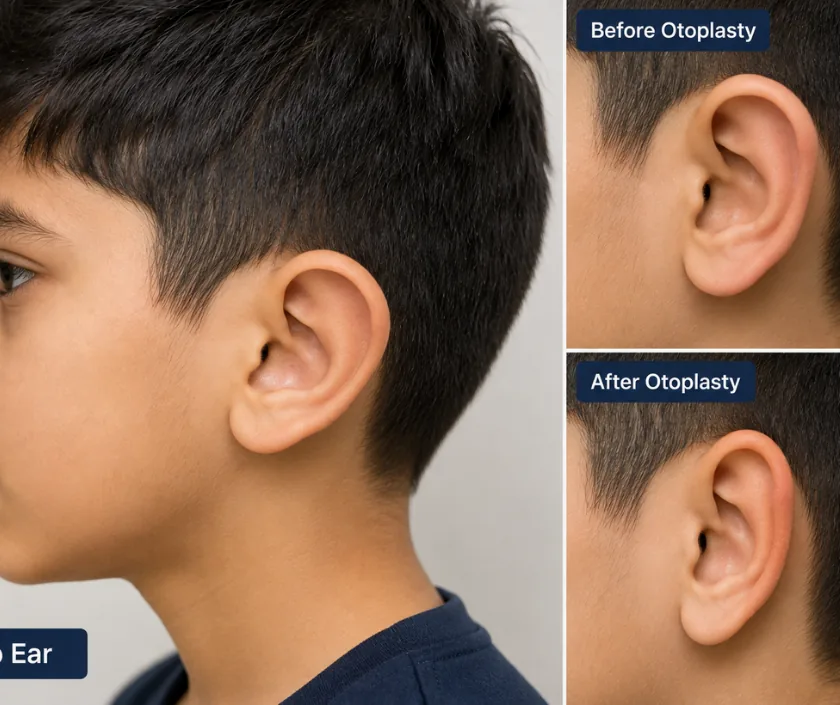
A cup ear is a small ear with a tight rim, a deep bowl and a top that curls forwards, so the ear looks cupped and sits low. It belongs at the firmer end of the constricted ear range. Moulding with a soft splint in the first weeks of life can help mild shapes, while set shapes need surgery to open out the cartilage and set the ear back.
In a cup ear three things happen together. The rim is tight, so the upper ear curls forwards and downwards. The bowl of the ear is deep, which pushes the whole ear away from the head. And the ear is shorter than its partner, because the cartilage plate never fully unfolded before birth.
The names used for these ears overlap. Some surgeons call the milder version a lop ear and reserve cup ear for the firmer, smaller shape; others treat both as points on one range. What matters in practice is not the label but how much cartilage and skin are actually missing, since that decides whether the ear can simply be opened out or needs new material added.
Hearing is usually normal, as the canal and inner ear form separately from the outer ear. Families notice the shape in photographs, when hair is tied back, or because spectacles slip on that side. Where a baby is seen in the first weeks, moulding is worth discussing before any surgical plan is made.
Which parts of the ear need work is decided by looking at three things separately: the height of the ear, the fold at the top and how far the ear sits from the head.
The height, width and position of both ears are compared. The surgeon judges how much cartilage is missing, because that single question decides whether opening out the ear will be enough.
When a baby is seen in the first weeks, a soft splint is fitted and worn steadily for some weeks. Skin is checked at each review. Mild cupping often improves and may need nothing further.
Children sleep under a general anaesthetic and adults may have local anaesthesia. Cuts are hidden in the crease behind the ear and, where needed, along the natural line of the rim.
The tight rim is released and the curled upper cartilage is unrolled. Fine stitches hold the new curve, and a deep bowl is trimmed or stitched down so the ear sits closer to the head.
If the ear is truly short, cartilage borrowed from the bowl or the rib lengthens the rim. Skin from behind the ear is brought round to cover the extra height gained.
A supportive dressing holds the new shape and the head is kept raised. Aching is expected and eases with simple pain relief. Severe one sided pain should be reported the same day.
Dressings come off in clinic and the ear is swollen at first. School usually restarts in about a week. A soft headband is worn at night so the ear is not folded during sleep.
Most swelling has settled and the height and projection can be judged properly. Sport and swimming restart once the surgeon has confirmed that the wounds are fully healed.
Scars fade over months and the cartilage settles into its new position. A small refinement is sometimes discussed if the rim has curled again at the top.
The ear generally looks taller, more open and closer to the head. It rarely matches the other side exactly, and a difference in size is usual where the cup was marked. Cartilage remembers its old shape, so part of the fold or the prominence can return over the years and a further procedure is sometimes needed. Scars sit behind the ear and settle slowly, and the shape is judged months after surgery.
Cup ear surgery reshapes cartilage that has a memory of its old form. Most children do well, and these are the problems to be aware of first.
The dressing holds the new shape, so protecting the ear and leaving that dressing alone are the two main jobs.
The ear gets bigger, but the cupped shape stays. Growth on its own does not open out the folded rim.
It works while newborn cartilage is still soft, which is the first few weeks. After that the cartilage is too firm.
Ears are never identical, even without surgery. The aim is an ear that looks unremarkable at a normal distance.
Appearance matters to children too, and older children often ask for it themselves before school pressures build.
Families come to us for a clear account of which parts of the ear can be improved, and for early advice while newborn moulding is still possible.

What you pay depends on how much cartilage is missing, whether one ear or both are treated, the anaesthetic used and whether cartilage has to be taken from the rib. Opening out a mildly cupped ear is a shorter procedure than a reconstruction that adds new cartilage and skin. A written estimate is prepared after the ear is examined, and insurance cover is checked at the same visit.
These are the questions that come up most often in consultation. If yours is not here, send it on WhatsApp and the team will reply, usually the same day.
Ask your question →A written estimate is given once the ear has been examined, because the work varies widely. Opening out the cartilage costs less than a reconstruction that borrows cartilage from the rib. Anaesthesia, hospital time and treating one ear or two all affect the total.
They sit on the same range. A constricted ear may only have a folded rim, while a cup ear is smaller, deeper and curls forwards more. The names are used loosely, so treatment is planned from the actual shape rather than the label.
In the first weeks of life the cartilage is soft and a splint can reshape it. Worn steadily for some weeks, moulding improves many mild cup shapes. Ears with a real shortage of cartilage will still need surgery when the child is older.
Correction is usually planned from about school age, when the ear is near adult size and the child can join the decision. A marked shape may be treated sooner. Growth and the child's own readiness guide the date rather than a fixed age.
It is normally day case surgery under a general anaesthetic given by a team used to children. Health is checked beforehand. Bleeding, infection and partial return of the shape are the recognised risks, and serious problems are uncommon.
A dressing is worn for a few days, then a soft headband at night for some weeks. School restarts in about a week for most children. Sport and swimming wait roughly six weeks while the reshaped cartilage settles.
Both ears are examined, measured and photographed and the missing height is assessed. You will hear whether moulding is still an option, what surgery could achieve, the recovery involved and the written estimate before any date is booked.
Seeing patients from across the city and beyond: read about the practice on the plastic surgeon in Surat page, or check what a written estimate covers on the costs and insurance page.
