In cryptotia the upper part of the ear is buried under the skin of the scalp, so the top rim cannot be seen. This page explains why it happens, when moulding works, what surgery involves and what it may cost.
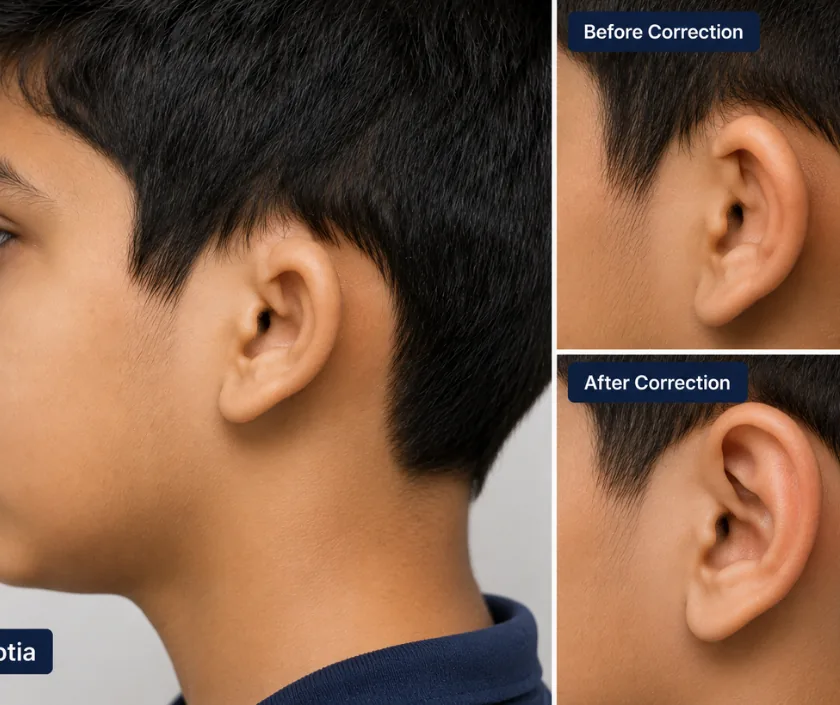
Cryptotia means a hidden ear. The upper cartilage of the ear is tucked under the skin of the side of the head, so the top rim and the groove behind it are missing. Gently pulling the ear outwards usually reveals a nearly normal shape. Moulding in early infancy often works well, while an older child needs surgery to release the buried cartilage and resurface the area.
In a typical ear there is a clear groove between the upper rim and the scalp, which is where spectacles and masks rest. In cryptotia that groove has never formed. The upper cartilage runs on under the skin of the side of the head, so the top of the ear looks as though it has been pushed into the scalp.
The lower ear is usually well formed and hearing is normal, since the canal and the inner ear develop separately. Practical problems come from the missing groove. Spectacles will not sit properly, masks slip off, and the ear can be uncomfortable when a child lies on that side or wears a helmet.
Two things may need attention. Skin is short over the buried part, and the cartilage underneath is often folded or kinked where it has been held down. A plan therefore has to release the cartilage, correct any fold within it, and then find enough skin to line the new groove behind the ear.
What is offered depends mainly on age. Newborn moulding and surgical release are two different routes towards a similar goal.
The upper ear is drawn gently outwards. If a nearly normal rim appears, the cartilage is present and simply buried, which makes the plan more straightforward and the result easier to predict.
Seen in the first weeks, many babies do well with taping or a soft splint that holds the rim out. It is worn steadily for some weeks and skin is reviewed at each visit.
Children sleep under a general anaesthetic; adults may have local anaesthesia. Before any cut, the surgeon plans where the skin to line the new groove will come from.
The upper ear is freed from the scalp and lifted into its proper position. Any fold in the cartilage is corrected and held with fine stitches so the rim keeps its curve.
The raw area behind the released ear is covered, either with a flap of nearby scalp skin or with a skin graft. A soft dressing then supports the ear while it settles.
A dressing protects the new groove and any graft. The head is kept raised and pain relief is given regularly. Dressings are left undisturbed unless the team advises otherwise.
The dressing is changed in clinic and any graft is checked. Swelling and bruising are usual. Most children return to school in about a week and avoid rough play.
The groove behind the ear is settling and spectacles can usually be tried again. Sport and swimming restart once the surgeon confirms that all wounds are healed.
Colour differences in a graft fade slowly and the ear position becomes settled. A minor adjustment is sometimes offered if the rim has been drawn back a little.
The ear usually sits out from the head with a visible upper rim and a usable groove behind it. The treated ear can stay slightly smaller or a little different in shape from the other side. Cartilage tends to pull back towards its old position, so the support dressing and time matter, and a small amount of relapse can happen. Scars lie behind the ear or in the hairline and settle over months.
Cryptotia surgery works with a small area of tight skin, so healing needs care. Most children do well, and these are the problems worth knowing about.
The ear is held in its new position by the dressing, so leaving that dressing undisturbed matters most of all.
The cartilage is usually all present. It is buried under scalp skin rather than absent, which is why release works.
Gentle traction shows what is buried, but it does not hold the ear out. Newborn moulding or surgery does that.
Cryptotia involves the shape of the outer ear. Hearing is usually normal, and it is checked in any case.
Families come to us for a quick opinion in the newborn period, and for an honest explanation of what release surgery can and cannot achieve later on.

Cost depends on how much skin is short, whether a local flap or a skin graft is used, whether cartilage inside the ear also needs reshaping, the anaesthetic and whether one ear or both are treated. Surgery in a young child adds theatre and recovery time. A written estimate is prepared after examination, and any insurance or scheme cover is checked at the same visit.
These are the questions that come up most often in consultation. If yours is not here, send it on WhatsApp and the team will reply, usually the same day.
Ask your question →A written estimate is given after the ear is examined. The figure depends on whether a flap or a skin graft is needed, whether the cartilage has to be reshaped, the anaesthetic used and the theatre time. Insurance cover is checked at the same appointment.
In the first weeks of life the cartilage is soft and moulding often works well for cryptotia. A splint or tape holds the rim out for some weeks while the skin stretches. Started late, moulding is far less effective and surgery is then advised.
Correction is commonly planned from about school age, when the ear is close to adult size and the child understands the plan. Marked cases may be treated earlier. Growth and how much the shape bothers your child guide the timing.
Hearing is usually normal, because the canal and the inner ear form separately from the outer ear. A hearing check is still sensible if there is any doubt. The everyday problems are with spectacles, masks and comfort rather than sound.
It is normally day case surgery under a general anaesthetic given by a team used to children, with health checked beforehand. Graft healing, infection and partial recurrence are the recognised risks. Serious complications are uncommon.
A dressing is worn for several days and any graft is reviewed in clinic. School usually restarts in about a week. Sport and swimming wait around six weeks, and the colour of a graft keeps improving for months.
The ear is examined, the rim is drawn out gently to see the hidden cartilage, and photographs are taken. You will hear whether moulding is still worth trying, what surgery involves and the written estimate before a date is set.
Each technique below has its own page explaining how it works and when it is chosen.
Seeing patients from across the city and beyond: read about the practice on the plastic surgeon in Surat page, or check what a written estimate covers on the costs and insurance page.
