Polydactyly means a child is born with an extra finger or thumb. This page explains how the hand is assessed in Surat, when a simple removal is enough, when a thumb needs rebuilding and what it may cost.
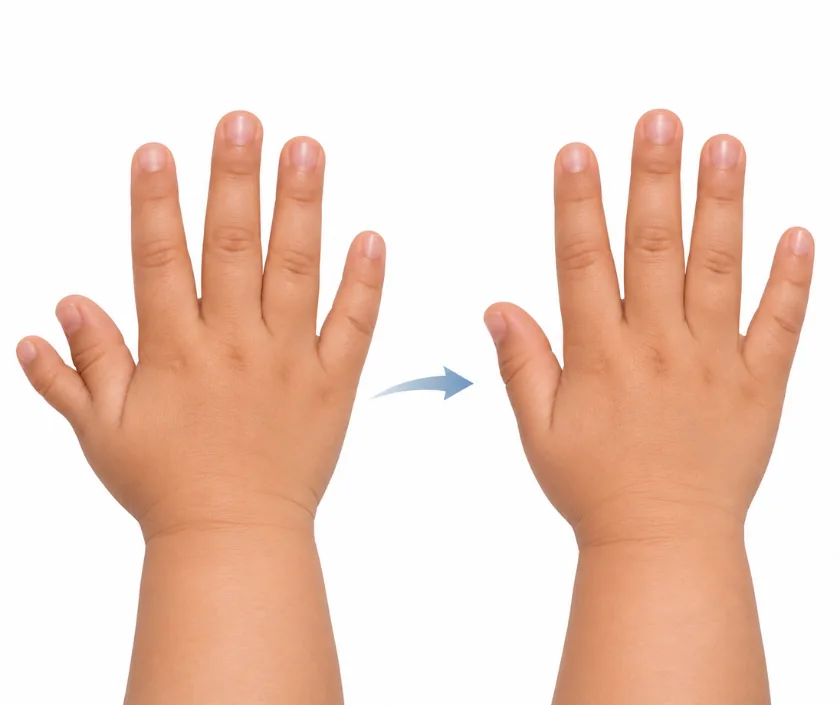
Polydactyly surgery treats an extra finger or thumb. The plan depends on the type. A small floppy tag on the little finger side may need only a short removal, while a duplicated thumb usually needs bone, joint, tendon and nail to be rebuilt so the remaining thumb pinches well. Splinting and hand therapy follow, with reviews as the hand grows.
Polydactyly is among the most common hand differences seen at birth. The extra digit may sit on the little finger side, on the thumb side, or in the middle of the hand. It can be a soft tag of skin with no bone inside, a partly formed digit, or a fully formed finger with its own nail, joint and tendons.
Treatment is chosen to leave the child with the most useful hand, not simply to take a part away. On the little finger side, a floppy tag is often removed through a short operation. On the thumb side the two thumbs usually share bone and tendon, so the surgeon keeps the better parts of each, moves tendons towards the midline, tightens the joint ligaments and reshapes the nail.
Because the thumb takes part in almost every grip, thumb duplication is planned with growth in mind. The joint can drift over the years and the rebuilt thumb may stay a little smaller than the other side. Hand therapy, night splinting and scheduled reviews through childhood are part of the plan from the start.
What the two digits share matters more than how the extra one looks, so examination and imaging come before any plan.
The hand is examined and X rays show whether the extra digit contains bone and how it joins the hand. This decides whether a short removal or a full reconstruction is the right plan.
The surgeon works out which digit has the stronger joint, nail and tendons. In thumb duplication the plan often keeps parts of both sides, rather than simply removing one thumb.
Your child sleeps under general anaesthesia. A soft tourniquet keeps the field clear so the small tendons, nerves and joint surfaces can be seen and handled gently.
The extra digit is removed. Tendons are moved so they pull along the midline, the joint ligament is rebuilt, and bone is trimmed or straightened so the remaining digit sits in line.
A soft dressing and a light plaster protect the repair. A fine wire is sometimes placed inside for a few weeks to hold the bones steady while healing takes place.
The hand rests in a plaster and dressing and is kept raised. Simple pain relief is usually enough, and most children are home the same day or after one night.
The dressing is changed and the wound is checked. A lighter splint may replace the plaster, and gentle movement of the neighbouring fingers is encouraged.
Any wire holding bone is usually removed by this stage. Hand therapy begins in earnest, with exercises for grip and pinch and a night splint if the digit tends to drift.
Scars soften over many months. Reviews continue as the hand grows, because a rebuilt thumb can drift or stay smaller, and a further procedure is sometimes advised.
Most children use the hand well and manage school tasks without difficulty. A reconstructed thumb is usually a little narrower, shorter or stiffer than the other one, and the nail may be a different shape. The joint can drift into an angle as the child grows, and a further operation in later childhood is offered in some cases. Scars stay visible on the hand. Therapy and ordinary daily use shape the final result a great deal.
Most children use the hand well after surgery. It still helps to know the problems that can arise, so anything unusual is checked early.
Protecting the repair for a few weeks and then using the hand normally are the two halves of recovery.
Thread tying can leave a tender lump or a piece of bone behind and can cause bleeding, so assessment comes first.
The remaining thumb is usually a little smaller or stiffer, though it generally works well.
Surgery is often planned in the first year or two, before grip patterns settle around the extra digit.
Most children have polydactyly on its own, though the team will check for anything else.
Parents want a hand that works for writing and play, and that is what the plan is built around rather than appearance alone.

Cost depends on the type of polydactyly, whether a short removal or a full reconstruction is planned, whether a wire is used and later taken out, the anaesthetic time and the length of stay. Splints and hand therapy sessions are counted separately. Because these differences vary so much from child to child, a written estimate is prepared after examination and X rays rather than quoted as a fixed price.
These are the questions that come up most often in consultation. If yours is not here, send it on WhatsApp and the team will reply, usually the same day.
Ask your question →A written estimate is given once your child is examined and the X rays are seen, because a small skin tag and a full thumb reconstruction are very different operations. The estimate covers surgeon, anaesthesia, theatre and stay. Ask about scheme or insurance cover at the same visit.
An anaesthetist reviews your child before any date is fixed, and surgery waits until the child is well and gaining weight. Hand operations in children are common and short. Monitoring continues in the hours after waking, and most children go home quickly.
A plaster and dressing usually stay on for two to three weeks, then a lighter splint is used. Everyday play returns within a month or so. When a wire has been placed inside, it is taken out at around six weeks in the clinic.
Most children grip, pinch and write well afterwards. A rebuilt thumb may stay slightly smaller than the other side, and the nail or scar can look different. Function generally settles better than appearance, and therapy helps the child get the most from the hand.
Not always. A small floppy tag causes no trouble in some children, and a middle digit may be left alone when the hand works well. Surgery is advised when the extra digit blocks grip, catches on clothing or pulls its neighbour out of line.
Many hand surgeons plan the operation in the first year or two, once a child is big enough for safe anaesthesia and the structures are easier to identify. Waiting a little longer is reasonable for some children, so timing is agreed after assessment rather than fixed by age alone.
The hand is examined and grip is watched during play. X rays show what lies inside the extra digit. You will hear which digit would be kept, what the operation involves, what therapy follows and what the written estimate covers.
Seeing patients from across the city and beyond: read about the practice on the plastic surgeon in Surat page, or check what a written estimate covers on the costs and insurance page.
