Radial club hand is a difference where the thumb side of the forearm is short or missing, so the wrist tilts over. This page explains the staged plan used in Surat, from splinting to surgery, and what it may cost.
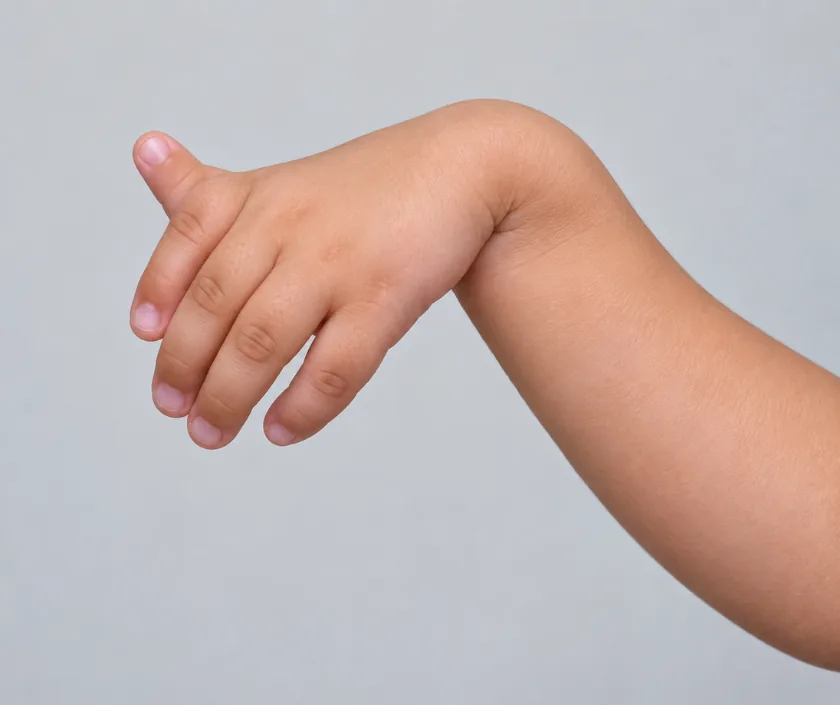
Radial club hand means the bone on the thumb side of the forearm is small or missing, so the wrist tilts that way and the arm is shorter. Treatment starts with stretching and splinting in infancy. Surgery may bring the wrist over the forearm, and a separate stage can build a working thumb. Care continues through childhood as the arm grows.
Radial club hand, also called radial longitudinal deficiency, is a difference in which the radius, the bone on the thumb side of the forearm, is small or absent. Without that support the wrist leans towards the thumb side, the forearm is shorter than the other one, and the thumb itself is often small, floppy or missing.
The hand difference is sometimes part of a wider picture. Because the same period of early development shapes the heart, kidneys, spine and blood, a paediatrician usually arranges checks and blood tests before any surgery is planned. Families are seen by a team rather than by one person alone.
Treatment is staged over years. Stretching and serial splinting begin in the first months to soften the tight tissues on the thumb side. Surgery to bring the wrist over the forearm may follow when the child is bigger, and building a working thumb is planned as a separate step. Elbow movement is protected at every stage, because a child with a stiff elbow relies on the bent wrist to reach the mouth.
Almost every baby born with radial club hand benefits from stretching and splinting, but not every child needs an operation. The plan depends on how much wrist support is missing and on how the child already uses the arm.
The arm is examined and X rays show how much radius is present. A paediatrician arranges heart, kidney, spine and blood checks, because radial deficiency can travel with other conditions.
A hand therapist teaches daily stretches and fits a series of splints or casts in infancy. This softens the tight tissue on the thumb side and can improve the wrist position before any surgery.
When surgery is agreed, tight structures are released and the wrist is brought over the end of the ulna. A wire holds that position while healing takes place, and elbow movement is protected.
A small floppy thumb is often rebuilt by moving the index finger into the thumb position, a step called pollicisation. This gives the child a digit that can pinch and grip.
A cast is followed by night splinting for months. Therapy teaches the child to use the new thumb position, and reviews continue while the forearm keeps growing.
Your child stays in hospital for a night or two after wrist surgery. The arm is kept raised, fingers are checked regularly and pain relief is given by the clock rather than on request.
The cast stays on while bone and soft tissue heal. Dressing changes happen in clinic. Finger and shoulder movement are encouraged so the whole arm does not stiffen.
A wire is removed once X rays allow, and night splinting begins. Hand therapy builds grip and, after pollicisation, teaches the child to use the new thumb.
Reviews continue through childhood. The wrist can drift again as the forearm grows, and further surgery is sometimes planned at a later stage.
The forearm stays shorter than the other side, and no operation changes that. What can change is the position of the hand and how easily the child uses it. Grip strength usually stays below the unaffected side. Some drift back towards the old position is common as the child grows, and a second smaller operation is sometimes needed in later childhood. Most families judge the result by what the child can do, not by the shape alone.
This is major reconstructive surgery, planned in stages over years. Being clear about the possible problems helps a family weigh up each stage.
Recovery is mostly about protecting the new position and keeping the hand moving. Your therapist will show you each step before you leave.
Waiting does not lengthen the forearm or straighten the wrist. Early stretching keeps tissues supple and keeps more options open later.
The two arms will stay different in length and shape. Treatment is aimed at what the hand can do, not at making the sides look the same.
Splinting and hand therapy do a large share of the work, and some children do well with these alone.
This difference is often linked with heart, kidney and blood conditions, so screening tests are part of the first visit.
Radial club hand is a long journey rather than a single appointment, and we plan it that way with parents from the first visit.

Because treatment is staged, cost is discussed stage by stage rather than as one figure. Splints, casts and therapy sessions run through the whole plan. A wrist procedure and a thumb reconstruction are estimated separately, and the paediatric tests arranged beforehand are billed by the treating hospital. A written estimate is prepared once assessment and imaging are complete, so each stage is clear in advance.
These are the questions that come up most often in consultation. If yours is not here, send it on WhatsApp and the team will reply, usually the same day.
Ask your question →A written estimate is prepared for each stage after assessment and imaging, because splinting, wrist surgery and thumb reconstruction are separate items. Therapy, casts and the paediatric tests arranged before surgery are listed as well. Scheme and insurance cover are checked at the same visit.
Checks of the heart, kidneys and blood come first, since this deficiency can travel with other conditions. Surgery is planned only once those results are clear and an anaesthetist is satisfied. Your child is watched closely in hospital for a night or two afterwards.
A cast is worn for about six weeks after wrist surgery, followed by months of night splinting and therapy. Everyday activities restart well before the splinting ends. The overall plan runs across years rather than one recovery period.
Many children gain a straighter wrist and reach objects more easily, and pollicisation often gives a useful pinch. The arm stays shorter than the other side and some stiffness remains. Children usually adapt well and find their own way of doing tasks.
No. A mild deficiency with a good thumb and a wrist that sits reasonably well may need only stretching, splinting and review. Surgery is considered when the wrist tilt limits reach or grip, and each stage is decided together with the family.
Stretching and splinting often begin in the first months of life, while the tissues are still soft. Wrist surgery, when it is chosen, comes later once the child is bigger. Thumb reconstruction is timed so the child can take part in therapy afterwards.
The arm, wrist and thumb are examined, elbow movement is measured and X rays are reviewed. Referrals for heart, kidney and blood checks are arranged. You will hear what the stages might be, what therapy is needed and what a written estimate covers.
Seeing patients from across the city and beyond: read about the practice on the plastic surgeon in Surat page, or check what a written estimate covers on the costs and insurance page.
